

The canvasback is a species of diving duck, the largest found in North America.
Region
North America
Typical Environment
Breeds mainly in the Prairie Pothole Region of the north-central United States and south-central Canada, extending locally into Alaska’s interior wetlands. Winters on large lakes, coastal bays, estuaries, and sheltered marine waters on both Atlantic and Pacific coasts, the Gulf Coast, and parts of the lower Mississippi Valley. Key wintering sites include Chesapeake Bay, San Francisco Bay, and the Laguna Madre. Prefers open water near extensive beds of submerged aquatic vegetation and dives to feed in deeper ponds and bays.
Altitude Range
Sea level to 2000 m
Climate Zone
Temperate
Ease of Keeping
Beginner friendly: 2/5
The canvasback is North America’s largest diving duck, named for the male’s pale, canvas-like back. Its scientific name honors wild celery (Vallisneria), a favorite historic food that once made Chesapeake Bay famous for canvasbacks. It has a distinctive long, sloping profile with a wedge-shaped head and red eyes in males. Populations fluctuate with wetland conditions but are generally considered not at risk.


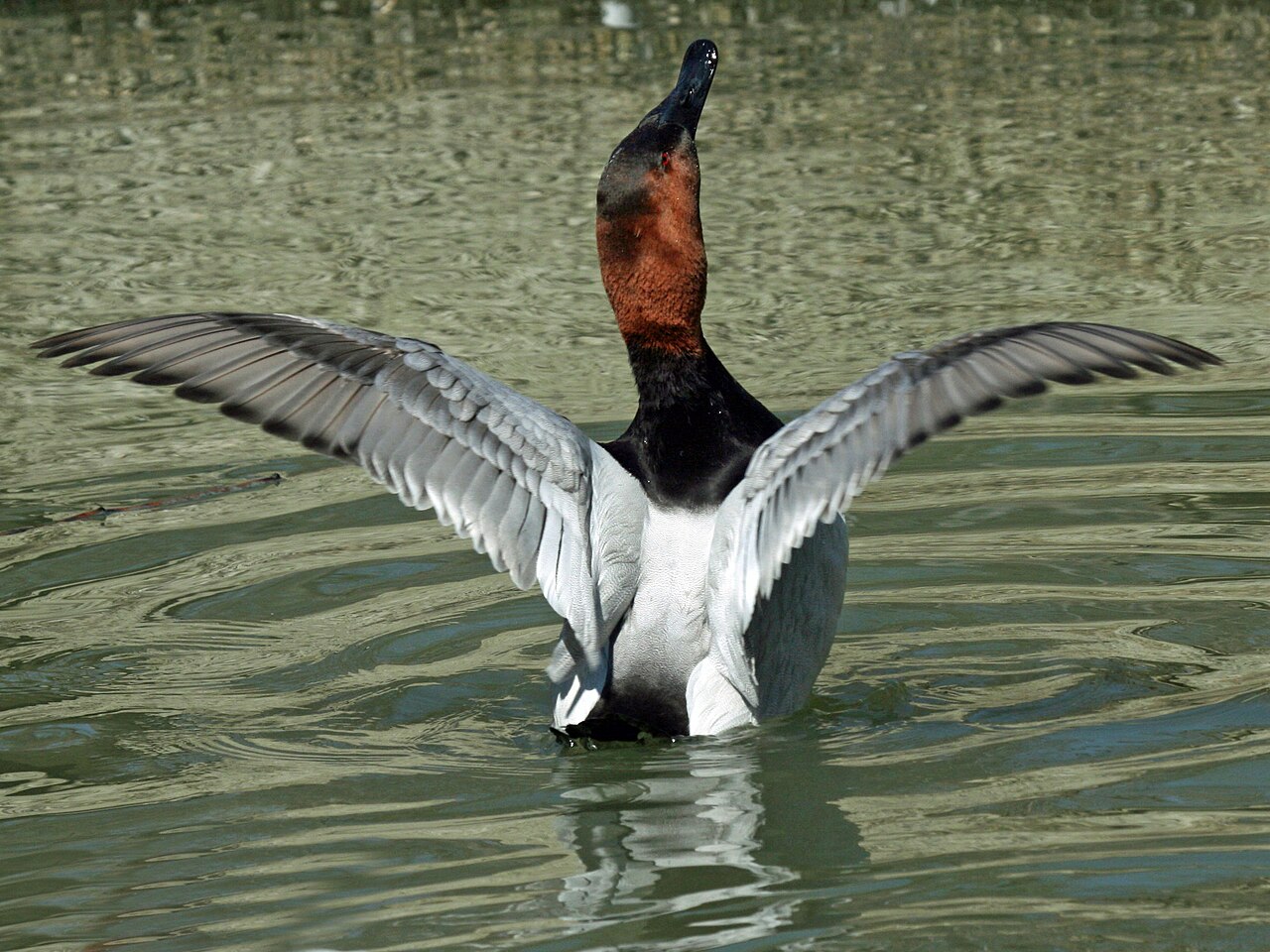
Drake canvasback stretching wings

Tubers of Sago Pondweed (Stuckenia pectinata), a favorite food of the canvasback
Temperament
social yet wary
Flight Pattern
fast, direct flight with rapid wingbeats
Social Behavior
Forms sizable flocks in migration and on wintering waters, often mixing with other diving ducks. Typically pairs on spring staging grounds; nests are built over water in dense emergent vegetation. The species is frequently parasitized by Redheads, which lay eggs in canvasback nests. Females tend broods in marshy ponds where ducklings dive and feed on invertebrates.
Migratory Pattern
Seasonal migrant
Song Description
Generally quiet; males give low rolling coos and grunts during courtship. Females produce harsher quacks and growls, and flocks can be noisy when flushed with wing-whistle and splash sounds.
Plumage
Male with bright chestnut head and neck, black breast, crisp white to pale gray back and sides, and black tail; female overall pale brown with a warmer brown head and grayish back. Both sexes show a sleek, wedge-shaped head with a long, sloping forehead and bill. Body feathers are smooth and dense for diving.
Diet
Feeds by diving for tubers, rhizomes, and leaves of submerged plants such as wild celery, sago pondweed, and wild rice. Also consumes mollusks, aquatic insects, and small crustaceans, especially in winter or on breeding grounds when animal protein is valuable. Diet can shift with habitat quality, favoring plant foods when abundant and invertebrates when vegetation is scarce.
Preferred Environment
Forages in deeper ponds, marshes, lakes, and coastal bays with extensive submerged vegetation beds. Often feeds near edges of channels or over shell and plant beds in estuaries.


