

The bushwren, also known as the mātuhituhi in the Māori language, is an extinct species of diminutive and nearly flightless bird that was endemic to New Zealand. It had three subspecies on each of the major islands of New Zealand, the North Island, South Island, and Stewart Island / Rakiura and nearby smaller islands. The species disappeared gradually after the introduction of invasive mammalian predators, last being seen on the North Island in 1955 and the South Island in 1968. Attempts were made to save the remaining population on small islands off Stewart Island, but they ultimately failed with the death of the last remaining known birds in 1972.
Region
New Zealand
Typical Environment
Historically found in native forests on the North Island, South Island, and Stewart Island / Rakiura, with final remnant populations on small offshore islets. It favored dense, mossy understory with abundant fallen logs, root tangles, and leaf litter. The species spent much of its time on or near the ground, using tangled vegetation for cover. After mammalian predators arrived, it persisted only on predator-free islands before disappearing entirely.
Altitude Range
Sea level to 1200 m
Climate Zone
Temperate
Ease of Keeping
Beginner friendly: 1/5
The bushwren (mātuhituhi) was a tiny, nearly flightless New Zealand wren that foraged close to the ground in mossy forest. It declined rapidly after the introduction of invasive mammals such as rats, and the last known birds died in 1972 despite translocation attempts to small predator-free islets. Its reduced wings and secretive habits made it especially vulnerable to predation. It is a member of the ancient New Zealand wren family (Acanthisittidae), unrelated to true wrens of the Northern Hemisphere.


Taxidermy specimen, National Museum of Scotland


Temperament
secretive and terrestrial
Flight Pattern
short rapid wingbeats; weak, fluttering hops
Social Behavior
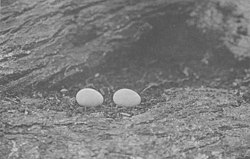
Often seen in pairs or small family groups, maintaining territories within dense understory. Nests were placed in cavities such as holes in tree stumps, among roots, or inside fallen logs, lined with moss and fine plant fibers. Both parents likely contributed to care of the young.
Migratory Pattern
Resident
Song Description
A thin, high-pitched series of trills and seeps, easily lost in forest background noise. Contact calls were soft and high, used to keep in touch while moving through dense cover.
Plumage
Fine, soft plumage; olive-brown above with buffy to yellowish underparts and subtle dusky mottling on the flanks.
Diet
Primarily small invertebrates including insects, spiders, and their larvae. It gleaned prey from moss, bark crevices, and leaf litter, probing with its fine bill. Occasional small arthropods were picked from the bases of ferns and root mats.
Preferred Environment
Feeds on or near the ground in damp, mossy forest with abundant rotting wood and dense understory. Frequently forages among fallen branches, tree bases, and root tangles where cover is close at hand.


