

The burrowing owl, also called the shoco, is a small, long-legged, primarily terrestrial—though not flightless—species of owl native to the open landscapes of North and South America. They are typically found in grasslands, rangelands, agricultural areas, deserts, or any other open, dry area with low vegetation. They nest and roost in burrows, and, despite their common name, do not often construct these dwellings themselves, rather repurposing disused burrows or tunnels previously excavated and inhabited by other species, such as American badgers, foxes, ground squirrels or prairie dogs, among others.
Region
North and South America
Typical Environment
Found in open landscapes including grasslands, prairies, deserts, scrub, pastures, and agricultural fields. They readily use burrow systems created by prairie dogs, ground squirrels, foxes, and badgers, and will also occupy roadside banks and human-altered sites with sparse vegetation. In suburban areas they can persist where short ground cover and open foraging space remain. In South America they inhabit pampas, Cerrado, and dry Andean foothills, while in North America they range from the Great Plains to the Southwest and Florida.
Altitude Range
Sea level to 3000 m
Climate Zone
Other
Ease of Keeping
Beginner friendly: 1/5
Burrowing owls are unusually terrestrial for owls, often standing on the ground or perching on low posts with a distinctive bobbing display. They frequently occupy burrows dug by mammals and may line the entrance with dung, which attracts beetles they later eat. Northern populations migrate seasonally, while many tropical and subtropical groups are year-round residents. When threatened near their burrow, young and adults can produce a rasping hiss that mimics a rattlesnake.


Burrowing owl in flight

A family of burrowing owls

A burrowing owl on the lookout

A burrowing owl makes a home out of a buried piece of pipe.
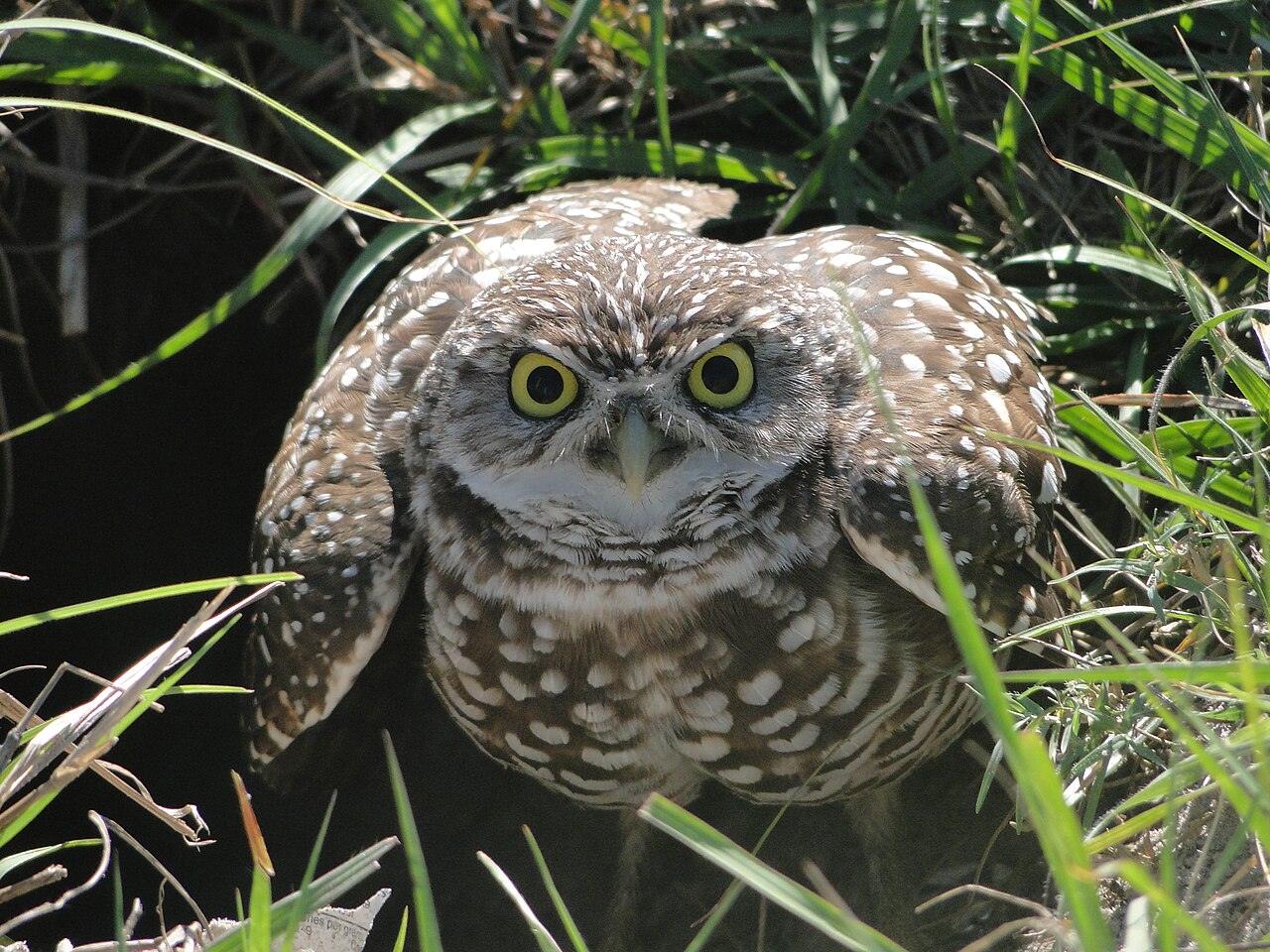
A. c. floridana by its burrow in Florida

Burrowing owls at a golf course in Plantation, FL

At Buenos Aires, Argentina
Temperament
alert and wary but often tolerant of humans
Flight Pattern
short, low flights with rapid wingbeats
Social Behavior
Often nests in loose colonies and uses mammal-dug burrows for nesting and roosting. Pairs are typically monogamous for a season; both sexes attend the nest, with the female spending more time below ground during incubation. They cache prey at the burrow entrance and may decorate burrows with dung and debris. Juveniles often gather near the burrow mouth and perform head-bobbing displays.
Migratory Pattern
Partial migrant
Song Description
Calls include a mellow two-note coo or ‘whoo’ from males during courtship and territory advertisement, sharp chattering alarms, and soft contact notes. Young produce a rattling hiss reminiscent of a rattlesnake when disturbed. Vocal activity increases around dusk and dawn.
Plumage
Compact, long-legged owl with mottled brown upperparts and white spotting; underparts buffy to white with brown barring (less barred in juveniles). Round head with no ear tufts and a pale facial disk. Tail short; legs conspicuously long and unfeathered below the tibiotarsus.
Diet
Primarily consumes insects such as beetles, grasshoppers, crickets, and moths, supplemented by scorpions and spiders. They also take small mammals (mice, voles), small birds, reptiles, and amphibians when available. Prey is captured by short sallies from perches, aerial hawking, or running and pouncing on the ground. They may store excess prey in or near the burrow.
Preferred Environment
Feeds in open, sparsely vegetated areas where prey is visible and accessible, often near the burrow entrance. Common along field edges, prairie dog towns, pastures, and desert flats, and may exploit artificial lighting to catch insects in developed areas.


