

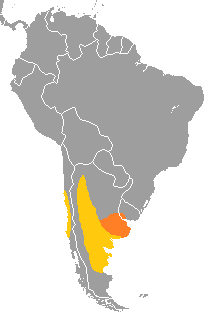
The burrowing parrot, also known as the burrowing parakeet or the Patagonian conure, is a species of parrot native to Argentina and Chile. It belongs to the monotypic genus Cyanoliseus, with four subspecies that are currently recognized.
Region
Southern South America
Typical Environment
Native to Argentina and Chile, especially across Patagonia and the Monte shrublands, with localized populations along coastal and riverine cliffs. It favors semi-arid steppe, open scrub, and agricultural mosaics, often commuting between feeding grounds and communal roosts. The species nests almost exclusively in earthen or soft-rock cliffs where it excavates burrows. Outside breeding, flocks range widely over open country and farmland.
Altitude Range
Sea level to 2000 m
Climate Zone
Arid
Ease of Keeping
Beginner friendly: 2/5
This highly social parrot digs long tunnels into sandstone or earthen cliffs, forming vast nesting colonies—one of the largest known is at El Cóndor in Argentina. Burrows can extend several meters and end in a chamber where 2–4 eggs are laid. It is sometimes persecuted as an agricultural pest but is protected in parts of its range. In captivity it is loud and very active, requiring ample space and social interaction.



Burrowing parrot by Edward Lear

Nesting burrows

Burrowing parrot in captivity
Temperament
social and active
Flight Pattern
strong flier with rapid, direct wingbeats
Social Behavior
Extremely gregarious, forming large flocks outside the breeding season and nesting in dense cliff colonies. Pairs are typically long-term and share burrow excavation and chick rearing. Communal roosting is common, and birds maintain strong colony fidelity.
Migratory Pattern
Partial migrant
Song Description
Vocalizations are loud, rolling screeches and harsh contact calls that carry over long distances, especially around colonies. In close range, pairs exchange chattering notes and softer wheezy calls.
Plumage
Olive-green upperparts with a brownish head, pale whitish breast band, and yellow underparts featuring an orange to red central belly patch. Blue outer wings and rump are conspicuous in flight, with a long, tapered tail. Feathers are smooth and close-fitting, giving a sleek appearance.
Diet
Primarily consumes seeds, grains, and fruits from native shrubs and grasses. It also takes agricultural crops such as sunflower, maize, and wheat when available. Birds often ingest grit or clay to aid digestion and mineral intake. Foraging is both on the ground and in low vegetation.
Preferred Environment
Feeds in open steppe, scrub, and cultivated fields within commuting distance of roosts and nesting cliffs. Flocks commonly move between feeding areas and water sources, using fence lines and shrubs as perches.


