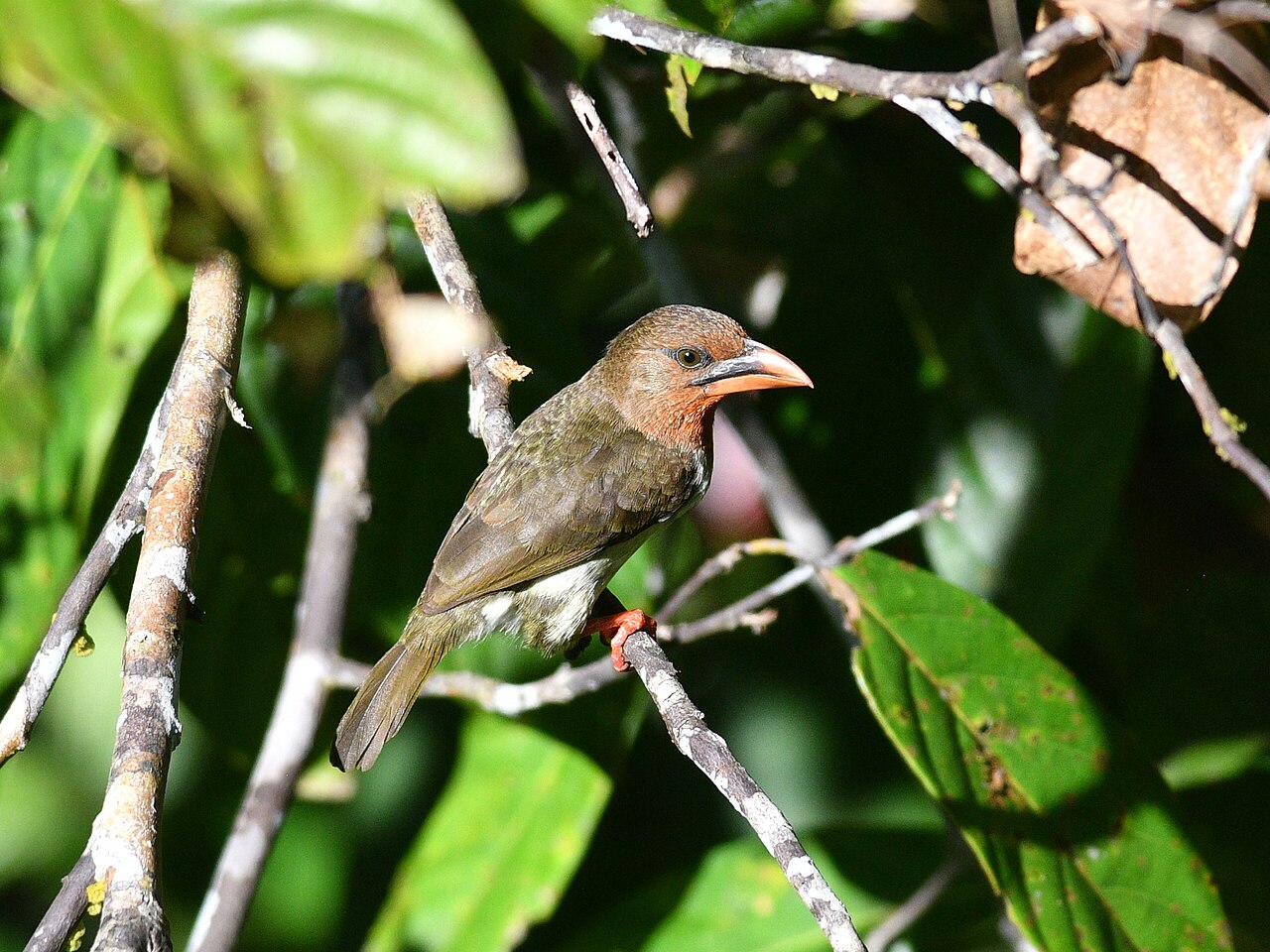
Brooks's leaf warbler is a species of Old World warbler in the family Phylloscopidae.
Region
Western Himalayas and Hindu Kush
Typical Environment
Breeds in montane forests and woodland edges across northeastern Afghanistan, northern Pakistan, and adjacent northwestern India. Prefers coniferous and mixed forests with spruce, fir, pine, juniper, and birch, often along ravines and moist slopes. In the non-breeding season it descends to the foothills and plains, using riparian groves, orchards, gardens, and scrub. Occurs in scattered thickets and canopy edges where it gleans insects from leaves and twigs.
Altitude Range
1200–3200 m
Climate Zone
Highland
Ease of Keeping
Beginner friendly: 1/5
Brooks's leaf warbler is a small Old World warbler named after the ornithologist William Edwin Brooks. It often joins mixed-species foraging flocks and can be tricky to distinguish from Hume’s and greenish warblers; its call and slightly greener upperparts help separate it. During migration and winter it frequents gardens and scrub, making it more visible than during the breeding season. Its thin, high-pitched calls carry surprisingly far in mountain valleys.

Temperament
active and alert
Flight Pattern
short rapid wingbeats with quick, flitting movements
Social Behavior
Typically forages singly or in pairs, but readily joins mixed-species flocks outside the breeding season. Breeding pairs are territorial, with courtship displays centered on song and chasing. Nest is a small cup placed on or near the ground or low in dense vegetation, and clutches usually contain 3–5 eggs.
Migratory Pattern
Seasonal migrant
Song Description
Song is a thin, high-pitched series of sibilant notes and brief trills, delivered from cover or low perches. The call is a sharp, slightly rising 'tseet' that can carry well and helps distinguish it from similar leaf warblers.
Plumage
Olive-green upperparts with paler underparts, a clean whitish to pale yellowish belly, and a prominent pale supercilium. Fine, neat feathering with subtle contrasts; wingbars are faint or weakly expressed. The overall impression is a small, slim, green-toned leaf warbler.
Diet
Feeds mainly on small insects and their larvae, including aphids, caterpillars, and beetles. It gleans prey from leaves and twigs and occasionally makes short sallies to catch flying insects. During cooler periods it increases foraging activity in sunlit patches and sheltered edges.
Preferred Environment
Forages in canopy and mid-story of coniferous and mixed forests during breeding. In winter and on migration, it uses riparian trees, orchards, gardens, and scrubby edges where insect prey remains abundant.