

The broad-billed warbler is a species of bush warbler. It was formerly included in the "Old World warbler" assemblage, and belongs to the monotypic genus Tickellia.
Region
Eastern Himalayas and Indochina
Typical Environment
Found from the eastern Himalayan foothills through northern Myanmar and southern China to northern Thailand, Laos, and Vietnam. It favors dense bamboo and shrubby undergrowth within subtropical evergreen and montane broadleaf forests. In breeding season it occupies cooler, higher-elevation forests, descending or moving southward in non-breeding months. It also uses forest edges, secondary growth, and streamside thickets where cover is abundant.
Altitude Range
200–2600 m
Climate Zone
Subtropical
Ease of Keeping
Beginner friendly: 1/5
This small bush warbler is the sole member of the genus Tickellia, distinguished by its notably broad, flat-based bill that aids in gleaning insects from foliage and bamboo. It keeps close to dense undergrowth and bamboo thickets, making it more often heard than seen. The genus honors the naturalist Samuel Tickell, while the species name commemorates Brian Houghton Hodgson.

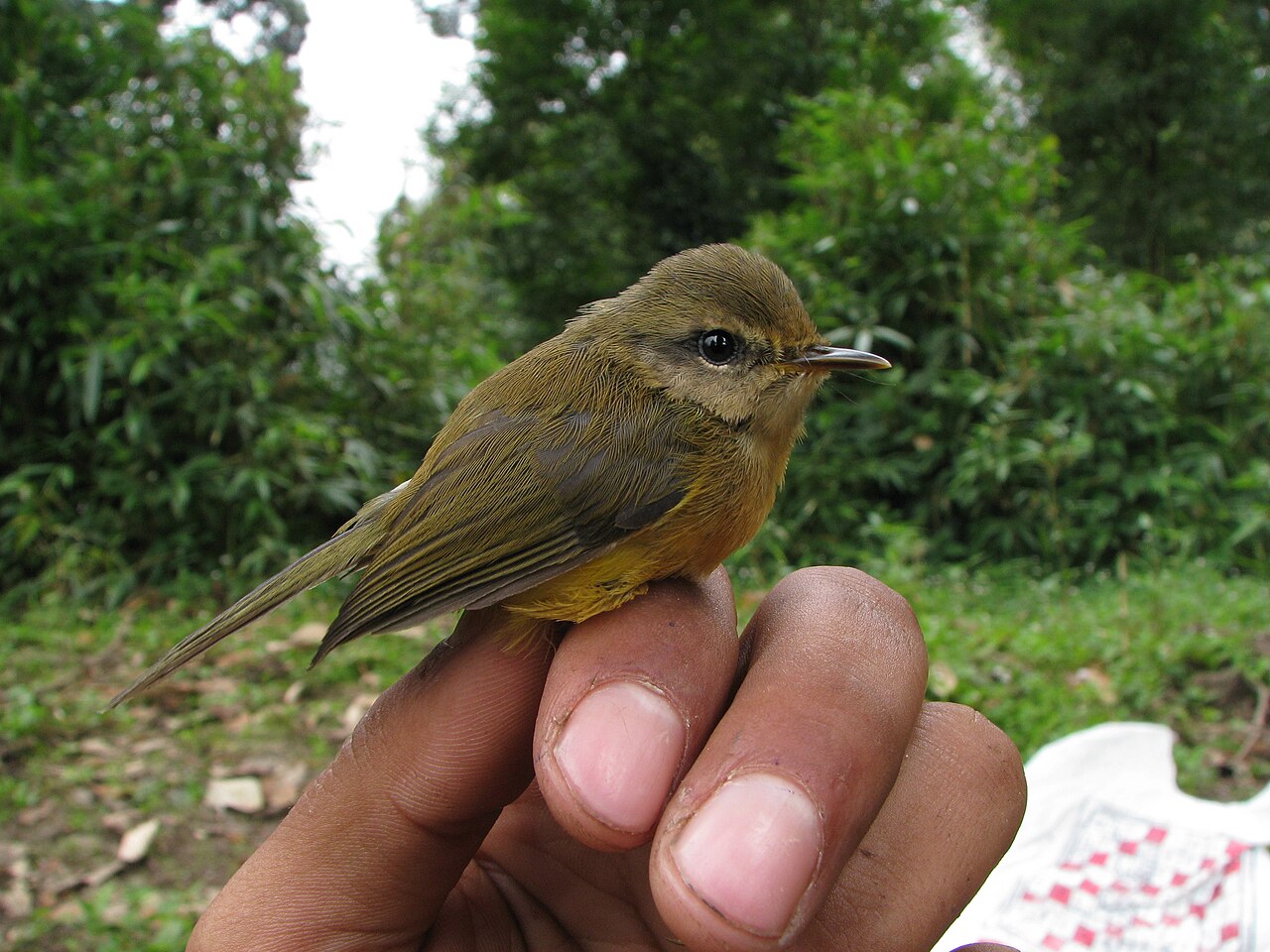
A juvenile. Note the dullness of color
Temperament
secretive and skulking
Flight Pattern
short rapid wingbeats through dense cover
Social Behavior
Typically seen singly or in pairs during the breeding season and joins mixed-species flocks in non-breeding months. Nests are placed low in dense vegetation, often bamboo or thick shrubs, and are cup-shaped. Both sexes participate in nesting duties, with strong site fidelity to suitable thickets.
Migratory Pattern
Seasonal migrant
Song Description
Song is a thin, high-pitched series of sweet trills and tsee notes delivered from concealed perches. Calls include sharp, squeaky contact notes and soft scolds while foraging in bamboo.
Plumage
Plain olive-brown upperparts with paler, buffy underparts and a whitish throat; fine, soft-textured feathers suited to dense cover. Shows a clean, pale supercilium and a faint darker eye-line. The broad, flattened bill is conspicuous at close range.
Diet
Feeds mainly on small insects such as beetles, caterpillars, flies, and spiders, gleaned from leaves, stems, and bamboo culms. It will hover-glean briefly and occasionally snatch prey in short sallies. Plant matter is rarely taken, though it may sip from small soft fruits or nectar incidentally.
Preferred Environment
Forages in the understory and mid-story of dense bamboo and evergreen thickets, often near forest edges and along streams. It prefers shaded, cluttered microhabitats where it can move swiftly under cover.


