
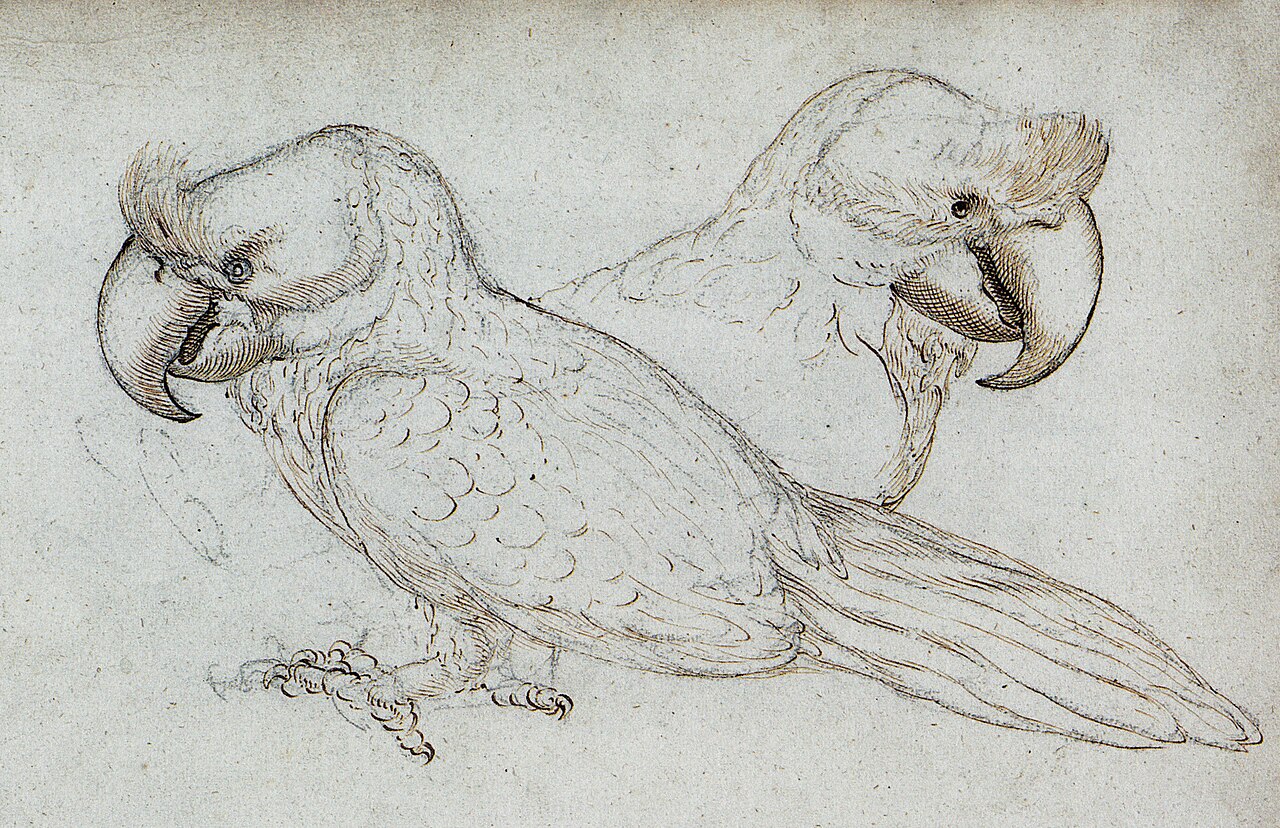
The broad-billed parrot or raven parrot is a large extinct parrot in the family Psittaculidae. It was endemic to the Mascarene island of Mauritius. The species was first referred to as the "Indian raven" in Dutch ships' journals from 1598 onwards. Only a few brief contemporary descriptions and three depictions are known. It was first scientifically described from a subfossil mandible in 1866, but this was not linked to the old accounts until the rediscovery of a detailed 1601 sketch that matched both the subfossils and the accounts. It is unclear what other species it was most closely related to, but it has been classified as a member of the tribe Psittaculini, along with other Mascarene parrots. It had similarities with the Rodrigues parrot, and may have been closely related.
Region
Mascarene Islands
Typical Environment
Endemic to forested habitats of Mauritius, especially lowland and mid-elevation native woodlands. It likely used palm-rich and ebony-dominated forests where hard fruits and drupes were abundant. Subfossil finds and early notes suggest it foraged both on the ground and in trees. Riparian woods and coastal forest edges were probably used seasonally or opportunistically.
Altitude Range
Sea level to 700 m
Climate Zone
Tropical
Ease of Keeping
Beginner friendly: 1/5
Also called the raven parrot, it was a large, heavy-billed parrot endemic to Mauritius and is known only from a few early accounts, illustrations, and subfossil remains. Its exceptionally broad bill suggests specialization for cracking hard fruits and seeds. It likely became extinct in the 17th–18th centuries due to hunting, habitat loss, and introduced predators. Its relationships within the Mascarene parrots remain uncertain.


Woodcut from 1601, with the first published depiction of a broad-billed parrot (5, perched in a tree above).

Lithograph of the now lost subfossil holotype mandible, 1866

Life restoration by Julian P. Hume, with colouration based on contemporary accounts
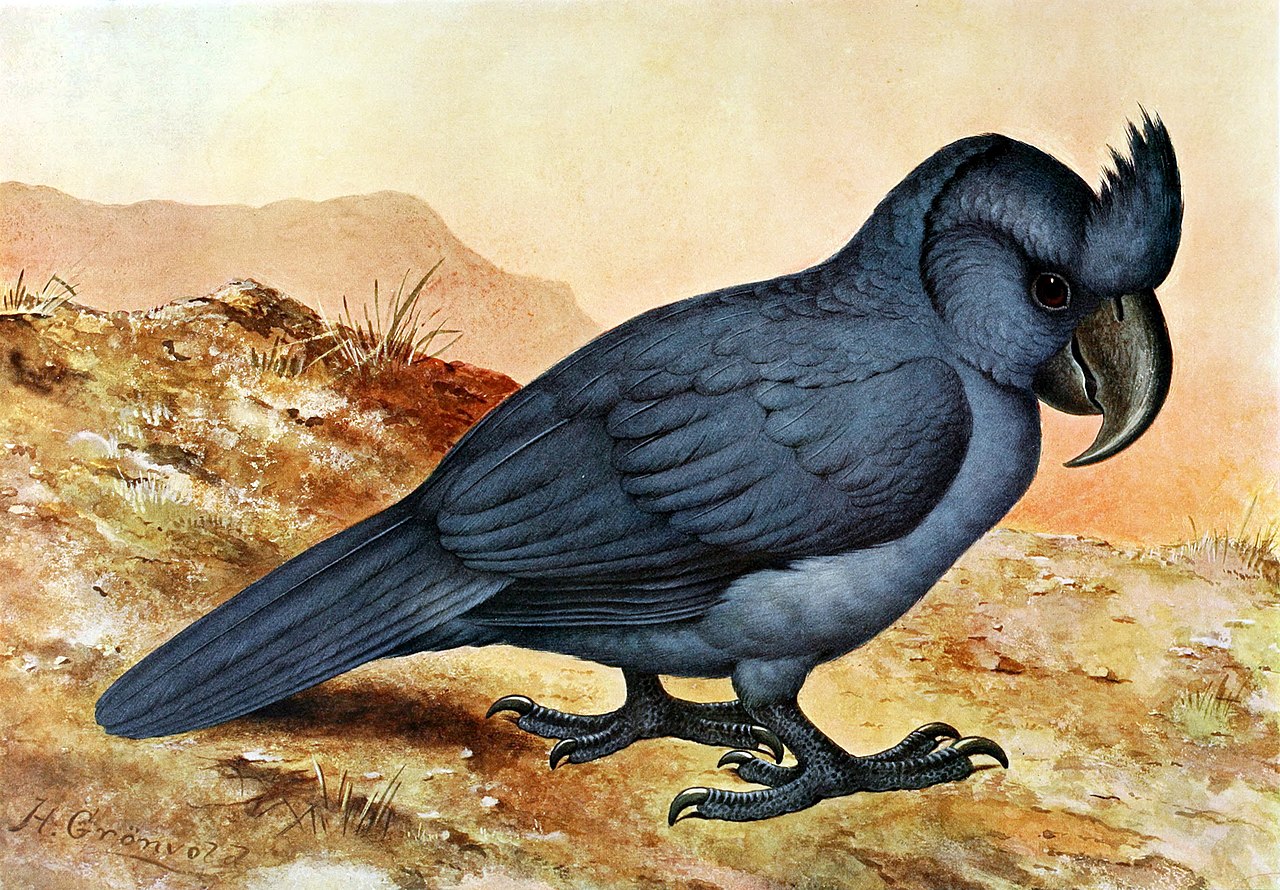
1907 restoration by Henrik Grönvold (based on the Gelderland sketch), inaccurately showing the bird as entirely blue; the body probably had a different colour in reality

Illustration based on a tracing of the Gelderland sketch, 1896

Subfossil leg bones, a mandible, and a sternum, 1893

Sketch by Sir Thomas Herbert from 1634 showing a broad-billed parrot ("Cacato"), a red rail, and a dodo

Seeds of Latania loddigesii, perhaps part of this parrot's diet

Statues in Hungary of Newton's parakeet and the broad-billed parrot
Temperament
likely wary and somewhat terrestrial
Flight Pattern
heavy-bodied, probably a weak flier with short, labored flights
Social Behavior
Historical notes imply birds occurred singly or in pairs, sometimes in small groups near feeding sites. Like many parrots, it likely nested in tree cavities, using mature native trees. Parental care would have been biparental, with prolonged care of chicks typical of large parrots.
Migratory Pattern
Resident
Song Description
Vocalizations were not recorded in detail, but it likely produced loud, harsh squawks and croaks typical of large parrots. Calls were probably used to keep contact in dense forest and to signal alarm near feeding areas.
Plumage
Based on historical depictions: predominantly dark, with dusky to bluish-grey tones and a somewhat shaggy appearance around the head and neck.
Diet
A strong, broad bill indicates a diet centered on hard fruits, nuts, and palm seeds, supplemented by softer fruits and possibly tough drupes from native trees. It likely exploited seasonal resources, cracking seeds others could not process. Ground foraging for fallen fruits may have been common. It may have played a role in seed dispersal or seed predation of several Mauritian tree species.
Preferred Environment
Feeds in mature native forest, both canopy and forest floor, especially where palms and fruiting hardwoods were present. Edge habitats and riverine forests likely provided seasonal fruiting opportunities.


