

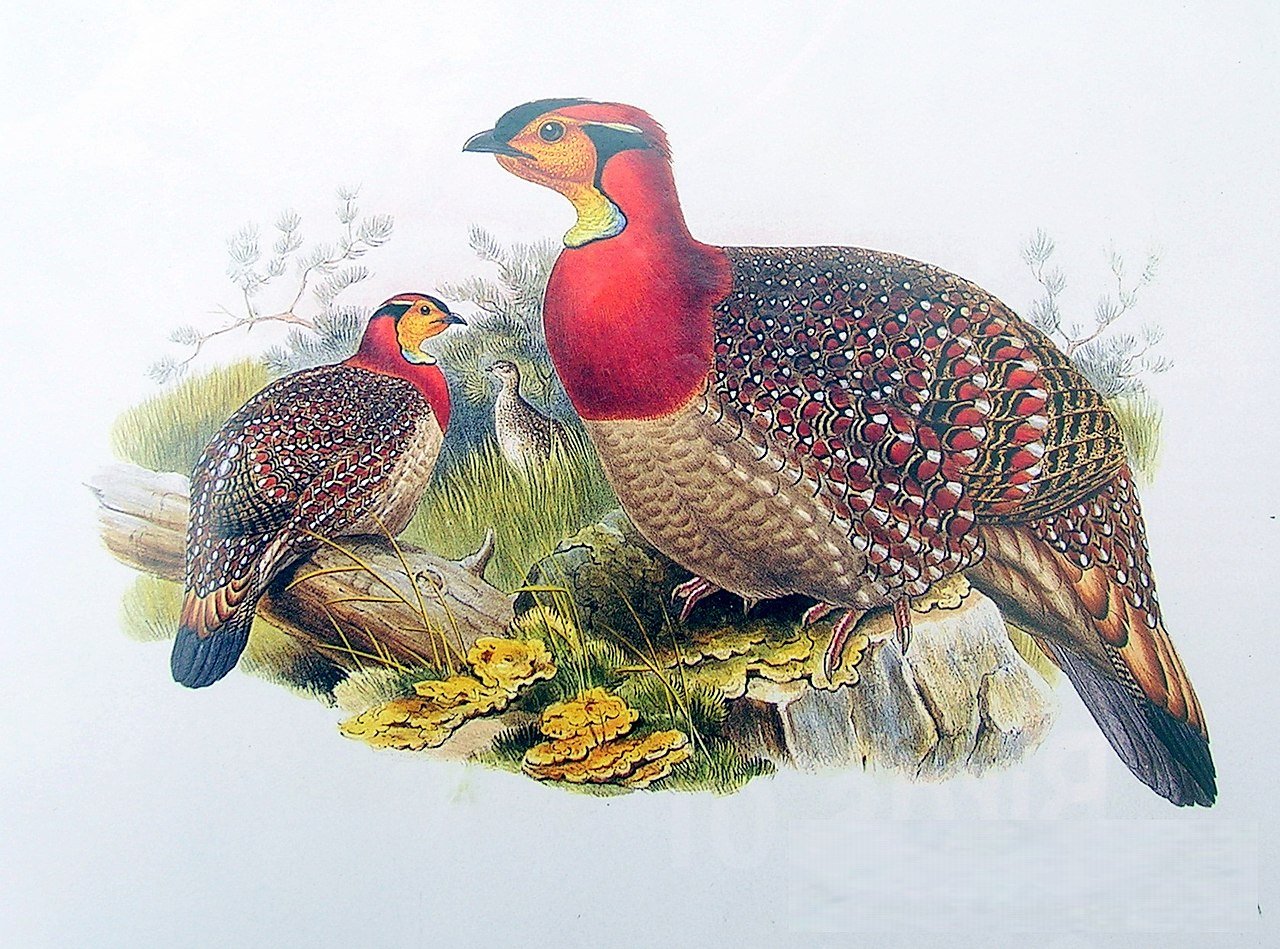
Blyth's tragopan or the grey-bellied tragopan, is a pheasant that is a vulnerable species. The common name commemorates Edward Blyth (1810–1873), English zoologist and Curator of the Museum of the Asiatic Society of Bengal. It is the state bird of Nagaland.
Region
Eastern Himalayas
Typical Environment
Occurs in the hill and montane forests of Northeast India (notably Nagaland, Arunachal Pradesh, Manipur, and Mizoram) and adjacent northern Myanmar. It inhabits dense, moist broadleaf and mixed oak–rhododendron forests with thick bamboo and shrub undergrowth. Birds favor steep slopes, ravines, and forest edges where cover is abundant. They are largely sedentary, making short elevational movements in response to weather and food availability.
Altitude Range
1200–3000 m
Climate Zone
Highland
Ease of Keeping
Beginner friendly: 2/5
Blyth's tragopan, also called the grey-bellied tragopan, is a vividly patterned Himalayan pheasant named after zoologist Edward Blyth. Males display inflatable blue facial lappets and horn-like structures during courtship. It is the state bird of Nagaland, India, and is threatened by habitat loss and hunting. Conservation efforts focus on protecting montane forests and reducing snaring.

Temperament
shy and secretive
Flight Pattern
short rapid wingbeats; bursts to low trees
Social Behavior
Typically forms monogamous pairs during the breeding season and is otherwise solitary or in loose, small groups. Males perform elaborate courtship displays, fanning the tail and inflating blue lappets and horns. Unusual among pheasants, tragopans frequently nest off the ground in trees or large shrubs.
Migratory Pattern
Resident
Song Description
The male gives loud, ringing whistles and grating, crowing calls that carry through forested valleys during the breeding season. Contact calls are softer clucks and whistles used to maintain pair cohesion.
Plumage
Male is striking orange-red with dense white ocelli (spotting) and a contrasting grey belly; head dark with vivid blue facial skin and inflatable lappets during display. Female is mottled brown with buff and black patterning for excellent camouflage. Both sexes have stout bodies and short rounded wings typical of forest pheasants.
Diet
Feeds on a mix of fruits, berries, seeds, tender leaves, shoots (including bamboo), buds, and flowers. It also takes invertebrates such as insects, worms, and snails, especially in the breeding season when protein needs rise. Birds may occasionally forage in fallow fields or near forest edges.
Preferred Environment
Forages on the forest floor and along edges, often near dense bamboo, rhododendron thickets, and streamside vegetation. Uses cover to move discreetly, emerging into small clearings to feed.


