

The blue-capped manakin is a species of bird in the family Pipridae. The males have a brilliant blue cap; some have black, others have green body plumage, but the relationship between the subspecies is not well understood.
Region
Northern South America (Chocó and western Amazon Basin) and eastern Panama
Typical Environment
Found in humid tropical lowland and foothill forests from eastern Panama through western Colombia and Ecuador into the western and central Amazon of Peru, Bolivia, Brazil, and southern Venezuela. It favors terra firme and várzea forest, edges, and second growth with abundant fruiting shrubs. Most records are from the shaded understory and lower midstory. Populations are patchy where suitable intact forest persists.
Altitude Range
Sea level to 1300 m
Climate Zone
Tropical
Ease of Keeping
Beginner friendly: 1/5
Males perform elaborate lek displays, including rapid fluttering and audible wing snaps, to attract females. The striking blue cap contrasts with either black or green body plumage depending on the population, and the taxonomy of these forms is still being studied. As mainly fruit-eaters, they are important seed dispersers in tropical forests.


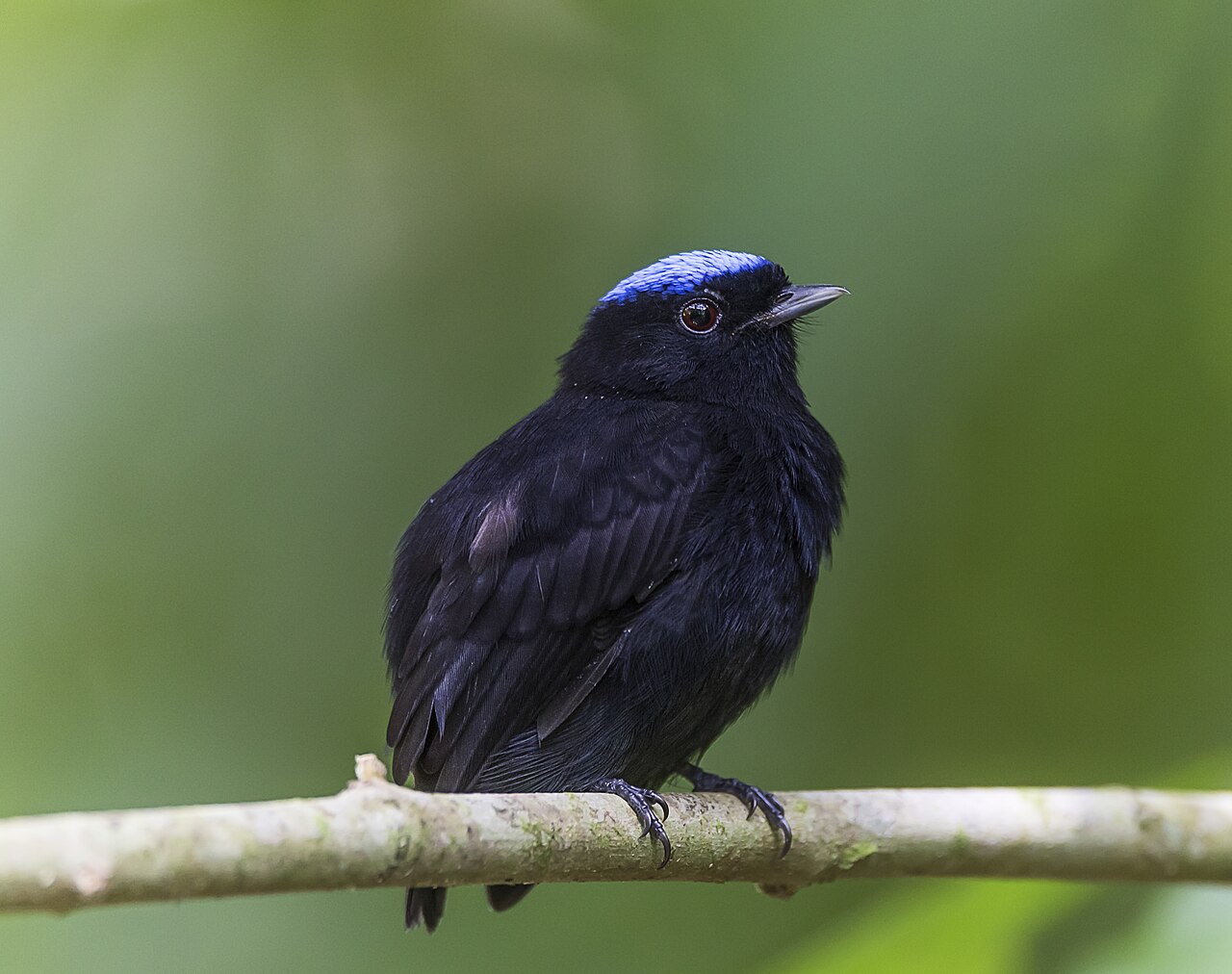
Blue-crowned manakin with male plumage
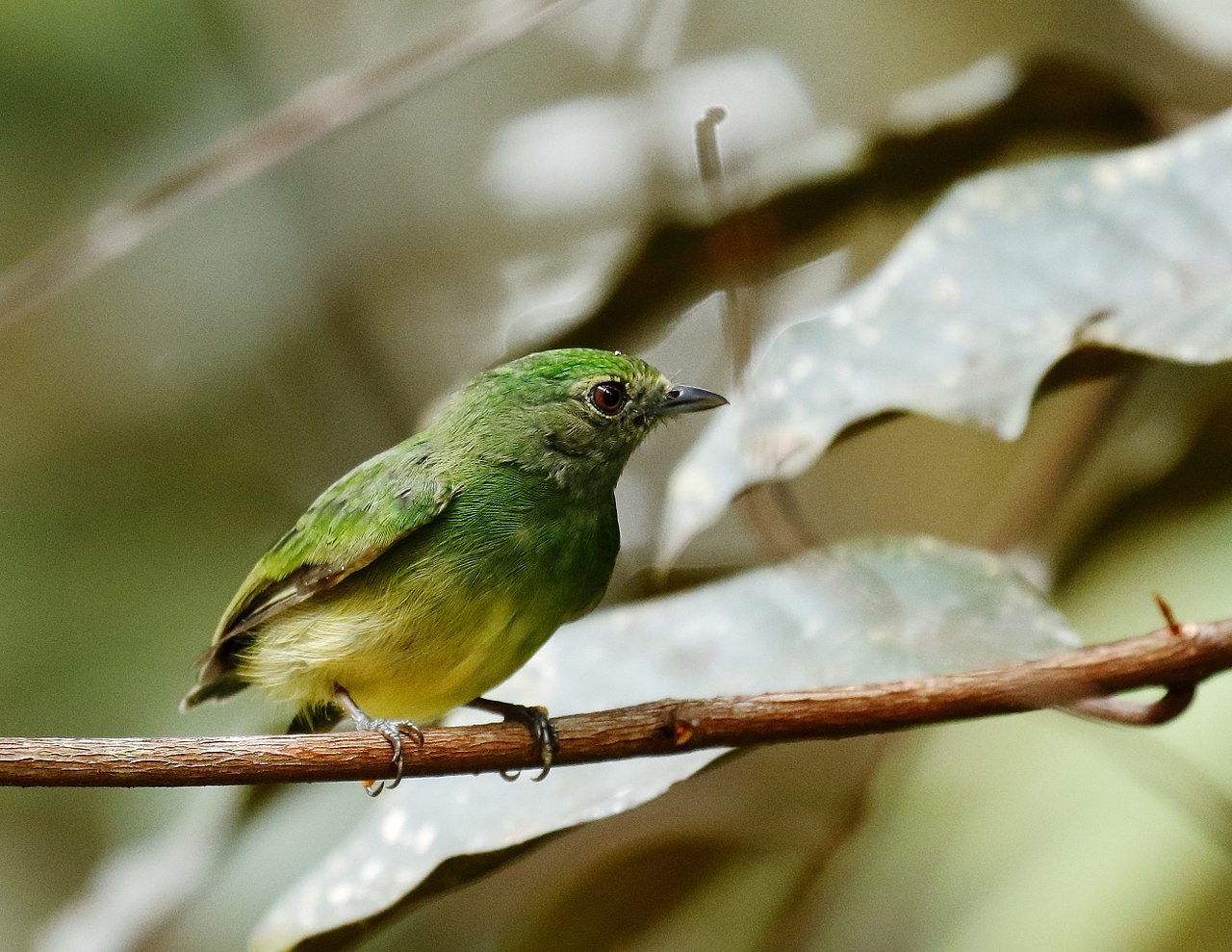
Blue-crowned manakin with female plumage


Blue-capped manakin nest placed in a horizontally forked branch with one egg.
Temperament
shy but active
Flight Pattern
short rapid wingbeats
Social Behavior
Males gather at leks where each defends a small display perch and courts passing females with hops, darts, and wing snaps. The species is polygynous; females select mates at leks and then nest alone. Nests are small, cup-shaped, and placed low in the understory where the female incubates and raises the young without male assistance.
Migratory Pattern
Resident
Song Description
Vocalizations are soft, thin whistles interspersed with high, buzzy notes. Displays include sharp mechanical snaps produced by the wings, often given in rapid series during courtship.
Plumage
Male with a brilliant, glossy blue cap and otherwise uniform body that is either velvety black or green depending on population; female is olive-green with a paler belly and lacks the blue crown. Feathers are smooth and compact in the understory-adapted style typical of manakins.
Diet
Primarily small, soft fruits and berries plucked from understory and midstory plants, which are swallowed whole and later dispersed as seeds. Supplements diet with occasional small insects and other arthropods gleaned from foliage or caught in short sallies. Feeding is usually solitary or in loose association with other frugivores near fruiting trees.
Preferred Environment
Understory thickets, forest gaps, and edges with fruiting shrubs and small trees. Also uses second growth and riparian corridors where fruit is abundant.


