

The blue-capped redstart is a species of bird in the family Muscicapidae.
Region
Central Asia to Western Himalayas
Typical Environment
Breeds in montane regions including the Tian Shan, Pamir, and Hindu Kush, extending to the western Himalayas. Prefers forest edges, subalpine meadows, juniper and birch scrub, and rocky slopes near water. In winter it descends to foothills, valleys, and open woodland, including orchards and hedgerows. It uses perches such as boulders, shrubs, and fence posts for aerial sallies.
Altitude Range
800–3800 m
Climate Zone
Highland
Ease of Keeping
Beginner friendly: 2/5
The blue-capped redstart is a small Old World flycatcher that flicks and fans its rufous tail while foraging, a classic redstart trait. Males show a distinctive bluish crown that contrasts with warm rufous underparts, while females are more subdued and brownish. It breeds in high montane zones of Central Asia and moves to lower elevations and the Indian subcontinent in winter. Like many redstarts, it often hunts by sallying out from exposed perches to snatch insects mid-air.

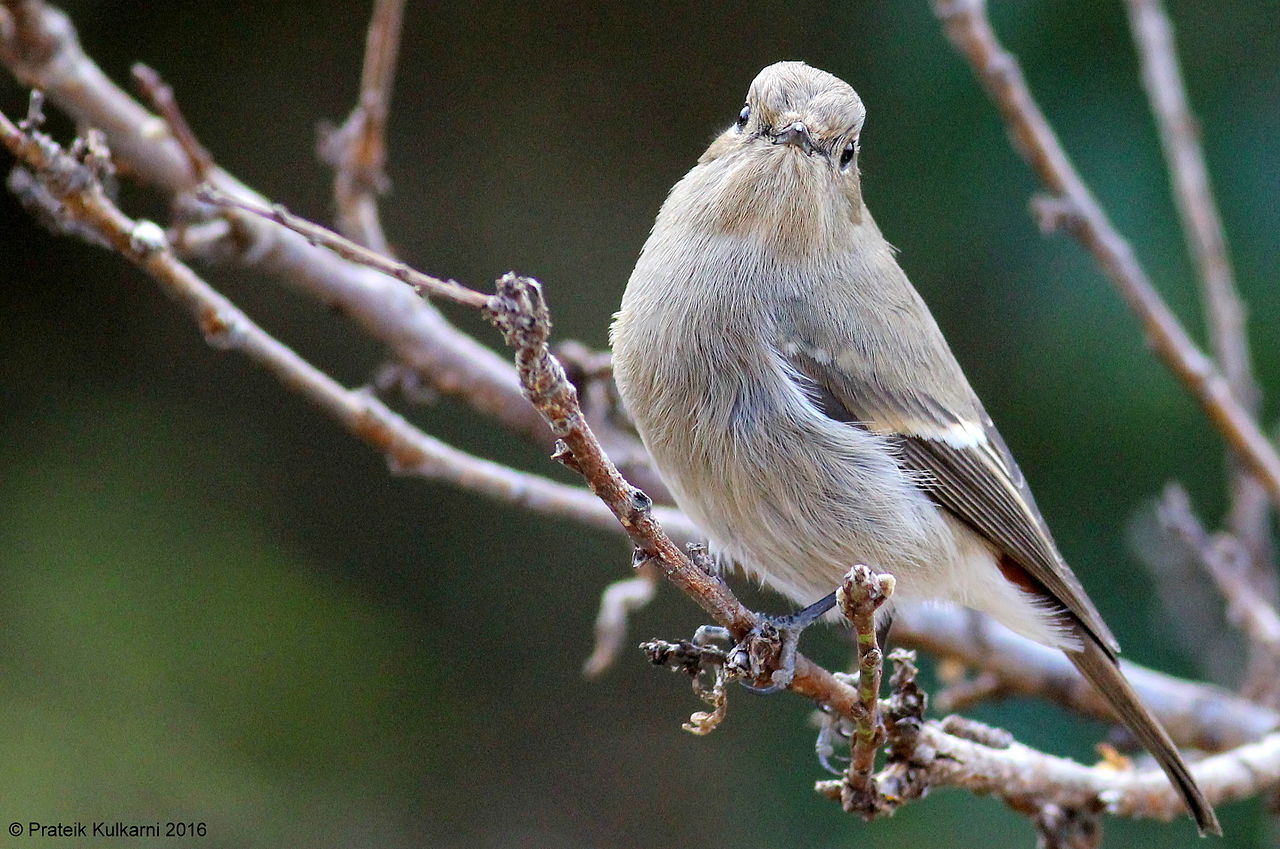
Blue-capped Redstart (female) at Pangot, Nainital, Uttarakhand, India
Temperament
active and alert
Flight Pattern
short rapid wingbeats with frequent sallies
Social Behavior
Generally solitary or in pairs during breeding, with males defending small territories. Nests are placed in crevices, banks, or sheltered cavities close to the ground. Outside the breeding season it may join loose mixed flocks in foraging areas and tolerates conspecifics more readily.
Migratory Pattern
Seasonal migrant
Song Description
A soft, high-pitched warble with clear whistles and short trills, delivered from perches or during brief song flights. Calls include a sharp tick or tac note, often given when alarmed.
Plumage
Male shows a bluish crown and nape with darker face and upperparts, bright rufous-orange underparts, and a rufous tail with a darker tip; female is warm brown above with buffy underparts and a rufous tail. Both sexes are slim, with fine, pointed bills and often display tail-flicking.
Diet
Feeds primarily on small insects such as flies, beetles, caterpillars, and spiders. Captures prey by sallying from low to mid-level perches and also gleans from foliage and ground. In colder months it may take small berries to supplement when insects are scarce.
Preferred Environment
Forages along forest edges, scrubby slopes, riverine thickets, and subalpine meadows where scattered perches are available. In winter it frequents open woodland, orchards, and hedgerows near water.


