

The blue-billed curassow is a species of bird in the family Cracidae, the chachalacas, guans, and curassows. It is endemic to Colombia.
Region
Northern Colombia (Magdalena River basin and adjacent foothills)
Typical Environment
Occurs in humid lowland and foothill forests, favoring mature primary rainforest and well-developed secondary growth. Often associated with riverine and gallery forests with abundant fruiting trees. Uses dense understory for cover and forages along forest trails and clearings. Roosts in trees but spends most of the day on or near the ground. Highly sensitive to habitat fragmentation and hunting pressure.
Altitude Range
0–1200 m
Climate Zone
Tropical
Ease of Keeping
Beginner friendly: 1/5
The blue-billed curassow is a large cracid with a distinctive curled crest and a bright blue cere/knob at the base of the bill in males. It is a key seed disperser in Colombia’s lowland forests, helping regenerate native trees. Extremely shy and mainly ground-foraging, it prefers intact, undisturbed habitat. It is one of Colombia’s most threatened birds due to hunting and deforestation.


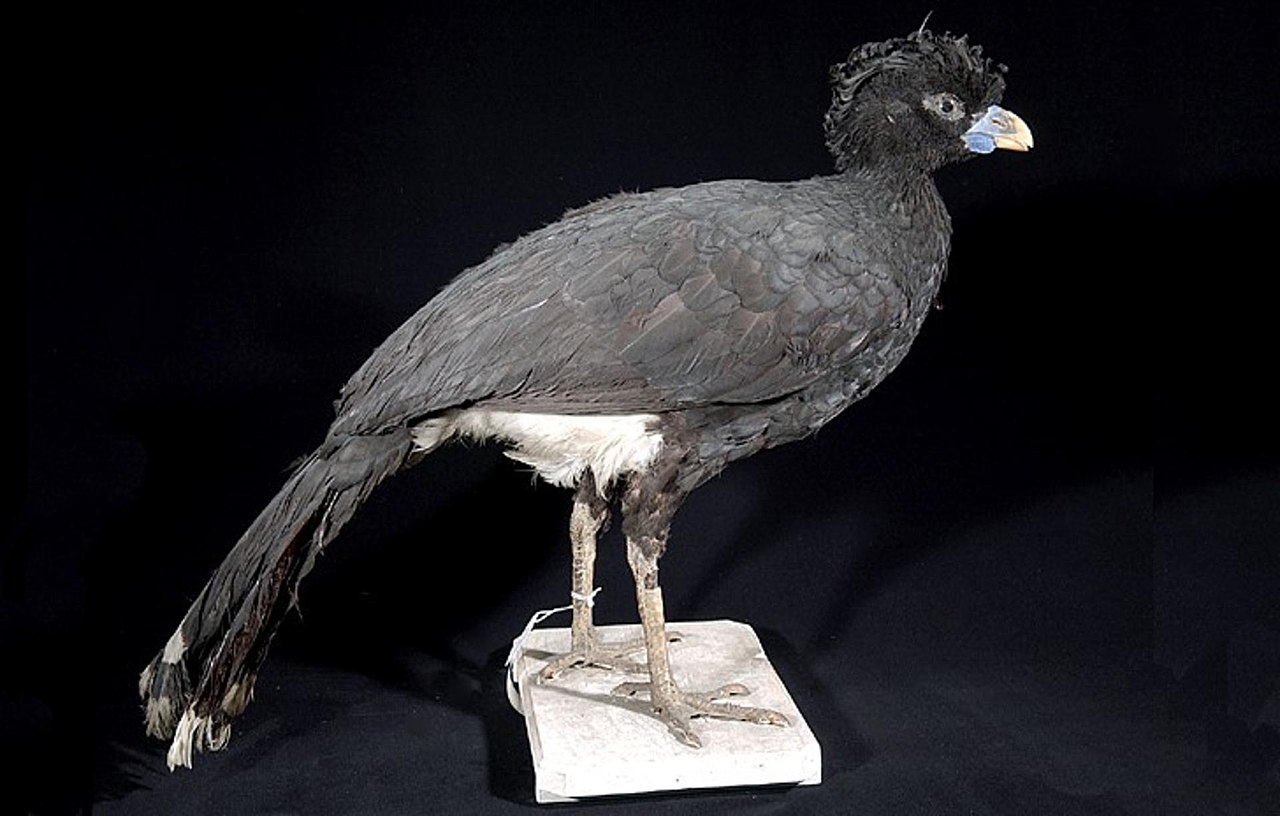
Preserved specimen in the Naturalis Biodiversity Center
Temperament
shy and wary
Flight Pattern
short rapid wingbeats; prefers running through understory
Social Behavior
Usually seen singly, in pairs, or small family groups. Thought to be largely monogamous; pairs maintain territories in suitable forest. Nests are platform-like structures placed in trees, with small clutches of 1–2 eggs. Adults lead chicks on the forest floor shortly after hatching.
Migratory Pattern
Resident
Song Description
Male gives deep, resonant booming notes at dawn that carry far through the forest. Also produces soft clucks and low grunts during contact and alarm. Vocalizations are subdued outside the breeding period.
Plumage
Male mostly glossy black with a curled black crest and contrasting white belly and tail tip; female is barred black and rufous with a rufous to buffy underbody and a smaller crest. Both sexes show a white tip to the tail; plumage appears sleek and slightly iridescent in good light.
Diet
Primarily consumes fallen fruits and seeds from a wide variety of forest trees and lianas. Supplements diet with leaves, shoots, and flowers. Also takes invertebrates such as insects and occasionally small vertebrates, especially during chick-rearing. Acts as an important seed disperser by passing viable seeds through its gut.
Preferred Environment
Forages on the forest floor and low understory, especially along fruiting tree fall zones, river edges, and quiet trails. Avoids open areas and heavily disturbed forest. Often feeds near dawn and late afternoon when human disturbance is minimal.


