

The blue-black grosbeak is a species of songbird in the family Cardinalidae.
Region
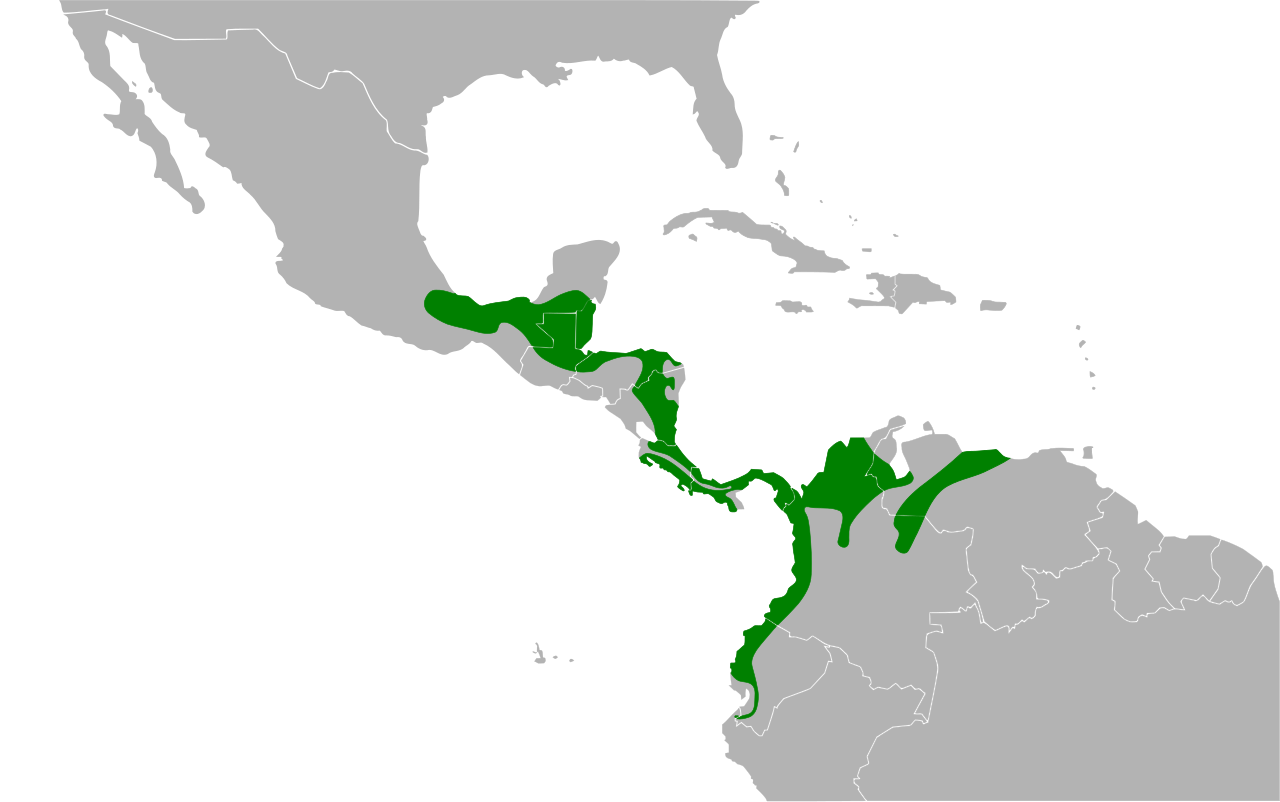
Central America and northern South America
Typical Environment
Occurs from southern Mexico through Central America (Guatemala to Panama) into northwestern South America, including Colombia, Venezuela, and parts of Ecuador. Prefers the dense understory of humid lowland and foothill forests, second growth, and thickets along rivers and streams. Frequently uses forest edges and overgrown clearings where cover is abundant. It is generally local but can be fairly common where suitable habitat persists.
Altitude Range
0–1500 m
Climate Zone
Tropical
Ease of Keeping
Beginner friendly: 1/5
The blue-black grosbeak is a skulking songbird of dense tropical understory, often heard before it is seen. Males are a striking inky blue-black, while females are warm brown, making pairs noticeably dimorphic. Its powerful conical bill is adapted for cracking hard seeds, but it also takes fruits and insects. It often keeps to shadowy thickets near streams and forest edges.




Temperament
shy and skulking
Flight Pattern
short rapid wingbeats
Social Behavior
Usually seen singly, in pairs, or small family groups within dense cover. Nests are cup-shaped and placed low in shrubs or vines in thick understory. Likely monogamous, with both parents involved in rearing young.
Migratory Pattern
Resident
Song Description
Song is a series of rich, clear whistles delivered from concealed perches. Calls include sharp metallic chips and thin seep notes, often betraying its presence in thick vegetation.
Plumage
Male is uniformly glossy blue-black with a sleek, even-toned finish; female is warm rufous-brown with softer, plainer texture and subtle buffy tones. Both sexes show a heavy, deep-based bill typical of grosbeaks.
Diet
Consumes a mix of hard seeds, small fruits and berries, and various insects and other arthropods. Uses its robust bill to crack seeds and glean food from foliage and vine tangles. Will occasionally forage on or near the ground in leaf litter.
Preferred Environment
Feeds in dense understory, vine tangles, and shrubby edges of humid forests. Often forages along streamside thickets and overgrown clearings where cover is close.


