

The blue-and-black tanager is a species of bird in the tanager family Thraupidae. It is found in the Andes of Bolivia, Colombia, Ecuador, Peru and Venezuela, where it inhabits montane evergreen forest, dwarf forest, and secondary forest at elevations of 1,500–3,500 m (4,900–11,500 ft). It inhabits the highest altitude of any Tangara species, and is the only species from the genus that is found near the tree line. Adults are 13 cm (5.1 in) long and weigh 18 g (0.63 oz) on average, and are mostly blue with black masks, wings, and tails. The species shows slight sexual dimorphism, with females being slightly duller than males.
Region
Andes Mountains
Typical Environment
Found in the Andes of Venezuela, Colombia, Ecuador, Peru, and Bolivia. It inhabits montane evergreen and cloud forests, dwarf (elfin) forest near the tree line, and adjacent secondary growth. The species favors forest edges, gaps, and fruiting trees where it can glean and sally for food. It often moves along mossy outer canopies and ridgelines, sometimes entering shrubby páramo ecotones.
Altitude Range
1500–3500 m
Climate Zone
Highland
Ease of Keeping
Beginner friendly: 1/5
This Andean tanager occurs at the highest elevations of any Tangara, often foraging close to the tree line. It frequents mixed-species flocks and is a reliable indicator of intact high-montane forest. Subtle sexual dimorphism is present, with females duller than males. Its tolerance of cooler, windy ridges sets it apart from many lowland tanagers.


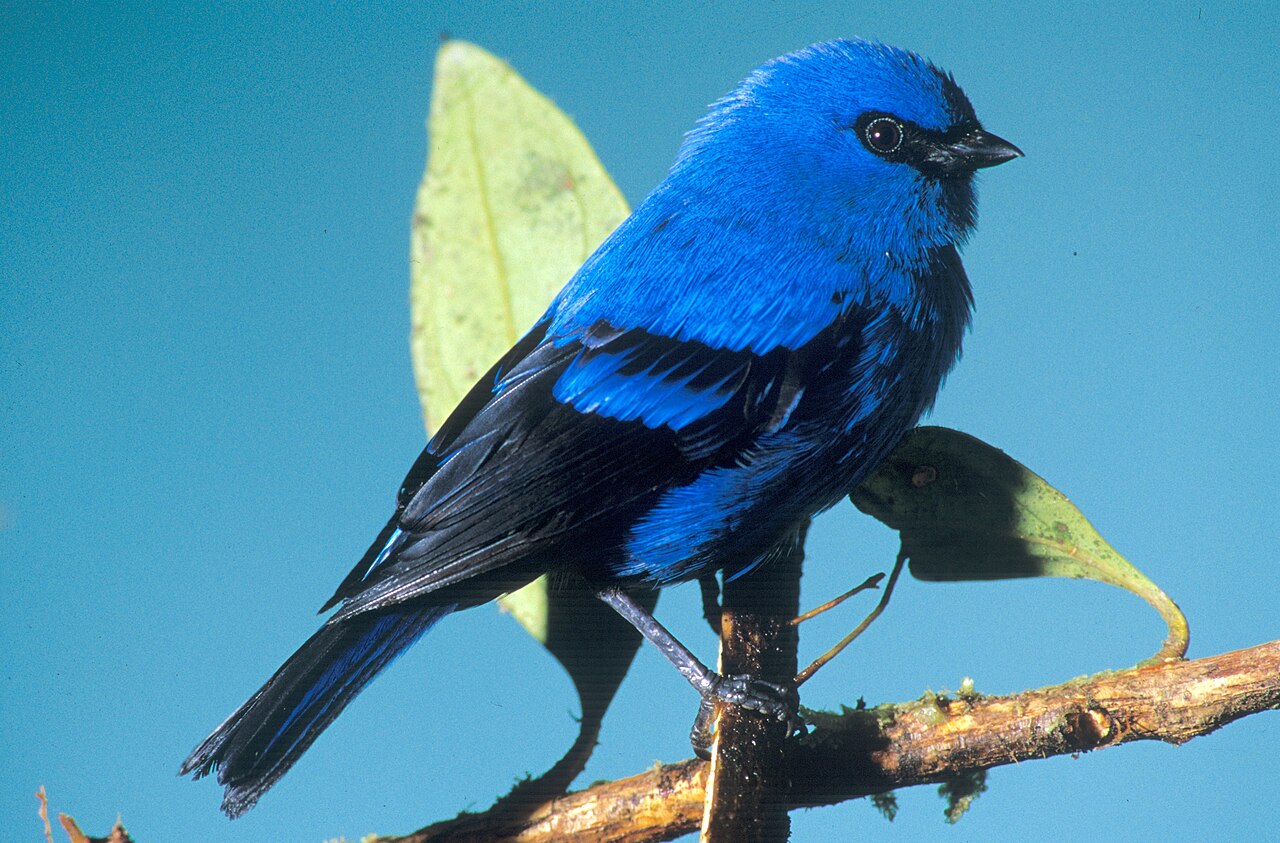
A blue-and-black tanager from Ecuador

Feeding on fruit

Dead blue-and-black tanager
Temperament
social and active
Flight Pattern
short rapid wingbeats
Social Behavior
Often travels in pairs or small groups and readily joins mixed-species flocks in the canopy. Breeding pairs are territorial around nest sites; nests are typically cup-shaped and placed in dense foliage. Clutch size is small, and both parents participate in care.
Migratory Pattern
Resident
Song Description
Song is a soft, thin twittering series of high-pitched trills and sibilant notes. Calls include sharp chips and short tsit notes given while foraging in flocks.
Plumage
Mostly bright blue to bluish-cyan with a contrasting black mask, wings, and tail; upperparts slightly darker than underparts with clean color blocks.
Diet
Consumes small fruits and berries, especially from melastomes and other montane shrubs and trees. Also takes arthropods by gleaning from leaves and twigs and occasionally by short sallies. Will probe among mosses and epiphytes for hidden insects and larvae.
Preferred Environment
Feeds in the upper to mid-canopy along forest edges, gaps, and at fruiting trees. Near the tree line it uses elfin forest, stunted woodland, and shrubby ecotones with abundant epiphytes.


