
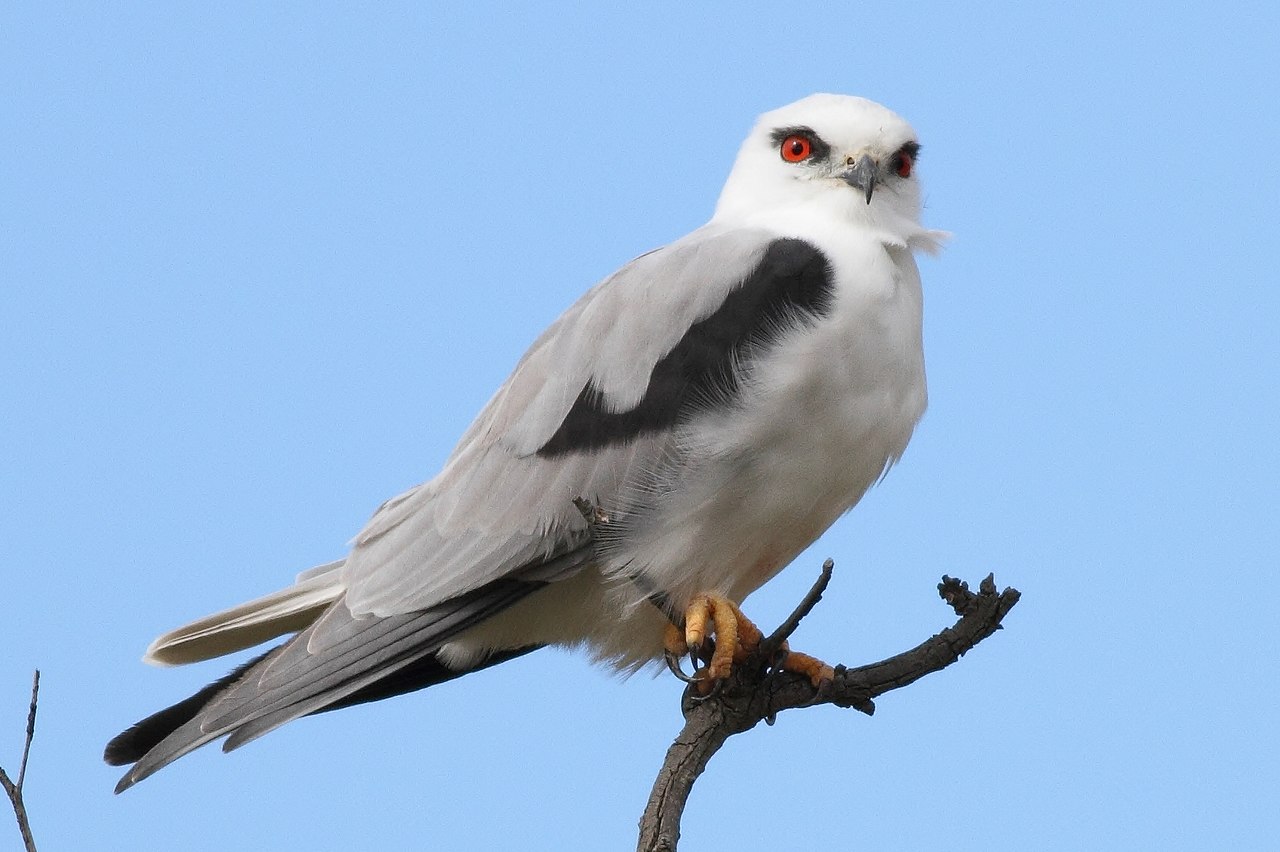
The black-shouldered kite, also known as the Australian black-shouldered kite, is a small raptor found in open habitats throughout Australia. It resembles similar species found in Africa, Eurasia and North America, including the black-winged kite, a species that has in the past also been called "black-shouldered kite". Measuring around 35 cm (14 in) in length, with a wingspan of 80–100 cm (31–39 in), the adult black-shouldered kite has predominantly grey-white plumage and prominent black markings above its red eyes. It gains its name from the black patches on its wings. The primary call is a clear whistle, uttered in flight and while hovering. It can be confused with the related letter-winged kite in Australia, which is distinguished by the striking black markings under its wings.
Region
Australia and Tasmania
Typical Environment
Found across most of mainland Australia and Tasmania in open habitats including grasslands, pastoral country, farmlands, and lightly wooded plains. It favors areas with scattered trees or fencelines that provide perches, and avoids dense forests and the most barren deserts. The species often expands locally following rainfall and rodent population booms. It tolerates human-modified landscapes and is frequently seen along roadsides and over fields while hunting.
Altitude Range
Sea level to 1500 m
Climate Zone
Other
Ease of Keeping
Beginner friendly: 1/5
A small hovering kite of open country, it hunts much like a kestrel by facing into the wind and holding position (“kiting”) over prey. It responds rapidly to mouse plagues, sometimes breeding multiple times in a season when rodents are abundant. Adults show striking red eyes and bold black shoulder patches. It can be confused with the rare letter-winged kite, which has distinctive black markings under the wings.

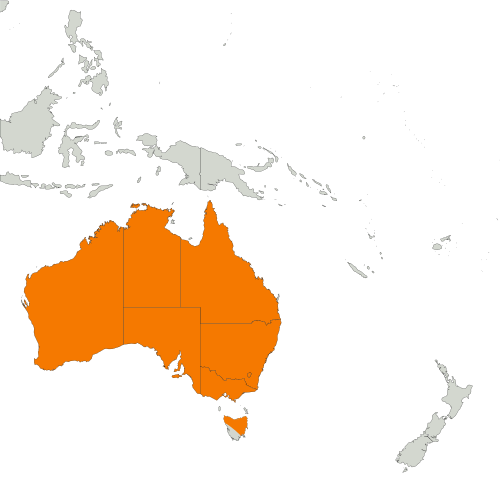

Illustration in John Gould's Birds of Australia, 1840s

Immature bird with buff markings

Perched on a branch

Flying with a mouse in its talons. Also showing small black underwing patches visible in flight

Hunting from a perch

Mature bird with prey

Hovering while hunting
Temperament
solitary and territorial
Flight Pattern
short rapid wingbeats with frequent hovering
Social Behavior
Usually seen singly or in pairs, becoming loosely gregarious where prey is abundant. Pairs build a small stick nest in a tree; the female incubates while the male provides food. They can breed opportunistically multiple times during periods of high rodent abundance. Outside the breeding season, small communal roosts may form.
Migratory Pattern
Resident
Song Description
Gives clear, whistled calls, often a repeated pee-pee or thin piping note during flight and display. Softer chirps and trills are used at the nest and between mates.
Plumage
Predominantly pale grey above and white below with bold black shoulder (carpal) patches and blackish wing tips; clean white face and underparts.
Diet
Specializes on small mammals, especially house mice, but also takes small birds, lizards, and large insects such as grasshoppers. Hunts by hovering into the wind and dropping swiftly onto prey. Will also hunt from exposed perches, making short sallies to the ground. Prey availability strongly influences local abundance and breeding.
Preferred Environment
Open country with low vegetation, pasture, croplands, roadside verges, and the edges of wetlands. Requires scattered trees, poles, or fences for perching and nesting, and open ground for detecting prey.


