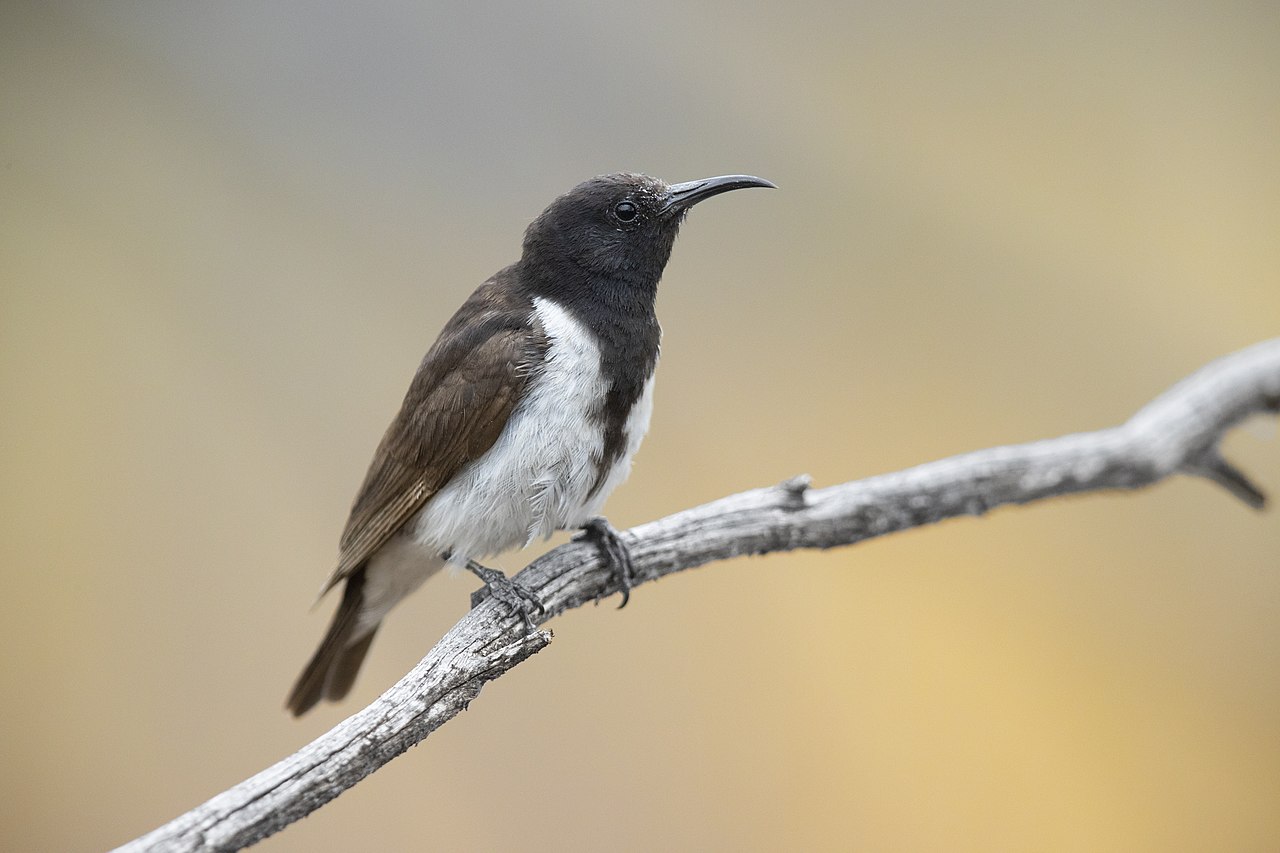
The black honey buzzard, also known as the New Britain honey buzzard, is a large raptor of the family Accipitridae. Standing at around 50 cm (20 in) tall, the adult black honey buzzard has a dark head and body, with striking white bands on its tail and flight feathers. When in flight, the buzzard can be recognized by its long wings and noticeably large secondary feathers. It is thought to be sedentary, with a range limited to the island of New Britain in Papua New Guinea, where it is endemic. Due to its remote habitat and tendency to remain in densely forested areas, there is still much to learn about this striking species.
Region
Bismarck Archipelago
Typical Environment
Endemic to the island of New Britain, where it occupies primary and mature secondary lowland and hill rainforests. It favors dense interior forest but may hunt along edges, rivers, and clearings where insect nests are accessible. The species perches high in the canopy and soars above forested ridges. It is generally sedentary with a small geographic range.
Altitude Range
Sea level to 1500 m
Climate Zone
Tropical
Ease of Keeping
Beginner friendly: 1/5
Also called the New Britain honey-buzzard, it is a secretive forest raptor specialized in raiding the nests of wasps and bees for larvae. Its broad secondaries and white tail and wing bands are striking in flight. The species is poorly known due to its preference for dense rainforest and rugged terrain on New Britain.
Temperament
secretive and wary
Flight Pattern
soaring glider with slow, deliberate wingbeats and long, steady circling over forest
Social Behavior
Typically solitary or in pairs, especially during the breeding season. Nests are likely placed high in tall forest trees, with a small clutch and extended parental care typical of accipitrids. Territorial displays may include soaring over ridges and calling.
Migratory Pattern
Resident
Song Description
Usually quiet, but gives high, thin whistles and mewing calls, often when soaring over forest. Vocalizations are sporadic and can be easily missed within dense canopy.
Plumage
Mostly dark sooty-brown to blackish with contrasting pale bands on the tail and on the flight feathers, especially the secondaries. Wings are long and broad with prominent secondary bulge, giving a distinctive silhouette.
Diet
Specializes in larvae of social insects, especially wasps and bees, extracted by tearing open nests. Also takes adult insects, grubs, and occasionally small vertebrates or carrion when available. May supplement with other invertebrates found in rotting wood or forest floor debris.
Preferred Environment
Hunts within and above dense rainforest, scanning from high canopy perches or while soaring along forested slopes. Foraging often occurs near forest edges, clearings, and river margins where insect nests are more accessible.