
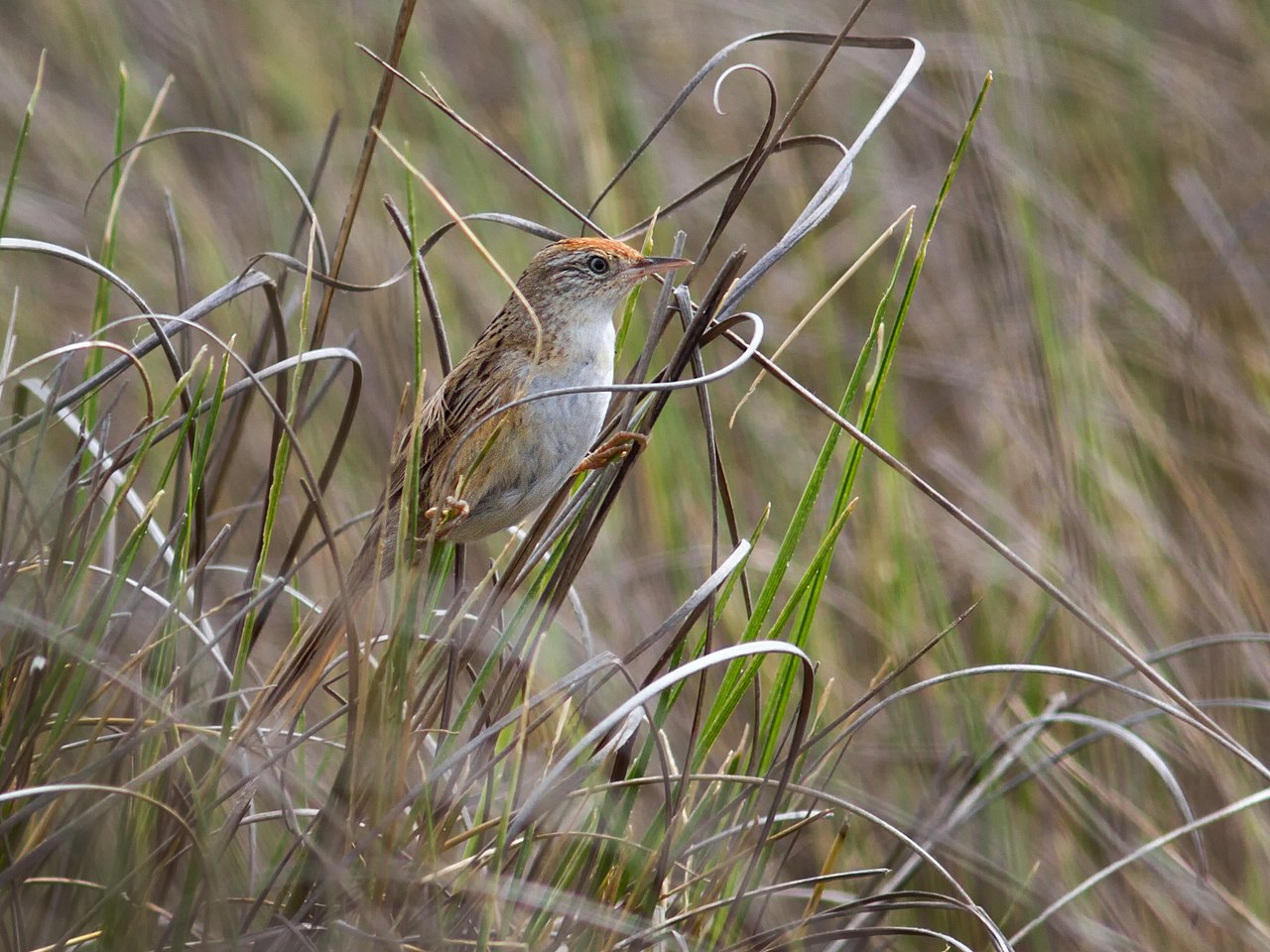
The bay-capped wren-spinetail is a species of bird in the Furnariinae subfamily of the ovenbird family Furnariidae. It is found in Argentina, Brazil, Paraguay, and Uruguay.
Region
Southern South America
Typical Environment
Occurs in lowland wetlands of Argentina, Brazil (southern), Paraguay, and Uruguay. It favors extensive marshes, lagoons, and estuarine reedbeds with dense stands of cattails, bulrushes, and rushes. The species tolerates both freshwater and brackish conditions and is most common where emergent vegetation forms continuous cover. It keeps to the interior of vegetation but will occasionally edge out along open water margins.
Altitude Range
Sea level to 800 m
Climate Zone
Temperate
Ease of Keeping
Beginner friendly: 1/5
Named for its rich bay-colored crown, the bay-capped wren-spinetail is a secretive marsh specialist that threads through dense reeds with remarkable agility. Its stiff, graduated tail feathers help it balance and maneuver among vertical stems. The species is an indicator of healthy freshwater and brackish wetlands across the Southern Cone. It often goes unseen, but its sharp, trilling song gives away its presence.


Temperament
skulking and active
Flight Pattern
short rapid wingbeats low over marsh vegetation
Social Behavior
Usually seen singly or in pairs, keeping close to cover. Pairs maintain small territories within extensive reedbeds. Nests are placed low in dense vegetation, typically a globular or domed structure of grasses; both sexes participate in building and care.
Migratory Pattern
Resident
Song Description
A sharp, rapid series of dry trills and chatters delivered from within cover or a low perch. Calls include metallic ticks and scolds used to maintain contact in dense reeds.
Plumage
Compact furnariid with a rich bay cap contrasting a darker face and paler supercilium; upperparts warm brown with subtle streaking, underparts buffy to grayish with a pale throat. Tail is long, graduated, and spiny-tipped. Wings show rufescent tones, especially in the coverts.
Diet
Primarily small insects and other arthropods gleaned from reed stems, leaf bases, and litter caught in marsh vegetation. It probes crevices and picks prey from surfaces rather than hawking in open air. Occasionally takes small snails or seeds incidentally while foraging.
Preferred Environment
Feeds within dense emergent vegetation such as cattails, bulrushes, and rushes, often just above the waterline. Forages along edges of channels and lagoons but stays under cover.


