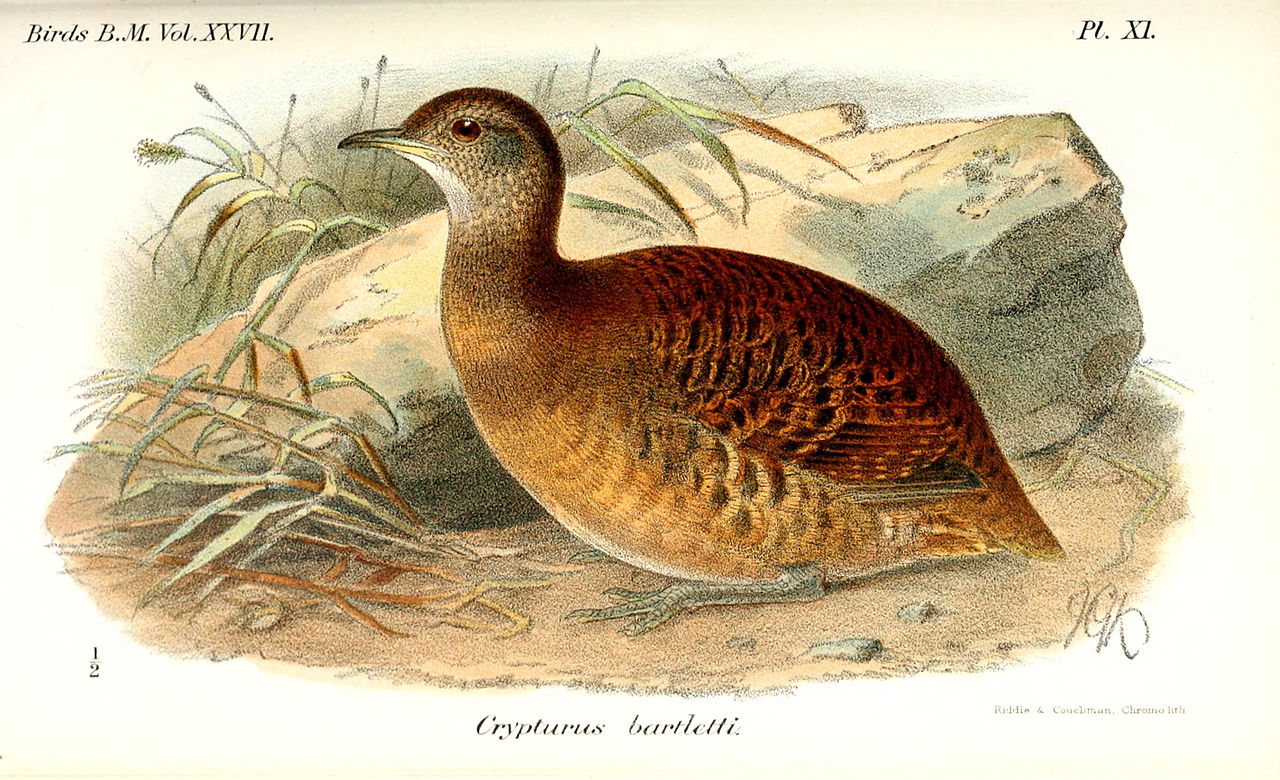
The barred tinamou is a type of tinamou commonly found in lowland moist forest in subtropical and tropical regions of northern South America.
Region
Northern Amazon Basin
Typical Environment
Occurs in lowland moist forests of southern Venezuela, adjacent eastern Colombia, and northwestern Brazil, particularly around the upper Orinoco–Rio Negro interfluvium. It inhabits terra firme rainforest as well as edges of seasonally flooded (várzea) and gallery forests. Prefers dense understory with ample leaf litter for cover. Often remains near fruiting trees where fallen fruits accumulate.
Altitude Range
0–800 m
Climate Zone
Tropical
Ease of Keeping
Beginner friendly: 1/5
Barred tinamous are shy, ground-dwelling relatives of ratites that rely on superb camouflage and stillness to avoid detection. Males perform all incubation and chick-rearing, often tending a clutch laid by multiple females. Their mournful, far-carrying whistles are a signature sound of Amazonian lowland forests at dawn and dusk.
Temperament
shy and secretive
Flight Pattern
short rapid wingbeats with explosive flush
Social Behavior
Usually solitary or in pairs, occasionally small loose groups where food is abundant. Nest is a simple ground scrape lined with leaves, well concealed in dense cover. The species is polygynandrous; males incubate and rear downy chicks from eggs laid by multiple females.
Migratory Pattern
Resident
Song Description
Gives low, mournful whistles that carry far through the forest, often as spaced single notes or short series. Vocal activity peaks at dawn and dusk, with individuals answering neighboring birds across territories.
Plumage
Overall finely barred pattern across upperparts and breast with a smooth, close-textured appearance; underparts buffy to rufescent with less distinct barring toward the belly.
Diet
Feeds mainly on fallen fruits and seeds gleaned from the forest floor. Supplements diet with insects, small arthropods, and occasional tender leaves or buds. Often follows natural fruit falls or visits areas beneath fruiting trees to pick through leaf litter.
Preferred Environment
Forages quietly on the ground in dense understory, along forest trails, and edges of treefall gaps. Frequently uses shaded, undisturbed patches with deep leaf litter where camouflage is most effective.