

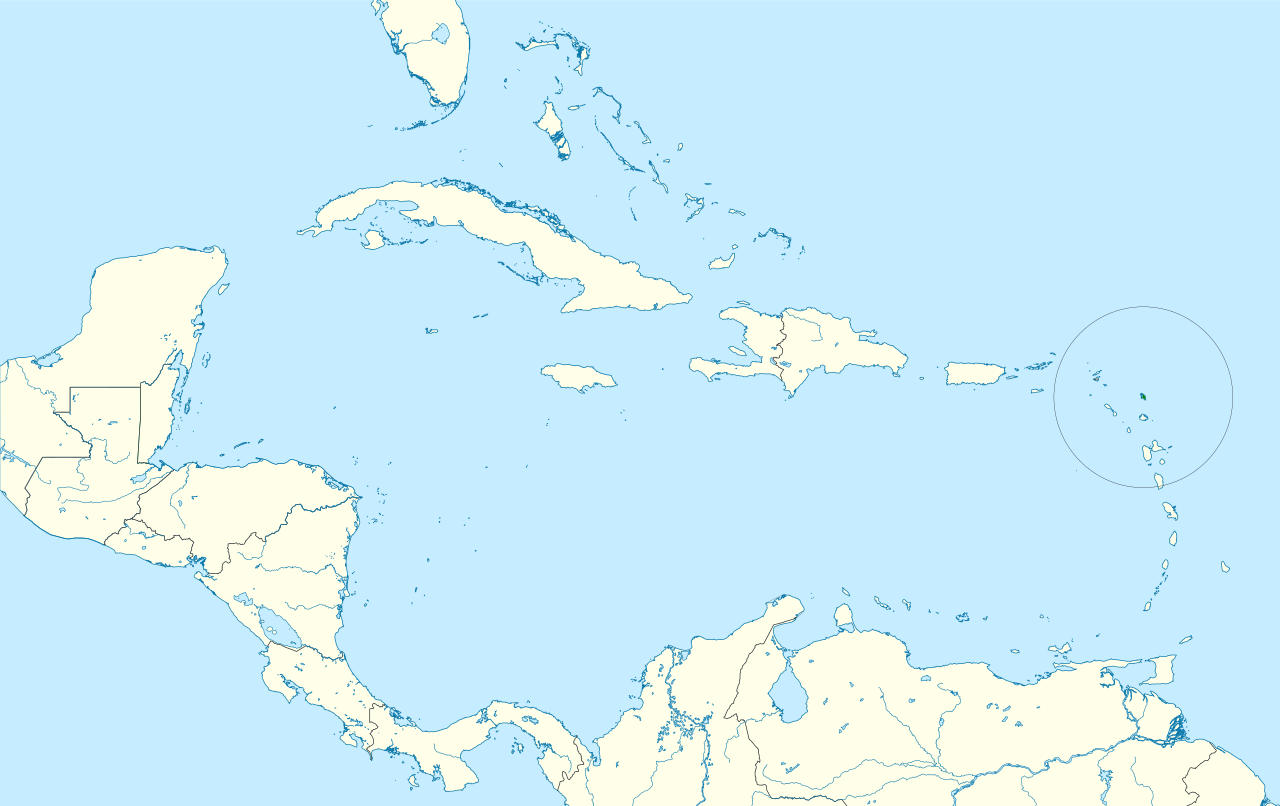
The Barbuda warbler is a species of bird in the family Parulidae. It is endemic to the island of Barbuda in Antigua and Barbuda. Its natural habitat is tropical dry shrubland near wetland areas. It is threatened by habitat loss. It once was considered a subspecies of the Adelaide's warbler. In September 2017, the warbler's habitat was massively damaged by Hurricane Irma. Despite this, the species was found to have survived the storm and its aftermath, and later surveys have indicated that the species was not significantly affected by the hurricane. However, it is still threatened by unplanned housing development, garbage dumping, and poor land-use practices.
Region
Lesser Antilles, eastern Caribbean
Typical Environment
Occurs across Barbuda in tropical dry shrubland, coastal scrub, and thickets near brackish wetlands and mangrove edges. It favors low, thorny vegetation and open scrub mosaics where it can glean insects from leaves and twigs. The species also uses secondary growth and disturbed scrub provided there is sufficient cover. It is generally absent from dense closed-canopy woodland and heavily urbanized areas.
Altitude Range
Sea level to 50 m
Climate Zone
Tropical
Ease of Keeping
Beginner friendly: 1/5
The Barbuda warbler is a small New World warbler restricted entirely to the island of Barbuda. It was long treated as a subspecies of Adelaide’s warbler but is now recognized as a distinct species. It proved resilient to the extensive habitat damage from Hurricane Irma in 2017, with surveys showing little long-term impact on numbers. Ongoing threats include unplanned development, garbage dumping, free-roaming livestock, and poor land-use practices in its dry-scrub habitats.

Temperament
active and alert; territorial during breeding
Flight Pattern
short rapid wingbeats with brief, flitting hops between perches
Social Behavior
Typically seen as singles or pairs, especially during the breeding season when pairs defend small territories. Nests are cup-shaped and placed low in shrubs or thorny vegetation. Outside the breeding season it may join loose mixed flocks with other small passerines but remains fairly inconspicuous in dense scrub.
Migratory Pattern
Resident
Song Description
A high, thin series of trills and buzzy phrases reminiscent of Adelaide’s warbler, delivered from exposed perches in scrub. Calls include sharp chips used during foraging and contact between mates.
Plumage
Crisp, clean warbler with gray upperparts, bright yellow throat and breast fading to a whitish belly, and two distinct white wing bars. Face shows a yellow cheek with a dark lores line and subtle eye markings. Underparts are mostly yellow anteriorly with pale undertail coverts; tail often flashed with white edges in flight.
Diet
Primarily takes small arthropods such as caterpillars, beetles, bugs, and spiders. It gleans prey from leaves and twigs and occasionally makes short sallies to snatch flying insects. Foraging is deliberate but lively, working methodically through low shrubs and thorn scrub. It may exploit insect flushes after rain or disturbance.
Preferred Environment
Feeds in low, thorny scrub, coastal coppice, and edges of mangroves and wetlands where foliage is sparse and accessible. Often forages 0.5–3 m above ground and uses open patches interspersed with dense cover.


