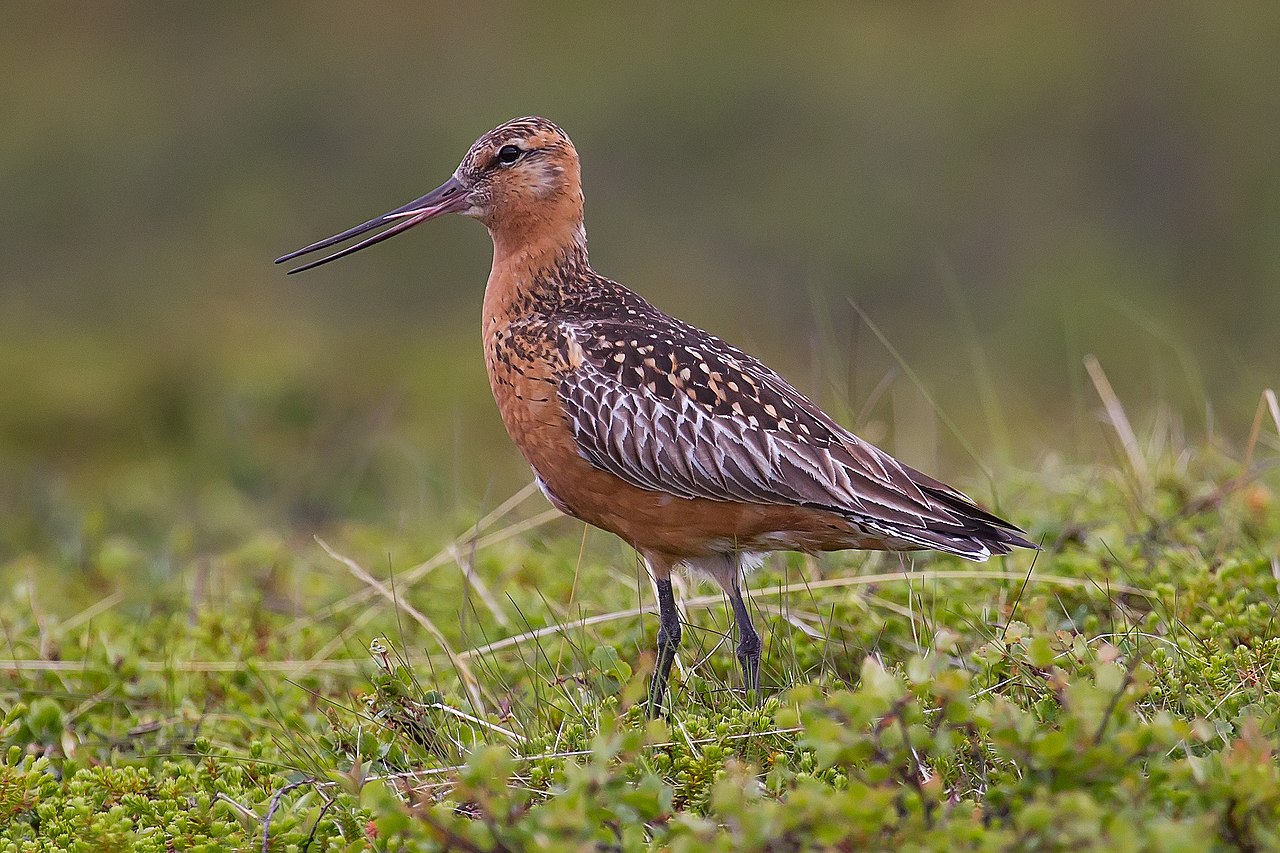
The bar-tailed cuckoo-dove or black-billed cuckoo-dove is a species of bird in the family Columbidae. It is native to New Guinea and the Bismarck Archipelago. It is rated as a species of least concern on the International Union for Conservation of Nature Red List of Endangered Species.
Region
Melanesia
Typical Environment
Occurs widely across New Guinea and on islands of the Bismarck Archipelago, inhabiting hill and montane forests, forest edges, and secondary growth. It uses ridgelines, clearings with tall trees, and disturbed forest where fruit is abundant. Birds typically forage in the mid- to upper canopy but may descend to lower strata or the forest floor to pick fallen fruits. It is often recorded around fruiting figs and laurels and can persist in partially logged habitats.
Altitude Range
200–2500 m
Climate Zone
Highland
Ease of Keeping
Beginner friendly: 1/5
Also known as the black-billed cuckoo-dove, it is a long-tailed forest pigeon native to New Guinea and the Bismarck Archipelago. It frequents hill and montane forests and often gathers quietly at fruiting trees. Its tail shows distinct dark barring that gives the species its common name. The IUCN currently lists it as Least Concern due to its wide range and tolerance of some habitat disturbance.
Temperament
shy and retiring
Flight Pattern
fast direct flight with whirring wingbeats
Social Behavior
Often seen singly, in pairs, or small loose groups at fruiting trees. Pairs form during the breeding season and defend small areas around nest sites. The nest is a flimsy platform of twigs placed in a tree or dense shrub, typically with a single white egg; both sexes share incubation and care.
Migratory Pattern
Resident
Song Description
Song is a series of deep, resonant coos delivered at a measured pace, often from within dense foliage. Calls include soft hoots and low booming notes that can carry through montane forest valleys.
Plumage
Overall warm rufous-brown to chestnut-brown with a slight purplish or coppery gloss on the neck; tail long with bold dark barring across the outer feathers.
Diet
Primarily eats small fruits and berries, especially figs and fruits of laurels and other forest trees. It swallows small fruits whole and may also take seeds and soft drupes. Occasionally it forages on fallen fruit on the forest floor. Regurgitated crop contents are used to feed the nestling.
Preferred Environment
Feeds in the mid- to upper canopy of hill and montane forests, at forest edges, and in secondary growth with fruiting trees. Also visits clearings, ridgelines, and tall roadside trees when fruiting.