
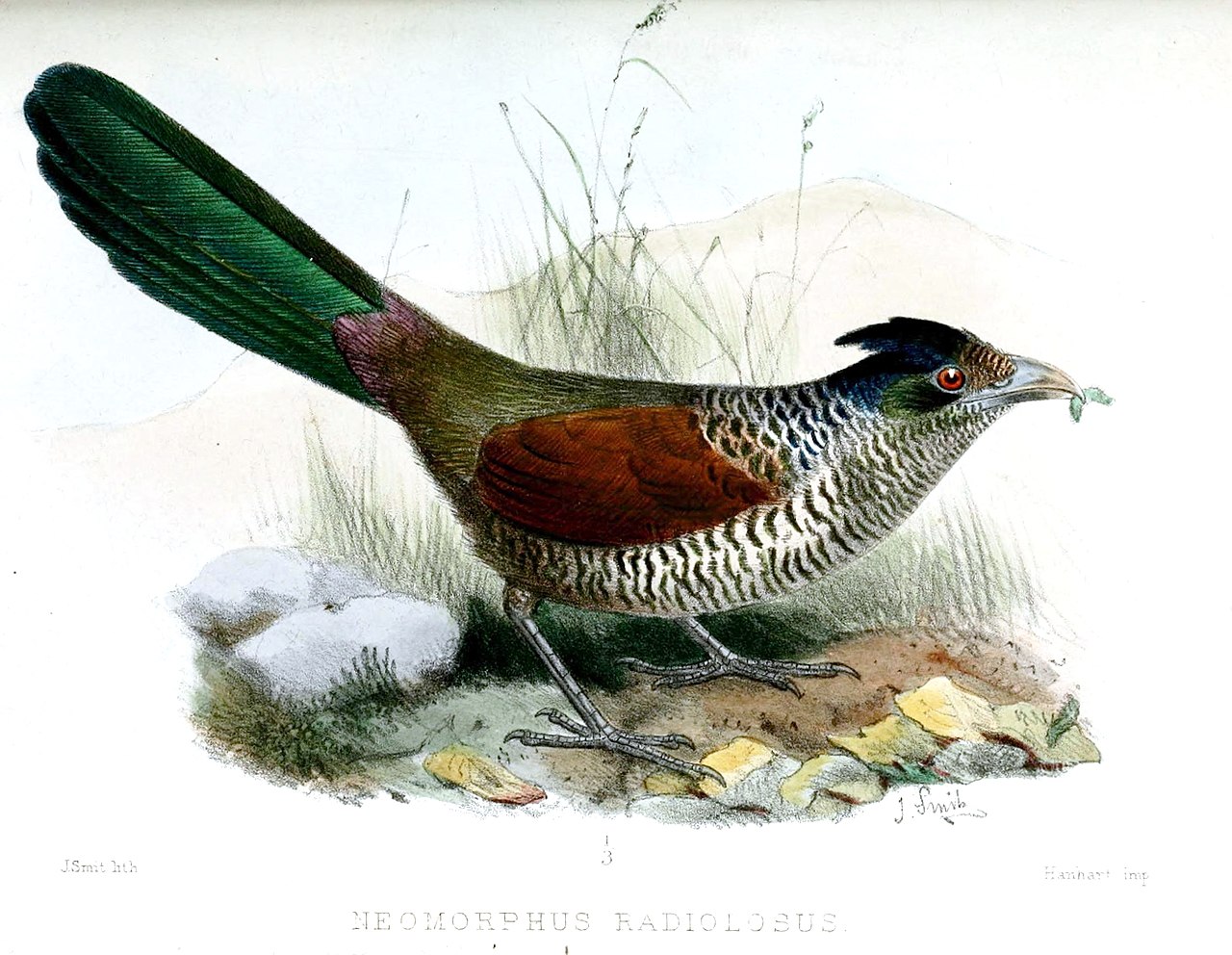
The banded ground cuckoo is an endangered species of cuckoo in the tribe Neomorphini of subfamily Crotophaginae. It is found in Colombia and Ecuador.
Region
Chocó–Andean foothills of western Colombia and northwestern Ecuador
Typical Environment
Occurs in primary and older secondary humid rainforest on the west (Pacific) slope of the Andes. Favors dense understory on ridges, ravines, and along shaded stream courses, where it moves quietly on the forest floor. Most frequent in relatively intact, little-disturbed tracts with closed canopy and deep leaf litter. Regularly attends swarms of army ants and follows large mammals to exploit disturbed prey.
Altitude Range
200–1200 m
Climate Zone
Tropical
Ease of Keeping
Beginner friendly: 1/5
This elusive terrestrial cuckoo often follows army-ant swarms and even peccary herds to snatch prey flushed from the leaf litter. It is among the rarest Neotropical ground-cuckoos and is highly sensitive to forest fragmentation. Its booming, low-frequency calls can carry far through dense rainforest. Conservation hinges on protecting remaining tracts of Chocó foothill forest in Colombia and Ecuador.


Temperament
shy and elusive
Flight Pattern
mostly runs; short rapid low flights when flushed
Social Behavior
Usually solitary or in pairs, moving quietly through understory while probing leaf litter. Likely monogamous; nests are placed off the ground in dense vegetation or low in trees, with both parents participating in care. Clutch is small, and breeding is tied to rainy-season food peaks.
Migratory Pattern
Resident
Song Description
Gives deep, resonant booming hoots that carry through forest, often in spaced series. Also produces gruff grunts and bill-clacking near ant swarms or when agitated.
Plumage
Upperparts dark bronzy-brown with a subtle greenish sheen; crown often slightly crested. Underparts boldly barred black and buff from breast to belly, with a paler throat. Long, graduated tail darker and glossy, wings rounded; overall gives a banded, earth-toned appearance well suited to the forest floor.
Diet
Primarily takes arthropods such as large insects, spiders, centipedes, and cockroaches, often seized as they flee ant swarms. Also consumes small vertebrates including frogs, lizards, and small snakes. Will opportunistically take fallen fruits and berries but animal prey dominates.
Preferred Environment
Forages on the forest floor in intact humid rainforest, especially along trails, creek margins, and around army-ant swarms. Frequently shadows peccaries or other large mammals to capture prey they disturb.


