

The austral negrito or Patagonian negrito is a species of bird in the family Tyrannidae, the tyrant flycatchers. It is found in Argentina, Bolivia, Brazil, Chile, Paraguay, and Uruguay and has occurred as a vagrant in Peru and on the Falkland Islands.
Region
Southern South America
Typical Environment
Breeds mainly in southern Chile and Argentina across Patagonian steppe, marshes, and coastal lagoons. In the non-breeding season it spreads north through Uruguay, Paraguay, southern Brazil, and Bolivia, and is an occasional vagrant to Peru and the Falkland Islands. It favors open, wet habitats including lake margins, bogs, estuaries, damp meadows, and flooded pastures. Birds often use low exposed perches such as reeds, posts, and stones near water. It tolerates moderately disturbed wetlands and agricultural landscapes.
Altitude Range
Sea level to 1500 m
Climate Zone
Temperate
Ease of Keeping
Beginner friendly: 1/5
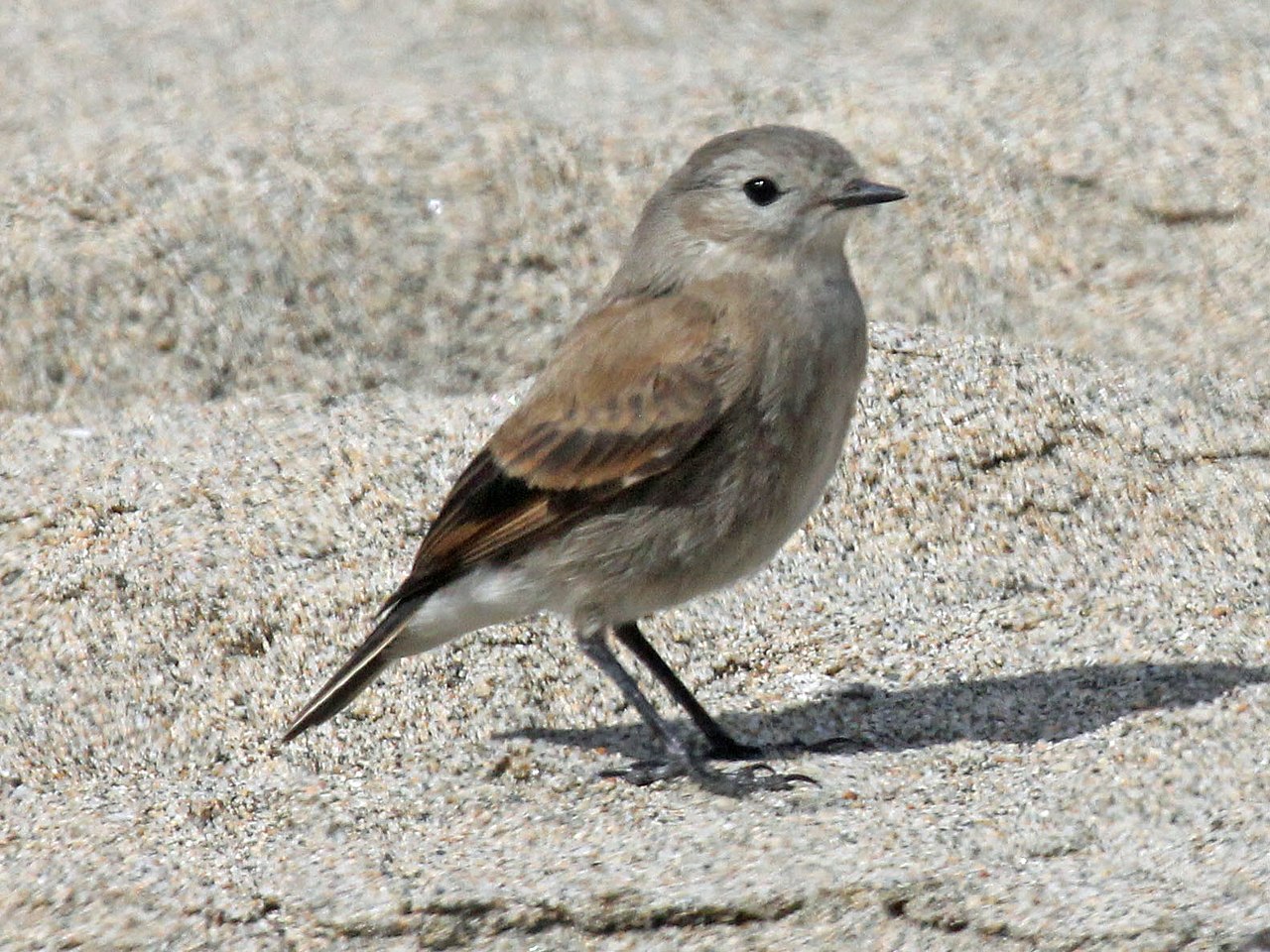
Males are mostly black with a striking rufous rump and tail that flash in flight, while females are brown and streaked for camouflage. It frequents open wetlands and coastal edges, often perching on reeds or fence posts to sally for insects. After breeding in southern Chile and Argentina, many birds move north in the austral winter to Uruguay, Paraguay, southern Brazil and Bolivia. It adapts well to human-altered wet grasslands such as rice fields and pastures.


Temperament
social and active
Flight Pattern
short rapid wingbeats, low over water
Social Behavior
Typically seen singly or in small groups, becoming more gregarious outside the breeding season. Pairs form in spring, with males performing brief display flights and tail-fanning. Nests are placed low in grasses or reeds near water, and both parents attend the young.
Migratory Pattern
Seasonal migrant
Song Description
Vocalizations are simple and thin, with high, sharp chips and short twittering phrases. Males give more frequent calls during display and territorial interactions.
Plumage
Male glossy black with rich rufous lower back and tail; wings dark. Female brown to gray-brown with fine streaking and paler underparts, showing a warmer tail. Both sexes have a small, slender bill and dark legs.
Diet
Primarily small flying and ground-dwelling insects such as flies, beetles, and ants, caught by short sallies or gleaned from low vegetation. It also takes aquatic invertebrates along muddy edges and shallow pools. Foraging is opportunistic and often concentrated where insects are dense, such as around livestock or emergent vegetation.
Preferred Environment
Feeds along wet grasslands, marsh edges, muddy shorelines, and shallow lagoons. Commonly uses perches like reeds, posts, or stones to launch short foraging flights and then returns to the same vantage point.


