

The Atlantic canary, known worldwide simply as the wild canary and also called the island canary, common canary, or canary, is a small passerine bird belonging to the genus Serinus in the true finch family, Fringillidae. It is native to the Canary Islands, the Azores, and Madeira. Wild birds are mostly yellow-green, with brownish streaking on the back. The species is common in captivity and a number of colour varieties have been bred.
Region
Macaronesia (Canary Islands, Azores, Madeira)
Typical Environment
Occurs across oceanic islands of the Northeast Atlantic, inhabiting open woodlands, shrublands, laurel forest edges, farmland mosaics, and urban parks and gardens. It is particularly common in areas with scattered trees and seed-rich ground cover. The species uses orchards and plantations, including vineyards and citrus groves. It avoids dense interior forest but frequents edges and clearings. Readily adapts to human-modified habitats where water and seeding plants are available.
Altitude Range
Sea level to 1700 m
Climate Zone
Subtropical
Ease of Keeping
Beginner friendly: 4/5
The Atlantic canary is the wild ancestor of the domesticated canary kept worldwide for its melodious song and varied color morphs. Males are brighter yellow and sing more complex songs, especially during the breeding season. It thrives in a wide range of island habitats and readily visits gardens and orchards.

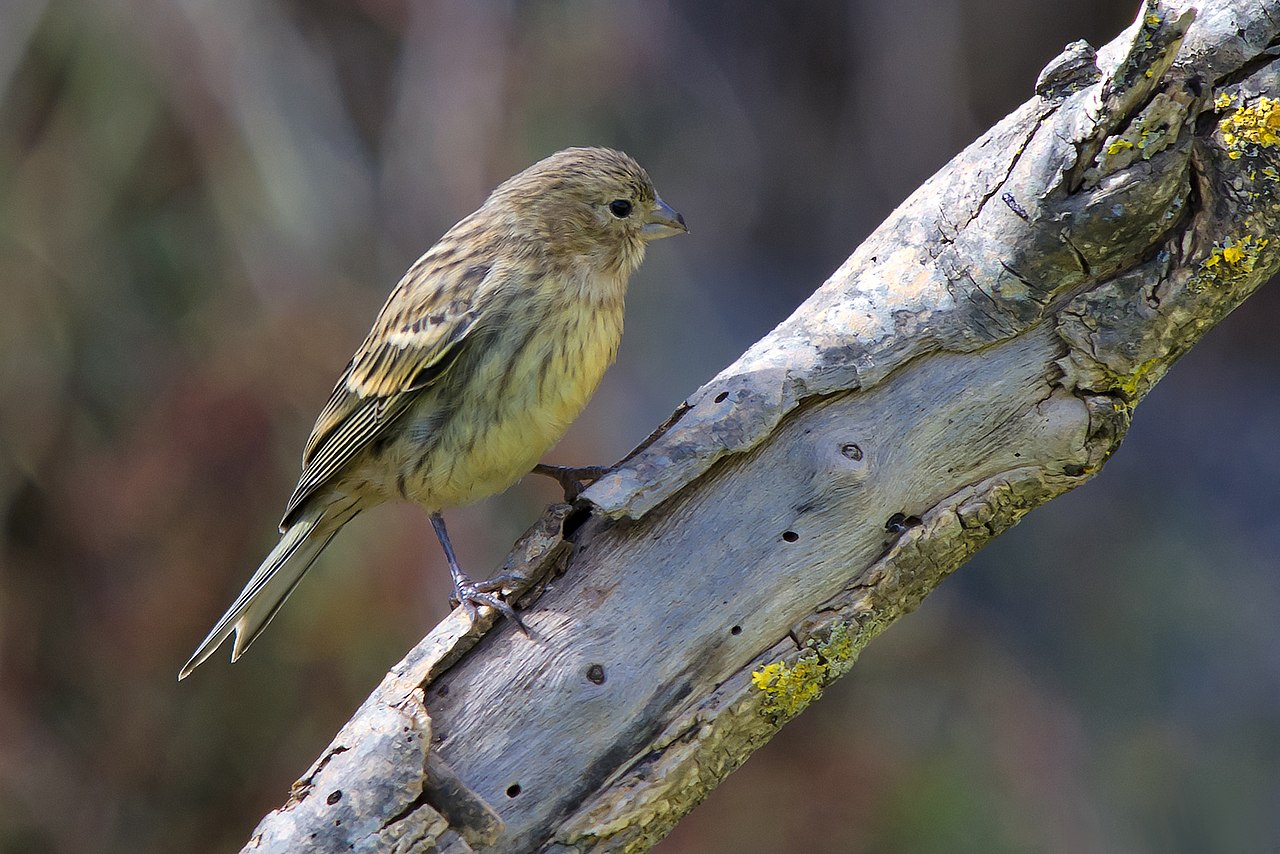
Juvenile on Gran Canaria, Canary Islands, Spain

Eggs of Serinus canaria canaria Tenerife MHNT
Temperament
social and active
Flight Pattern
undulating with short rapid wingbeats
Social Behavior
Outside the breeding season it forms small, loose flocks that move between feeding sites. Pairs are monogamous during breeding, building a neat cup nest in shrubs or small trees. Clutches typically contain 3–4 pale blue eggs, and both parents attend the young.
Migratory Pattern
Resident
Song Description
The male delivers a bright, rolling series of trills, twitters, and warbles that can continue for long sequences. Song is used for territory and courtship and may include mimicry of other sounds. Contact calls are soft, high chips given in flight and while foraging.
Plumage
Yellow-green overall with brownish streaking on the back and flanks; underparts paler with light streaks. Males show brighter yellow on the face, breast, and rump; females are duller and more heavily streaked.
Diet
Feeds mainly on small seeds from grasses, weeds, and herbaceous plants, cracking them with its sturdy conical bill. It supplements with buds, tender shoots, and small fruits when available. During breeding, it takes small insects and other invertebrates, especially for nestlings. It readily visits feeders offering millet and canary seed in settled areas.
Preferred Environment
Forages on the ground and low vegetation in open habitats, field margins, and garden lawns. Often feeds in mixed flocks in seed-rich patches and along edges of orchards and plantations.


