
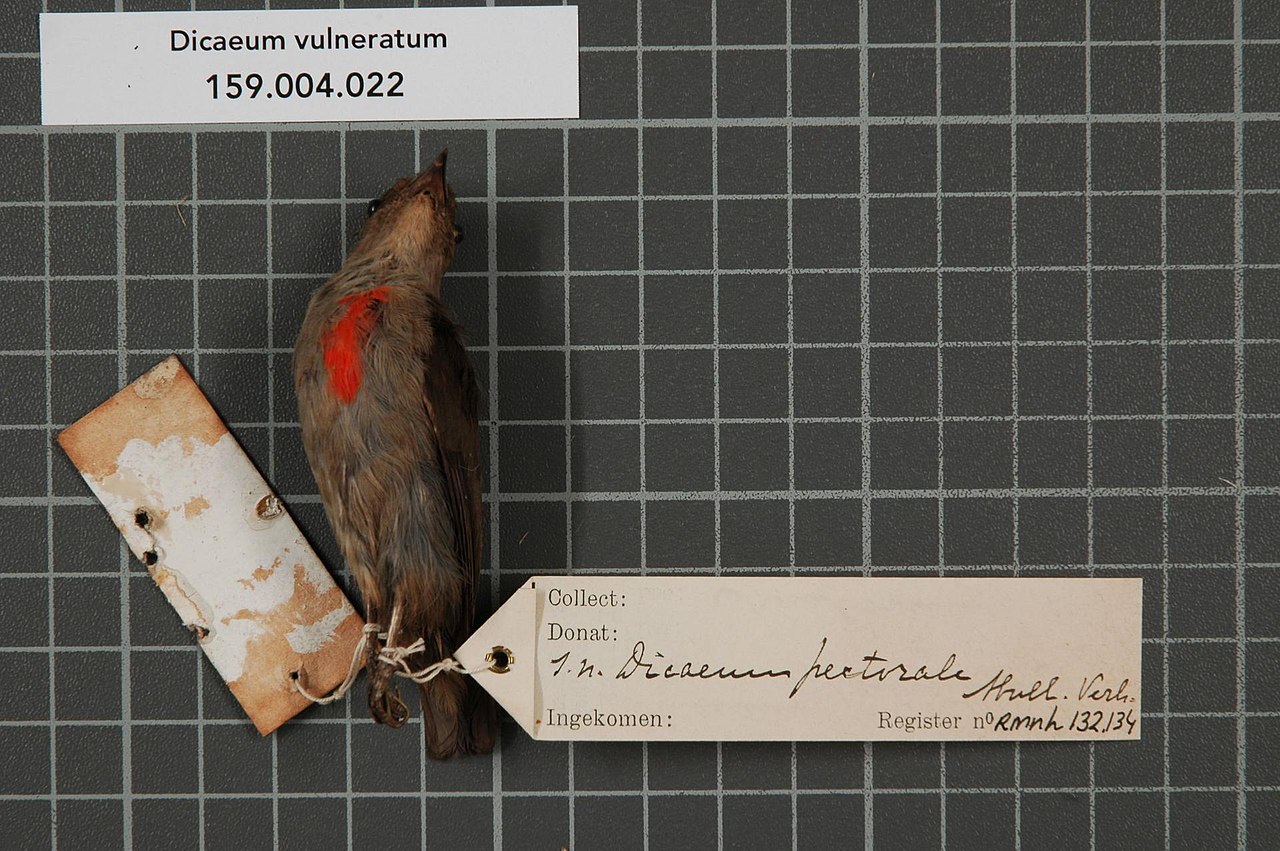
The ashy flowerpecker is a species of bird in the family Dicaeidae. It is endemic to Indonesia where it occurs on Seram, Ambon and nearby islands in the Banda Arc. Its natural habitats are subtropical or tropical moist lowland forest and subtropical or tropical moist montane forest.
Region
Maluku Islands (Banda Arc)
Typical Environment
Occurs on Seram, Ambon, and nearby islands of the Banda Arc. It uses tropical moist lowland and lower montane forests, including forest edges and secondary growth. The species also forages in village gardens, coconut groves, and plantations where suitable flowering and fruiting plants are available. It is generally common where habitat remains and shows some tolerance of disturbance.
Altitude Range
Sea level to 1600 m
Climate Zone
Tropical
Ease of Keeping
Beginner friendly: 1/5
A tiny flowerpecker of the Maluku Islands, it plays an important role in dispersing mistletoe and other small-fruited plants. Males show a subtle reddish patch on the breast, while females are duller and more uniformly gray. It often visits gardens and edges as well as forest, and builds a neat, pendulous pouch nest of plant fibers and spider silk.


Temperament
active and alert
Flight Pattern
short rapid wingbeats
Social Behavior
Usually seen singly, in pairs, or small family groups, and frequently joins mixed-species flocks in the canopy and edges. Breeding pairs construct a pendant, purse-like nest from plant fibers and spider silk suspended from slender branches. Territorial around rich food sources when in season.
Migratory Pattern
Resident
Song Description
A series of thin, high-pitched tseep notes and short buzzy trills. Calls are quick and repeated, often given while foraging high in foliage.
Plumage
Compact, short-tailed flowerpecker with ashy-gray upperparts and pale gray to whitish underparts. Males often show a small reddish patch on the central breast; females are plainer. Bill is short, thick, and slightly decurved; wings and tail dark with a faint pale panel.
Diet
Takes small berries (especially mistletoe), nectar from flowers, and tiny insects and spiders. Swallows many fruits whole and helps disperse seeds. Probes blossoms for nectar and gleans insects from leaves and twigs, especially during breeding when protein is needed.
Preferred Environment
Forages in the mid- to upper canopy of forest, at edges, and in secondary growth. Frequently visits flowering and fruiting trees in gardens, village groves, and plantations.


