

The Antillean piculet is a species of bird in subfamily Picinae of the woodpecker family Picidae. It is endemic to the Caribbean island of Hispaniola that is shared by the Dominican Republic and Haiti.
Region
Hispaniola, Greater Antilles
Typical Environment
Occurs across much of Hispaniola in both the Dominican Republic and Haiti. It favors dry to semi-humid lowland habitats including thorn scrub, second-growth thickets, plantation edges, and forest margins. The species typically forages from near ground level up to mid-story, especially in areas with dead twigs, bamboo, or cactus. It tolerates human-altered landscapes and is often seen in gardens, pastures with scattered shrubs, and along rural fencerows.
Altitude Range
Sea level to 1500 m
Climate Zone
Tropical
Ease of Keeping
Beginner friendly: 1/5
The Antillean piculet is the only member of its genus and a tiny, ground-hugging relative of woodpeckers. It forages low in shrubs, cactus, and small trees, often probing soft, decayed wood and thin stems for prey. Pairs maintain small territories year-round and excavate their own nest cavities in soft wood or dead stalks.


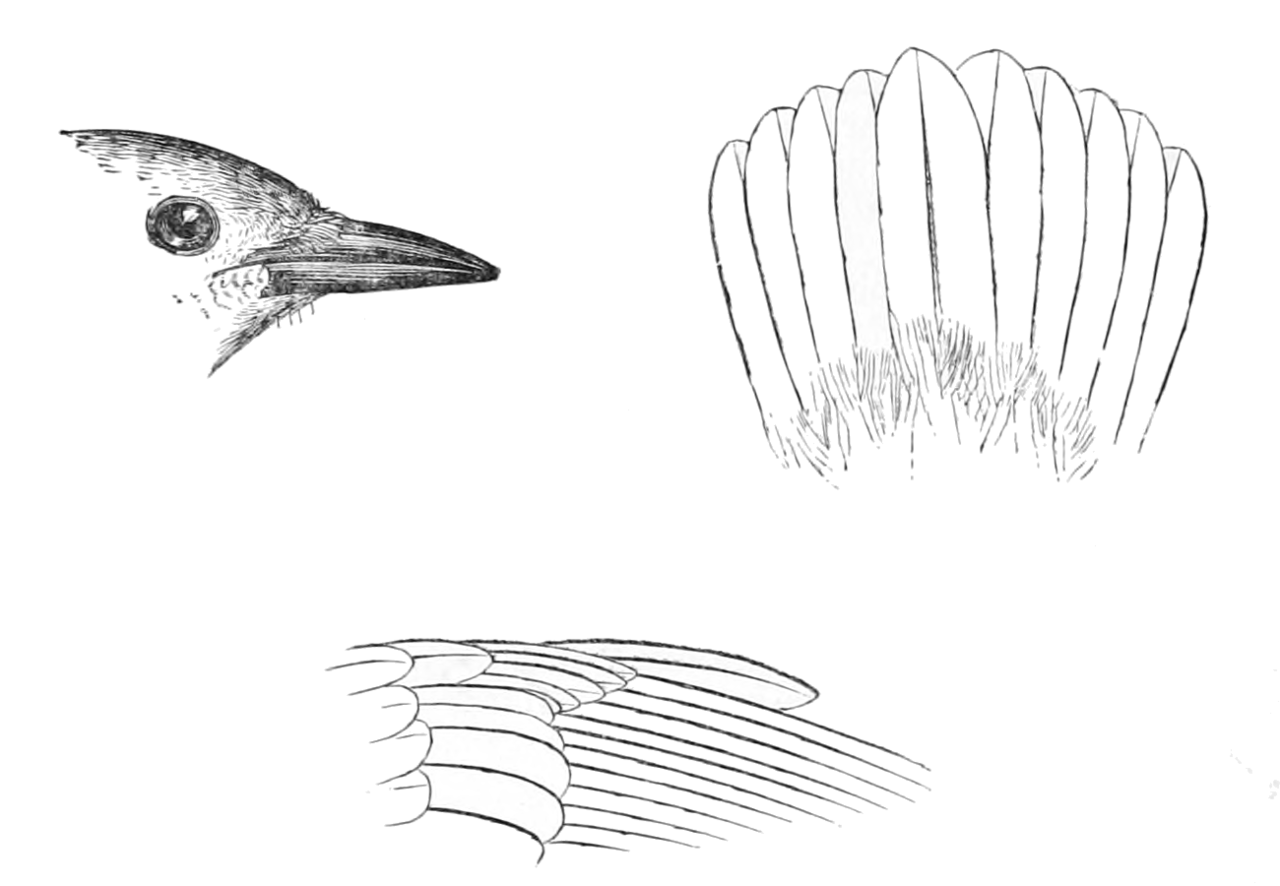
Details of beak, tail and hand region of wing (the latter two as seen from above)

Temperament
active and wary
Flight Pattern
short rapid wingbeats with brief undulations
Social Behavior
Usually found singly or in pairs, sometimes with dependent juveniles. Pairs defend small territories and communicate with soft calls and drumming-like taps. They excavate nest cavities in soft, decayed wood, dead stems, or fence posts; both sexes participate in excavation and care.
Migratory Pattern
Resident
Song Description
A rapid, high-pitched series of thin notes or a brief rattling trill. Calls include sharp tseet and tik sounds used for contact and alarm.
Plumage
Compact piculet with finely barred brown upperparts and buffy underparts thickly barred or scalloped dark. Crown speckled; males show small yellowish to orange-tinged spots on the forecrown. Short tail and small, straight chisel-tipped bill typical of piculets.
Diet
Primarily small insects and their larvae, including ants, beetles, termites, and spiders. It gleans from bark, twigs, and thin stems and probes soft wood and pithy plant material. Occasional pecking and brief tapping help expose concealed prey.
Preferred Environment
Forages low in thorn scrub, second growth, hedgerows, and plantation edges where dead twigs and soft stems are abundant. Often investigates cactus, bamboo, and weedy stands with decaying stalks.


