

The Andean tinamou is a tinamou, found commonly in high-altitude shrubland, in the Andes of South America.
Region
Andes Mountains
Typical Environment
Occurs along the central Andes from southern Peru through Bolivia into northern Chile and northwestern Argentina. It favors high-altitude shrublands, puna grasslands, and arid montane scrub, often near rocky slopes and bunchgrasses. Edges of Polylepis woodlands and agricultural mosaics are also used. The species is largely sedentary, moving locally to exploit food and cover. It relies on dense ground vegetation and stones for concealment.
Altitude Range
1800–4500 m
Climate Zone
Highland
Ease of Keeping
Beginner friendly: 2/5
The Andean tinamou is a ground-dwelling bird that prefers to run rather than fly, flushing only in short, explosive bursts when threatened. Males incubate eggs from multiple females and care for the chicks, a hallmark of tinamous. Its mottled, scaly plumage provides excellent camouflage among puna grasses and rocky scrub. Despite localized hunting and habitat pressures, it remains widespread in suitable Andean habitats.


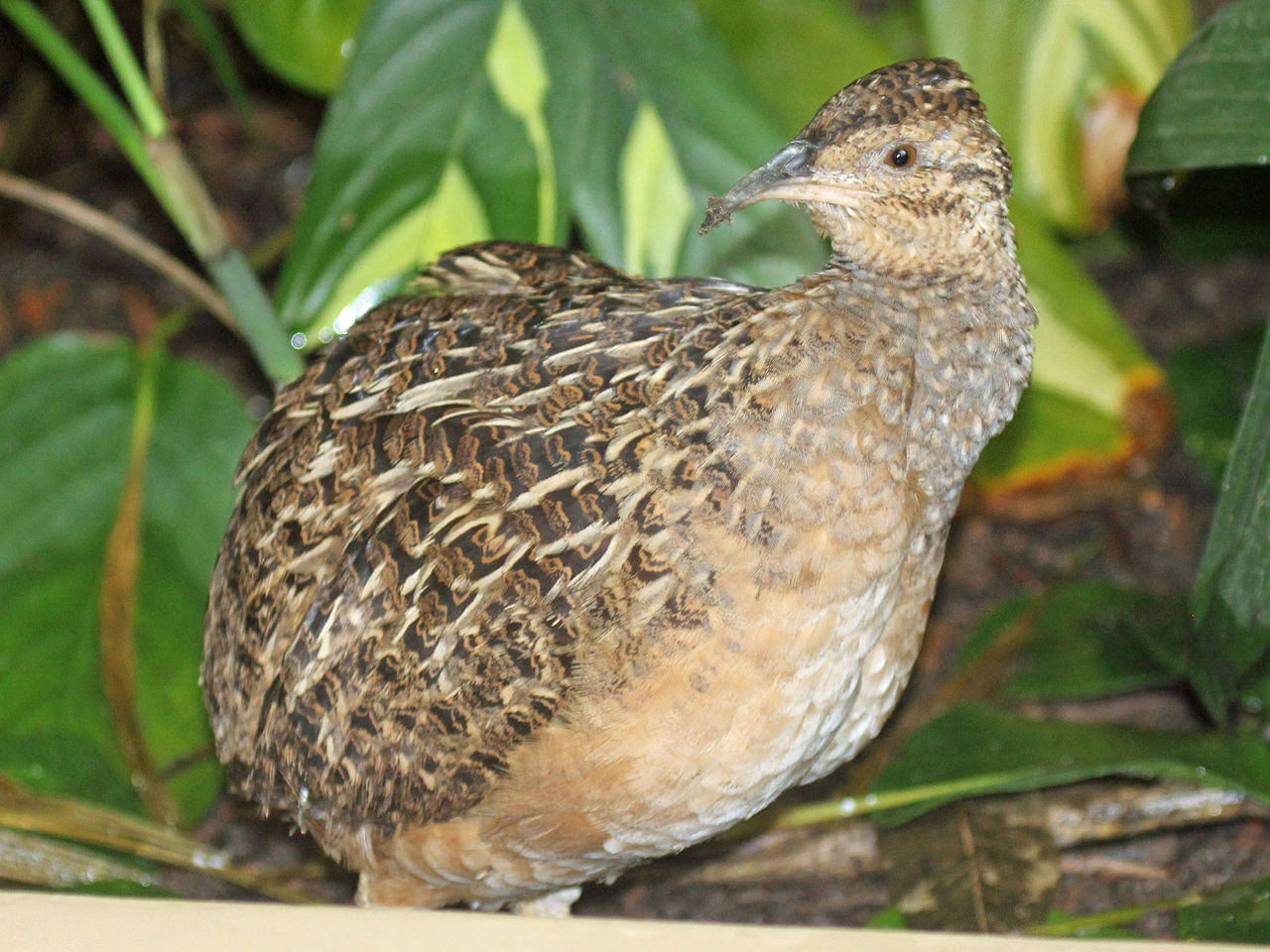
Andean tinamou, San Francisco Zoo

Andean tinamou in Peru
Temperament
skittish and secretive
Flight Pattern
short rapid wingbeats with explosive flush
Social Behavior
Outside the breeding season it forms small coveys that forage together and roost on the ground. During breeding, males establish territories, construct simple ground scrapes, and incubate clutches from multiple females. Chicks are precocial and follow the male soon after hatching.
Migratory Pattern
Resident
Song Description
A series of clear, hollow whistles that can carry over long distances, often delivered at dawn and dusk. Calls include soft clucks and whistles used to maintain contact within coveys.
Plumage
Cryptic, scaly-mottled pattern with barred flanks and vermiculated upperparts; feathers often show fine buff and grey edging.
Diet
Feeds on seeds, buds, and leaves of grasses and shrubs, as well as fallen fruits where available. Supplements with insects such as beetles, ants, and other small invertebrates, especially during the breeding season. Forages by walking and picking from the ground, occasionally scratching lightly in loose soil or litter.
Preferred Environment
Typically feeds in open puna grassland, arid scrub, and field edges with nearby cover. Uses rocky outcrops, shrubs, and tussock grasses for concealment while foraging.


