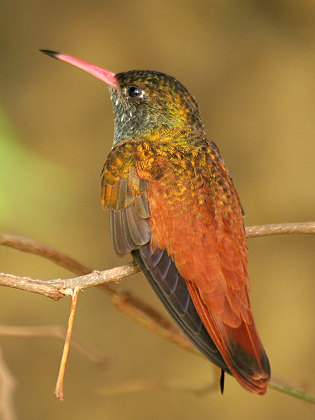
The Amani sunbird is a species of bird in the family Nectariniidae. It is found in Kenya and Tanzania. Its natural habitats are subtropical or tropical moist lowland forests and subtropical or tropical moist montane forests. The male Amani sunbird has a white and dark-green feathered body while the female Amani sunbird has a yellow and grey plumage. Breeding season takes place from May to June and from September to December. The regular diet of the Amani sunbird consists of spiders, caterpillars and other flying insects. It is threatened by habitat loss.
Region
East Africa
Typical Environment
Occurs locally in northeastern Tanzania and adjacent southeastern Kenya within humid coastal and Eastern Arc foothill forests. It favors subtropical to tropical moist lowland and montane forests, forest edges, clearings with flowering trees, and riparian thickets. Birds are most often encountered in the canopy and midstory at flowering trees, but they also drop to lower shrub layers when blossoms are abundant. Secondary growth and older plantations with native flowering species may be used when intact forest is unavailable.
Altitude Range
Sea level to 1500 m
Climate Zone
Tropical
Ease of Keeping
Beginner friendly: 1/5
The Amani sunbird is a small East African sunbird named after the Amani area of the East Usambara Mountains in Tanzania. Males show striking glossy green upperparts with clean white underparts, while females are much duller and yellowish below. It forages by hovering briefly at flowers but more often perches to probe for nectar, supplementing its diet with insects and spiders. Ongoing loss and fragmentation of lowland and montane forests threaten its limited range.
Temperament
active and territorial
Flight Pattern
short rapid wingbeats with brief hovering
Social Behavior
Typically seen singly or in pairs, sometimes in small family groups at flowering trees. The species is thought to be largely monogamous. It builds a pendant, oval nest with a side entrance from plant fibers and spider webs, suspended in foliage.
Migratory Pattern
Resident
Song Description
A thin, high-pitched series of twitters and tsee-notes, often delivered from a concealed perch. Calls include sharp tsip and buzzy chips during foraging and territorial interactions.
Plumage
Male with glossy dark-green head and upperparts, contrasting white underparts and darker wings and tail; female dull grey-olive above with yellowish to greyish underparts and faint streaking on the breast.
Diet
Primarily nectar from a variety of flowering trees, lianas, and shrubs. Also takes arthropods including spiders, caterpillars, and small flying insects, especially when feeding young. Gleans from foliage and occasionally hawks short distances to catch prey.
Preferred Environment
Feeds most often in the forest canopy and along edges where blossoms are concentrated. Also uses flowering gardens and secondary growth near intact forest.