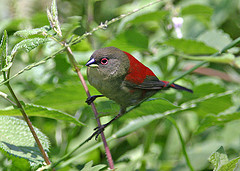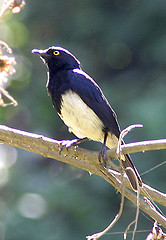
Abbott's starling is a species of starling in the family Sturnidae. It is found in Kenya and Tanzania. Its natural habitat is subtropical or tropical moist montane forests. It is threatened by habitat loss, and its population is estimated at 2500–9999. This species, at 16 to 18 cm long, is the smallest species of starling. It is in the monotypic genus Arizelopsar.
Region
East African Highlands
Typical Environment
Occurs patchily in subtropical and tropical moist montane forests in Kenya and northern Tanzania, including the Kenyan highlands and adjacent massifs in northern Tanzania. Prefers mature forest and well-developed secondary growth with a good supply of fruiting trees, especially figs. It frequents forest edges, clearings, and canopy gaps, and may descend to adjacent cultivation where fruit is available. The species’ range is naturally fragmented by valleys and lowland habitat, making it sensitive to further forest fragmentation.
Altitude Range
900–2600 m
Climate Zone
Highland
Ease of Keeping
Beginner friendly: 1/5
Abbott's starling is a small East African starling and the sole member of the genus Arizelopsar. At just 16–18 cm long, it is among the smallest starlings. It inhabits moist montane forests of Kenya and Tanzania and is threatened primarily by forest loss and fragmentation. It often joins mixed-species flocks and follows fruiting trees seasonally within its elevational range.


Temperament
social and active
Flight Pattern
short rapid wingbeats
Social Behavior
Often travels in small groups and associates with mixed-species flocks in the canopy. Nests in tree cavities or natural holes typical of starlings, with both sexes likely involved in care of young. Territoriality is modest, focused around nest sites and key fruiting trees.
Migratory Pattern
Resident
Song Description
Song consists of soft whistles and chatters typical of starlings, interspersed with mimicry-like notes. Calls are thin and high-pitched contact notes used to keep cohesion while foraging in the canopy.
Plumage
unknown
Diet
Feeds primarily on fruit, especially figs and other native forest berries. Supplements its diet with insects and other arthropods gleaned from foliage or snatched in short sallies. May take nectar or soft plant material opportunistically. Diet composition can shift seasonally with fruit availability.
Preferred Environment
Forages mostly in the mid- to upper canopy of mature montane forest and at forest edges. It concentrates around fruiting trees and occasionally ventures into adjacent gardens or agroforests when suitable fruit is present.