
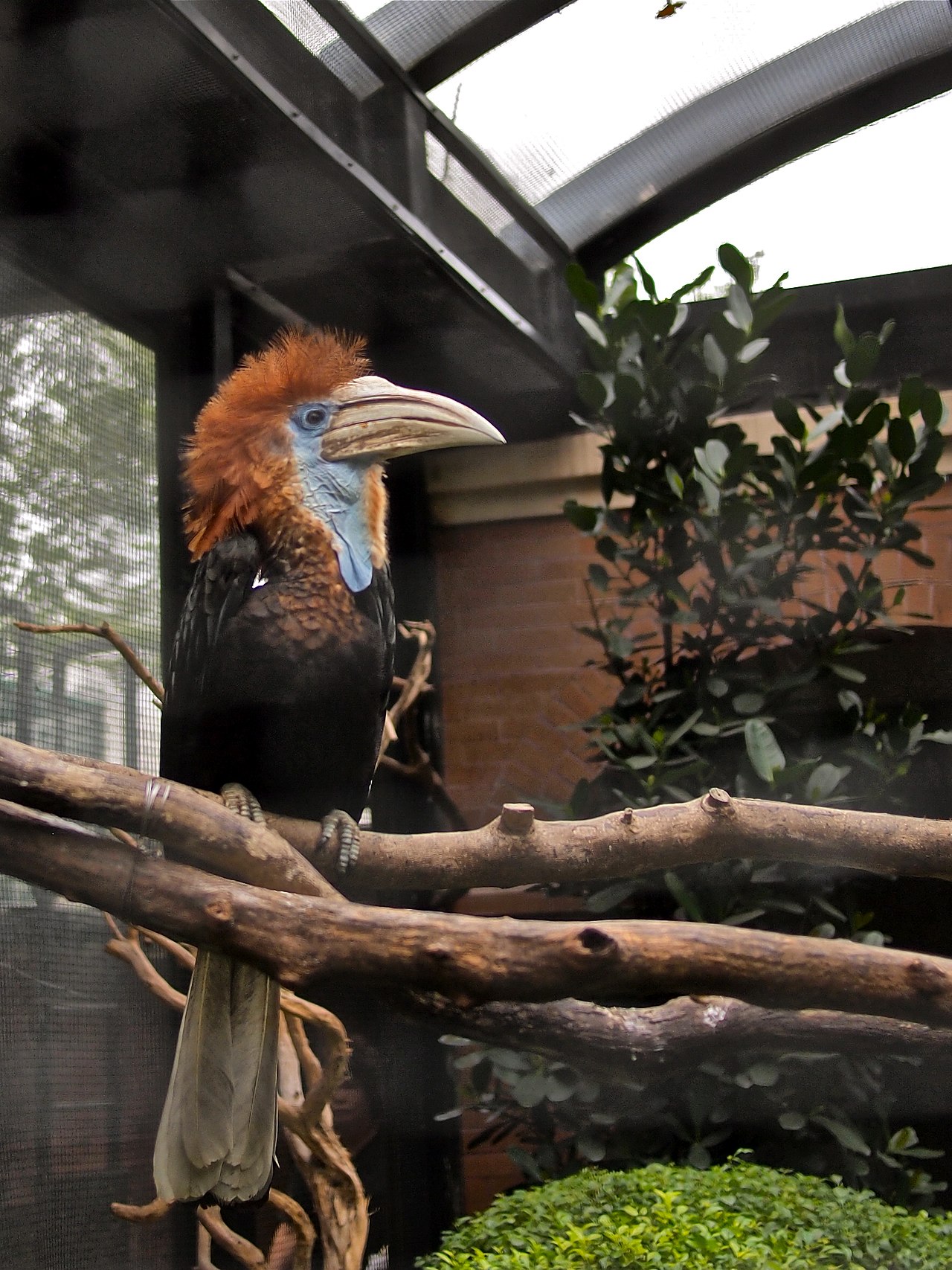
The yellow-casqued hornbill, also known as the yellow-casqued wattled hornbill, is found in the rainforest of coastal regions of West Africa, for example in Côte d'Ivoire. It is threatened by habitat loss.
Region
Upper Guinea rainforests, West Africa
Typical Environment
Occurs in mature lowland evergreen rainforest from Guinea and Sierra Leone through Liberia and Côte d'Ivoire to western Ghana. It favors intact primary forest and tall secondary forest with abundant fruiting trees. Birds often forage in the upper canopy and at forest edges, occasionally crossing open gaps between forest blocks. Nesting requires large, old trees with suitable cavities.
Altitude Range
Sea level to 900 m
Climate Zone
Tropical
Ease of Keeping
Beginner friendly: 1/5
A towering canopy hornbill of West Africa, it is also called the yellow-casqued wattled hornbill for the prominent yellow casque atop its bill. It is a key seed disperser for large-fruited rainforest trees, especially figs. Females seal themselves inside tree cavities during nesting, relying on the male to deliver food through a narrow slit. The species is threatened by logging, forest fragmentation, and hunting.

Temperament
social and active
Flight Pattern
strong flier with heavy wingbeats and short glides
Social Behavior
Typically travels in pairs or small groups and may join mixed-species hornbill parties at fruiting trees. Strong pair bonds are maintained through mutual calling and bill-touching. Nests in natural tree cavities; the female seals the entrance with a plaster of mud and droppings, leaving a narrow slit through which the male feeds her and the chicks.
Migratory Pattern
Resident
Song Description
Vocalizations are loud, resonant booms and honking barks that carry far through the forest canopy. Calls often come in repeated series and are used for contact and territorial advertisement.
Plumage
Mostly glossy black with contrasting white in the tail and lower belly; feathers are sleek and close-fitting.
Diet
Primarily eats large fruits and figs, swallowing them whole and later regurgitating seeds, making it an important seed disperser. Also takes insects, snails, and occasionally small vertebrates or eggs, especially when feeding nestlings. Foraging often involves long commutes between fruiting trees. It may exploit seasonal fruit peaks and revisit productive trees over several days.
Preferred Environment
Feeds mainly in the upper canopy and emergent layer of mature rainforest. Also visits forest edges and isolated fruiting trees in farm–forest mosaics when available.


