

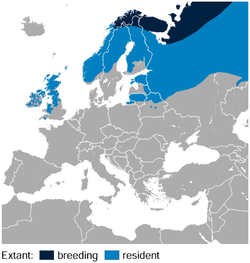
The willow ptarmigan is a bird in the grouse tribe Tetraonini of the pheasant family Phasianidae. It is also known as the willow grouse. The willow ptarmigan breeds in birch and other forests and moorlands in northern Europe, the tundra of Scandinavia, Siberia, Alaska and Canada, in particular in the provinces of Newfoundland and Labrador and Quebec. It is the state bird of Alaska.
Region
Circumpolar Arctic and Subarctic
Typical Environment
Found across northern Europe, Siberia, Alaska, and Canada, especially in tundra and shrub-dominated landscapes. It favors willow and birch scrub, heath and moorland, peatlands, and boggy lowlands with scattered shrubs. During winter it often shifts to sheltered thickets and forest edges and may roost in snow burrows for insulation. Nests are placed on the ground, typically among dwarf shrubs or heather.
Altitude Range
Sea level to 1500 m
Climate Zone
Polar
Ease of Keeping
Beginner friendly: 2/5
This grouse of Arctic and subarctic regions molts from mottled brown in summer to nearly all white in winter, an adaptation for camouflage in snow. Males often assist in defending the brood, unusual among grouse. It is the state bird of Alaska and is also known as the willow grouse.


Female in summer plumage, Alaska


Red grouse, L. l. scoticus, plumage shows less white than other subspecies

Male L. l. alascensis in winter plumage

Female L. l. lagopus in summer plumage


Alaska willow with twigs, leaves, buds and catkins

Egg, Collection Museum Wiesbaden
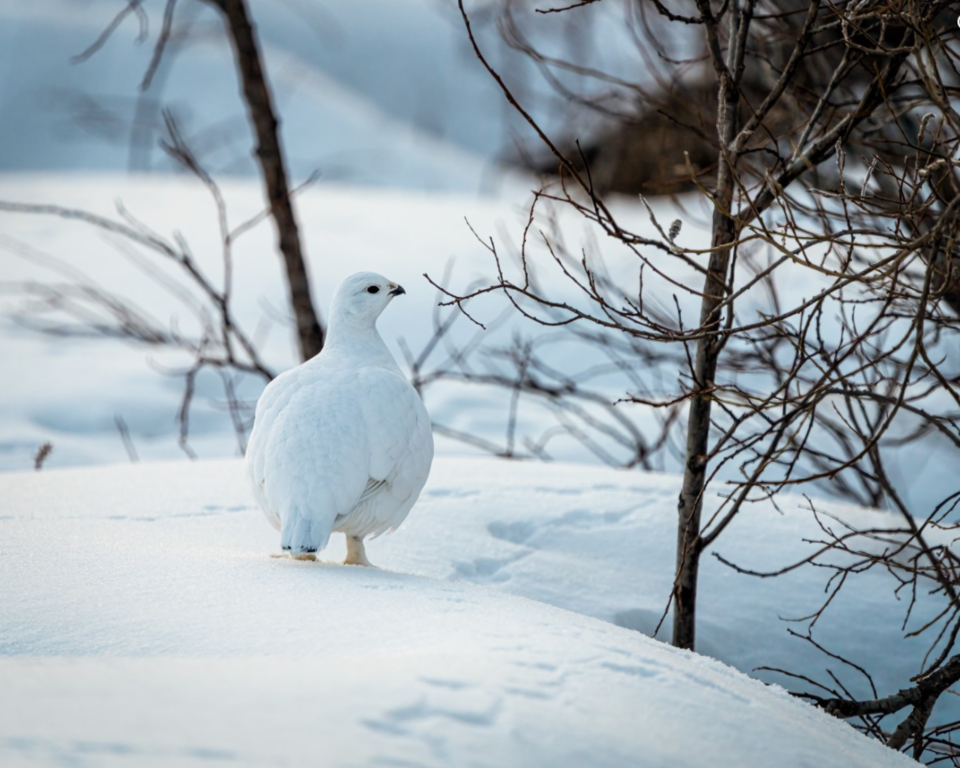
Winter plumage, Kenai National Wildlife Refuge, Alaska
Temperament
wary and cryptic
Flight Pattern
explosive takeoff with short rapid wingbeats and low direct flight
Social Behavior
Typically forms pairs in the breeding season, with males strongly territorial and often guarding and assisting the brood. In autumn and winter it gathers into loose flocks. Nests are shallow ground scrapes lined with vegetation and down.
Migratory Pattern
Partial migrant
Song Description
Males give rattling, clucking series and guttural croaks, often delivered from a low perch or during short flights. Calls carry well over open tundra and can sound like rapid chuckling or cackling bursts.
Plumage
Seasonally variable; mottled brown with barred chestnut tones in summer, turning mostly white in winter with a contrasting dark tail.
Diet
Primarily consumes buds, catkins, leaves, and twigs of willow and birch, along with heather and other dwarf shrubs. Berries such as crowberry and blueberry are important in late summer and autumn. Chicks rely heavily on insects and other invertebrates for protein during early development. In winter it browses woody twigs and buds above the snowline.
Preferred Environment
Feeds on the ground and in low shrubs within willow and birch thickets, moorland, and tundra edges. In winter it forages in sheltered scrub and at forest margins, often near snow burrows used for roosting.


