

The white-bellied blue flycatcher is a small passerine bird in the flycatcher family Muscicapidae. It is endemic to the Western Ghats of southwest India. Males are dark blue with a lighter shade of blue on the brow and have a greyish white belly. Females have a rufous breast, a white face and olive grey above.
Region
Western Ghats
Typical Environment
Found in evergreen and semi-evergreen forests of the Western Ghats in southwest India, including well-shaded riparian ravines. It favors dense undergrowth, bamboo thickets, and vine tangles where it can hunt from low perches. The species also occurs in shade-grown plantations (such as coffee) contiguous with native forest. It avoids open edges and heavily degraded patches, preferring intact canopy and moist microhabitats.
Altitude Range
Sea level to 1600 m
Climate Zone
Tropical
Ease of Keeping
Beginner friendly: 1/5
This forest flycatcher keeps to shaded undergrowth and often perches low, making short sallies to snatch insects. Its clear, melodious song is a characteristic sound of quiet evergreen ravines in the Western Ghats. Habitat quality strongly influences its presence, and it adapts to well-shaded plantations if native understorey is retained.


Female
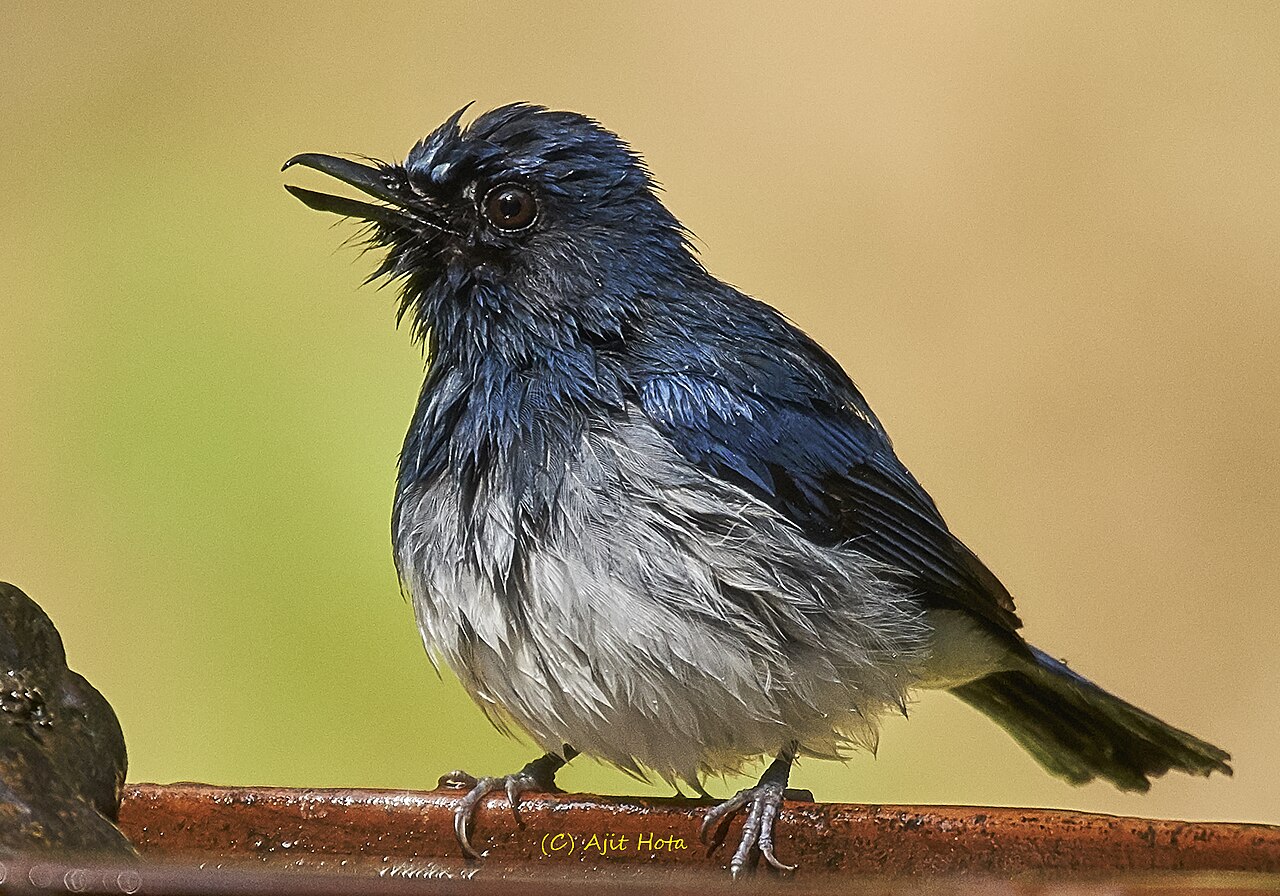
The white-bellied blue flycatcher male after a dip in water at Ganeshgudi, Dandeli
Temperament
quiet and skulking, active when foraging
Flight Pattern
short rapid wingbeats with quick sallies from low perches
Social Behavior
Typically solitary or in pairs within dense undergrowth. Breeding pairs maintain small territories during the nesting season. The nest is a neat cup placed in a crevice, bank, stump, or sheltered nook close to the ground; both sexes participate in care.
Migratory Pattern
Resident
Song Description
Song is a clear, sweet, and melodic series of whistles delivered from shaded perches, often near streams. Calls include soft ticks and thin tseep notes used during foraging and pair contact.
Plumage
Male has deep blue upperparts with a paler bluish brow and a clean whitish to grey-white belly; throat and breast are bluish. Female is olive-brown to olive-grey above with a whitish face, rufous breast, and whitish belly.
Diet
Primarily hunts flying and ground-dwelling insects such as flies, beetles, moths, ants, and termites; also takes small spiders. It uses perch-and-sally tactics, gleaning from leaves and snatching prey mid-air. Occasional small berries may be taken when insect prey is scarce.
Preferred Environment
Feeds in dim, moist understorey, especially along shaded streams and inside dense thickets. Also forages within shade-grown plantations that retain native shrub layers.


