

The waved albatross, also known as Galapagos albatross, is one of three species of the family Diomedeidae that occur in the tropics. When they forage, they follow a straight path to a single site off the coast of Peru, about 1,000 km (620 mi) to the east. During the non-breeding season, these birds reside primarily on the Ecuadorian and Peruvian coasts.
Region
Eastern Tropical Pacific
Typical Environment
Breeds on Española Island (with a very small secondary colony on Isla de la Plata off mainland Ecuador) and forages widely over the Humboldt Current. Outside the breeding season it ranges along the coasts of Ecuador and Peru, concentrating in productive upwelling zones. Nests on open, sparsely vegetated lava flats and gentle slopes near sea cliffs. At sea, it uses pelagic waters over shelf edges and offshore fronts where prey aggregates.
Altitude Range
Sea level to 200 m
Climate Zone
Tropical
Ease of Keeping
Beginner friendly: 1/5
The waved albatross breeds almost exclusively on Española Island in the Galápagos, making it the only albatross with a primarily tropical breeding range. Pairs perform elaborate courtship displays with bill-circling, clacking, and sky-pointing. Adults make remarkably direct commuting flights to rich upwelling waters off Peru to feed. Longline bycatch and illegal fisheries have been major threats to the species.


Adult and chick
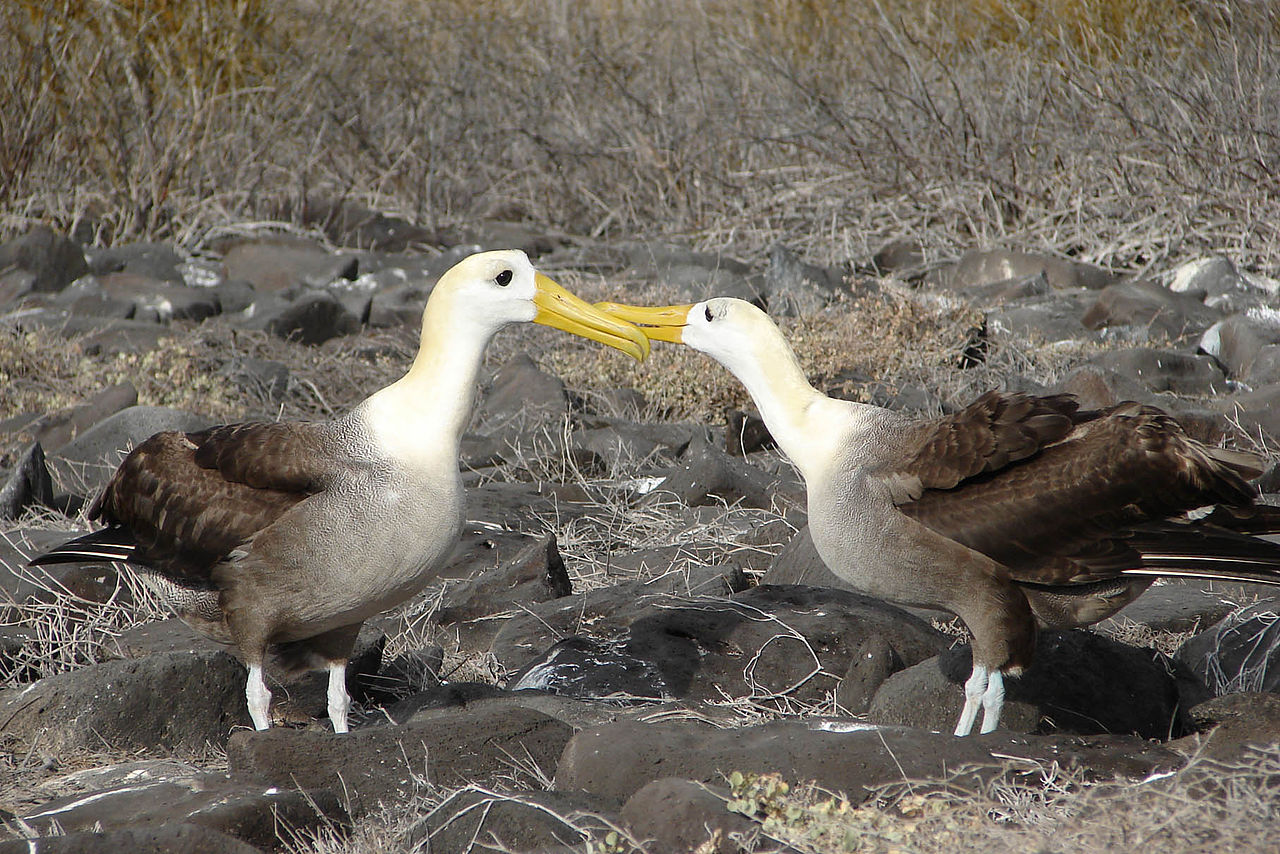
Courtship ritual

Flying


Temperament
social and colonial
Flight Pattern
soaring glider
Social Behavior
Breeds in dense colonies, forming long-term monogamous pairs. Courtship involves ritualized dances with bill-fencing, clacking, and sky-pointing. Lays a single egg on the ground; both parents share incubation and chick-rearing duties. Strong site fidelity brings adults back to the same nesting areas each year.
Migratory Pattern
Seasonal migrant
Song Description
Vocalizations include low moans, whistles, and gabbling notes, often during displays. Bill clacks and snaps are loud and conspicuous and form an important part of courtship communication.
Plumage
Creamy-yellow head and neck with gray-brown upperparts showing fine wavy barring; underparts paler with subtle mottling. Upperwings dark brown; underwings largely pale with contrasting dark margins.
Diet
Feeds mainly on squid and small pelagic fishes, also taking fish eggs and occasionally crustaceans. Frequently scavenges offal and discards from fishing vessels. Forages predominantly by surface seizing and shallow plunges, tracking areas of high productivity. Opportunistic at fronts and upwelling zones of the Humboldt Current.
Preferred Environment
Pelagic waters over continental shelf edges and offshore upwelling systems. Often concentrates near coastal Peru and Ecuador where prey is abundant, but ranges widely over open ocean while commuting from breeding sites.


