

Sykes's lark is a species of lark found in the dry open country of India. Its distribution is mainly restricted to central India, although stray records have been found elsewhere on the sub-continent. It is identified by its prominent crest and its overall rufous colouration. It has streaks on its breast which are less prominent than those found in the Oriental skylark.
Region
Central India and the Deccan Plateau
Typical Environment
Occurs mainly across the dry plains and scrubby farmlands of Maharashtra, northern Karnataka, parts of Telangana, and adjacent central India. It favors stony wastelands, fallow fields, short-grass pastures, and road margins with scattered bushes. Nests on the ground in sparsely vegetated areas and often forages along field edges. Stray records occur outside the core range elsewhere on the Indian subcontinent.
Altitude Range
0–1200 m
Climate Zone
Tropical
Ease of Keeping
Beginner friendly: 1/5
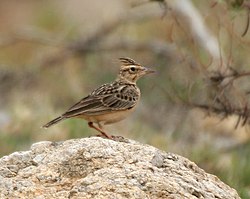
Sykes's lark is a crested lark of dry open landscapes in central India, often seen on bare ground or low perches. It frequently delivers an elaborate song during fluttering display flights and is known to mimic other birds. Compared to the Oriental skylark, it is warmer rufous overall with a bolder crest and finer breast streaking. It benefits from scattered scrub and traditional farmlands but avoids dense vegetation.



Temperament
solitary and territorial
Flight Pattern
strong flier with short rapid wingbeats and buoyant display flights
Social Behavior
Mostly seen singly or in pairs, becoming loosely gregarious in non-breeding periods where food is abundant. Ground nester, placing a shallow scrape lined with grasses under a tuft or small shrub. Likely monogamous with strong territorial defense during breeding. Breeding often coincides with or follows the monsoon when resources increase.
Migratory Pattern
Resident
Song Description
A rich, varied series of trills, twitters, and fluid phrases delivered from a perch or during an ascending, fluttering song flight. Frequently incorporates mimicry of other bird species. Calls include soft chirps and sharper contact notes when flushed.
Plumage
Warm rufous-sandy upperparts with fine dark streaking, buff underparts with faint breast streaks, and a conspicuous erectile crest. Wings and tail show rufous tones with darker centers; mantle is lightly streaked. A pale supercilium contrasts with a darker eye line; overall appearance is more rufous and less heavily streaked than similar larks.
Diet
Feeds on a mix of grass and weed seeds, small grains, and a variety of invertebrates such as beetles, ants, termites, and caterpillars. Insects form a larger portion of the diet during the breeding season and after rains. Forages by walking and pecking on bare soil, stubble, and short turf. Will occasionally glean along tracks and field margins and visit water sources in dry periods.
Preferred Environment
Open, sparsely vegetated ground including fallow fields, scrubby plains, and stony wastelands. Often forages near low shrubs that provide quick cover and uses small perches such as stones or fence posts for song.


