

The surfbird is a small stocky wader in the family Scolopacidae. It was once considered to be allied to the turnstones, and placed in the monotypic genus Aphriza, but is now placed in the genus Calidris.
Region
Pacific coasts of the Americas
Typical Environment
Breeds in alpine and subalpine tundra of Alaska and adjacent Yukon. During the nonbreeding season it occupies rocky, surf-exposed coastlines from southeastern Alaska and British Columbia south through the U.S. West Coast and Baja California to Central and South America, reaching as far as southern Chile and Tierra del Fuego. Prefers wave-washed headlands, boulder beaches, jetties, and tidepools, rarely using sandy beaches. Generally coastal in winter, seldom occurring inland outside the breeding season.
Altitude Range
Sea level to 2200 m
Climate Zone
Temperate
Ease of Keeping
Beginner friendly: 1/5
Surfbirds breed on alpine tundra in Alaska and the Yukon, but spend the nonbreeding season almost exclusively on wave-battered Pacific rocky shores from Alaska to Tierra del Fuego. They were once placed in the monotypic genus Aphriza due to their turnstone-like habits. In winter they often feed within breaking surf, deftly timing pecks between waves. Their tight flocking and steadfast foraging on slippery rocks make them a distinctive sight on rough coasts.


Surfbird in Humboldt County, California.
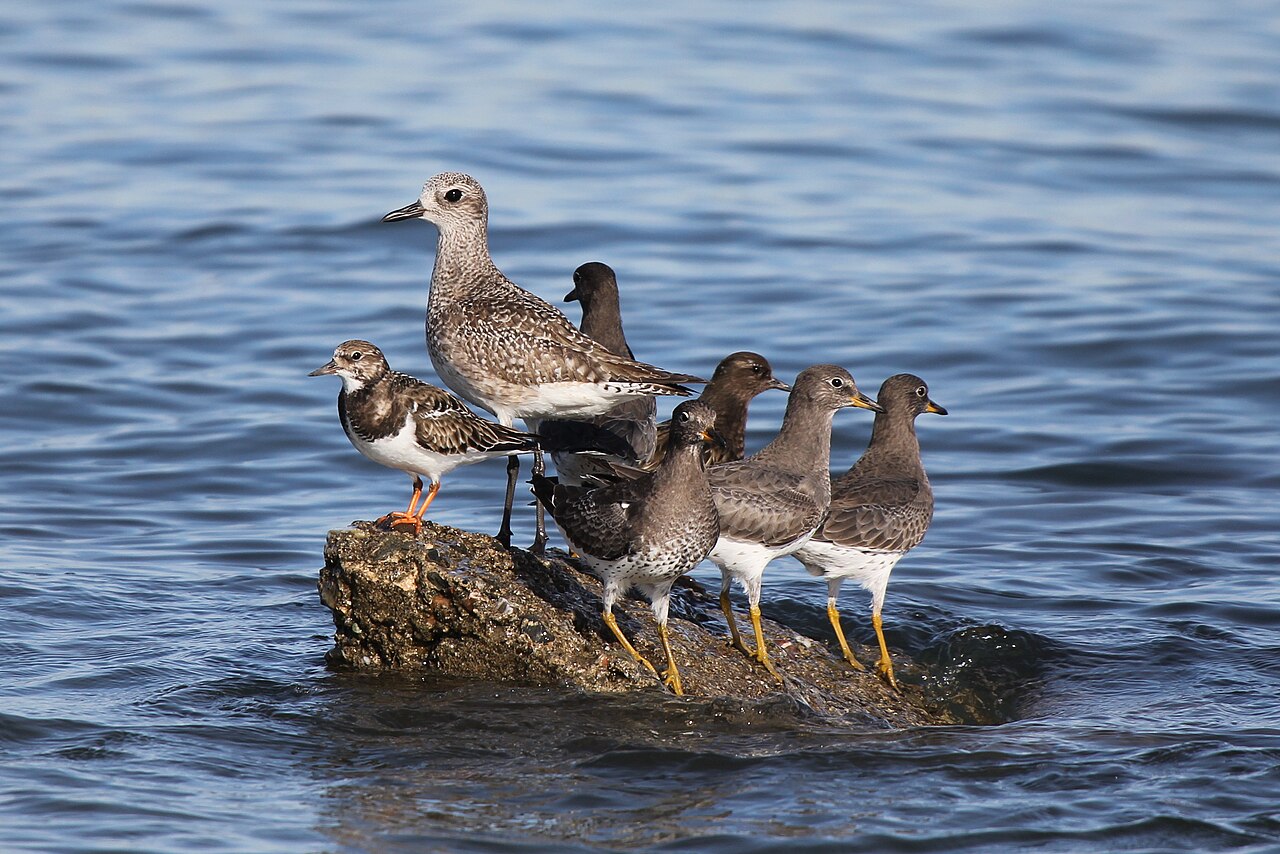
Surfbirds in winter plumage with a ruddy turnstone (left), black-bellied plover (second from left) and black turnstones (back).

Non-breeding surfbirds feed in the spray zone of rocky shores.

Surfbird on its nest
Temperament
social and active
Flight Pattern
strong flier with rapid, direct wingbeats low over surf
Social Behavior
Often forms tight flocks on rocky shores, especially at high tide roosts, and can mix with turnstones and other shorebirds. Nests on the ground in alpine tundra; a shallow scrape is lined with vegetation. Pairs are typically monogamous for the season, and both sexes participate in incubation and chick tending.
Migratory Pattern
Seasonal migrant
Song Description
Generally quiet on the wintering grounds, giving sharp, metallic notes and soft whistles. On breeding territories, males produce simple trills and nasal whistles during display flights.
Plumage
Nonbreeding plumage is smooth gray above and white below with fine dark chevrons along the flanks; breeding birds show mottled black, gray, and rufous on the back with a more heavily spotted breast. In flight it shows a bold white wing stripe and a mostly white tail with a contrasting dark subterminal band.
Diet
In winter, feeds mainly on marine invertebrates such as mussels, limpets, barnacles, small crabs, and other crustaceans, often prying or hammering at prey on rock surfaces. On the breeding grounds, takes insects, spiders, and other terrestrial arthropods. It forages quickly between waves, timing pecks to avoid surf, and will probe crevices and scrape algae for hidden prey.
Preferred Environment
Wave-washed rocky headlands, boulder fields, tidepools, and man-made rock jetties along exposed coasts. In breeding season, forages in alpine tundra near snowmelt patches and seepage areas.


