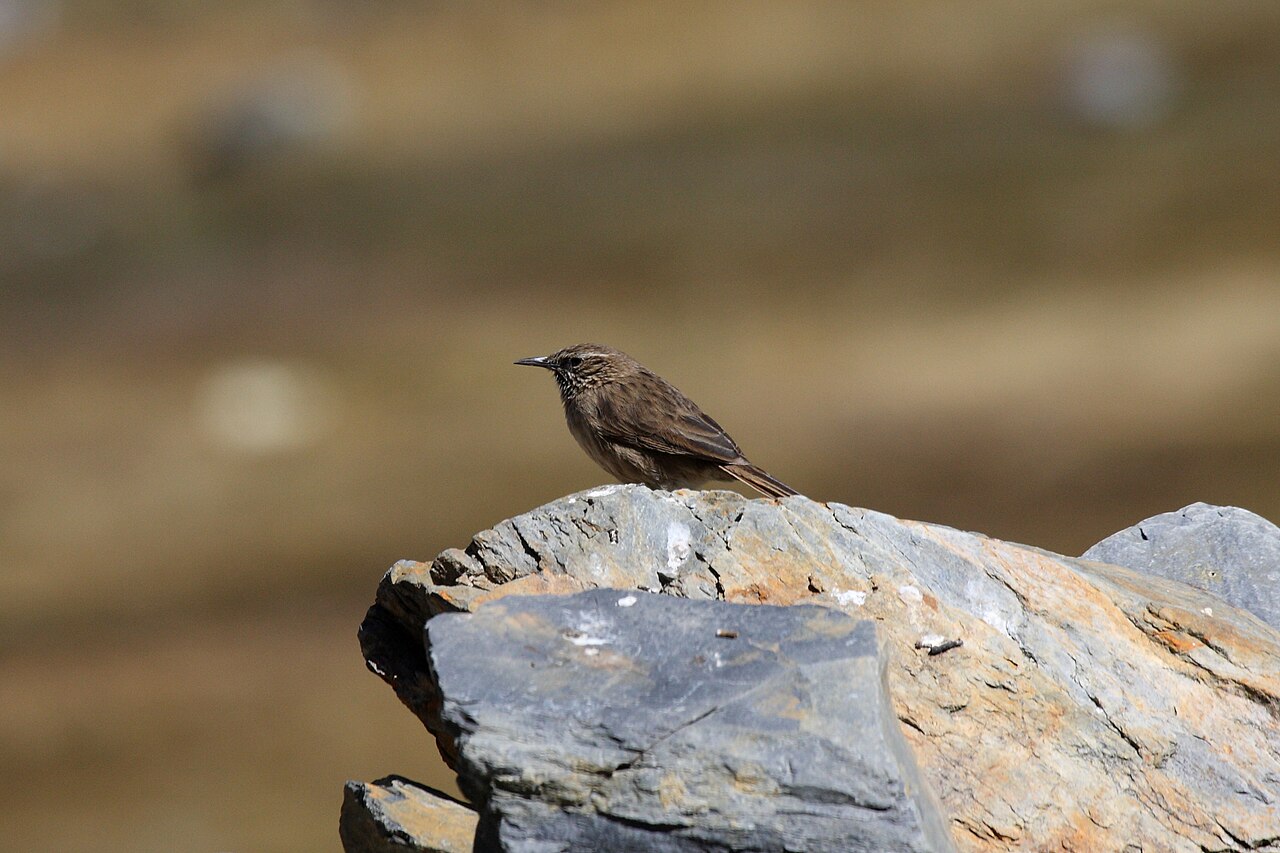
The streak-throated bush tyrant is a species of bird in the family Tyrannidae, the tyrant flycatchers. It is found in Argentina, Bolivia, Colombia, Ecuador, Peru, and Venezuela.
Region
Andes Mountains
Typical Environment
Occurs along the Andes from Venezuela and Colombia south through Ecuador and Peru to Bolivia and northwestern Argentina. It favors open montane habitats including forest edges, scrubby slopes, pastures with scattered trees, and ravines. The species is commonly seen along roads and landslides where exposed perches and foraging opportunities are abundant. It is generally local but can be fairly common where suitable habitat persists.
Altitude Range
1500–4000 m
Climate Zone
Highland
Ease of Keeping
Beginner friendly: 1/5
A conspicuous Andean flycatcher, the streak-throated bush tyrant often perches on exposed rocks, fence posts, and treetops while sallying out to catch insects. Its finely streaked throat gives the species its name, and a warm rufous tail is a frequent field clue. It tolerates human-modified landscapes such as pastures and roadcuts near montane forest edges. Some populations make short altitudinal movements in response to weather and food availability.


Temperament
solitary and territorial
Flight Pattern
short rapid wingbeats with frequent sallies from exposed perches
Social Behavior
Typically encountered singly or in pairs, maintaining territories along open slopes and edges. During the breeding season, pairs defend conspicuous perches and nesting areas. Nests are placed on ledges, banks, or sheltered sites on cliff faces or human structures, and both sexes participate in care.
Migratory Pattern
Resident
Song Description
Vocalizations include sharp, ringing whistles and chatters delivered from high perches. The simple song is a short series of clear notes, repeated at intervals, while contact calls are sharper and more abrupt.
Plumage
Brownish to gray-brown upperparts with a contrasting pale, finely streaked throat and upper breast; underparts otherwise buffy to pale cinnamon with less streaking below. Tail and often the wing edgings show warm rufous tones. Feathers appear fairly smooth and unpatterned on the mantle, with the streaking concentrated on the throat.
Diet
Primarily captures flying insects such as flies, beetles, and wasps by sallying from exposed lookouts. It also gleans prey from foliage and occasionally takes insects from the ground. Small berries may be taken opportunistically, especially in cooler periods when insects are scarce.
Preferred Environment
Feeds along forest edges, shrublands, and open pastures with scattered trees, as well as along roadcuts and landslides where prey is abundant. Often hunts from fence posts, rock outcrops, and treetops with broad visibility.