
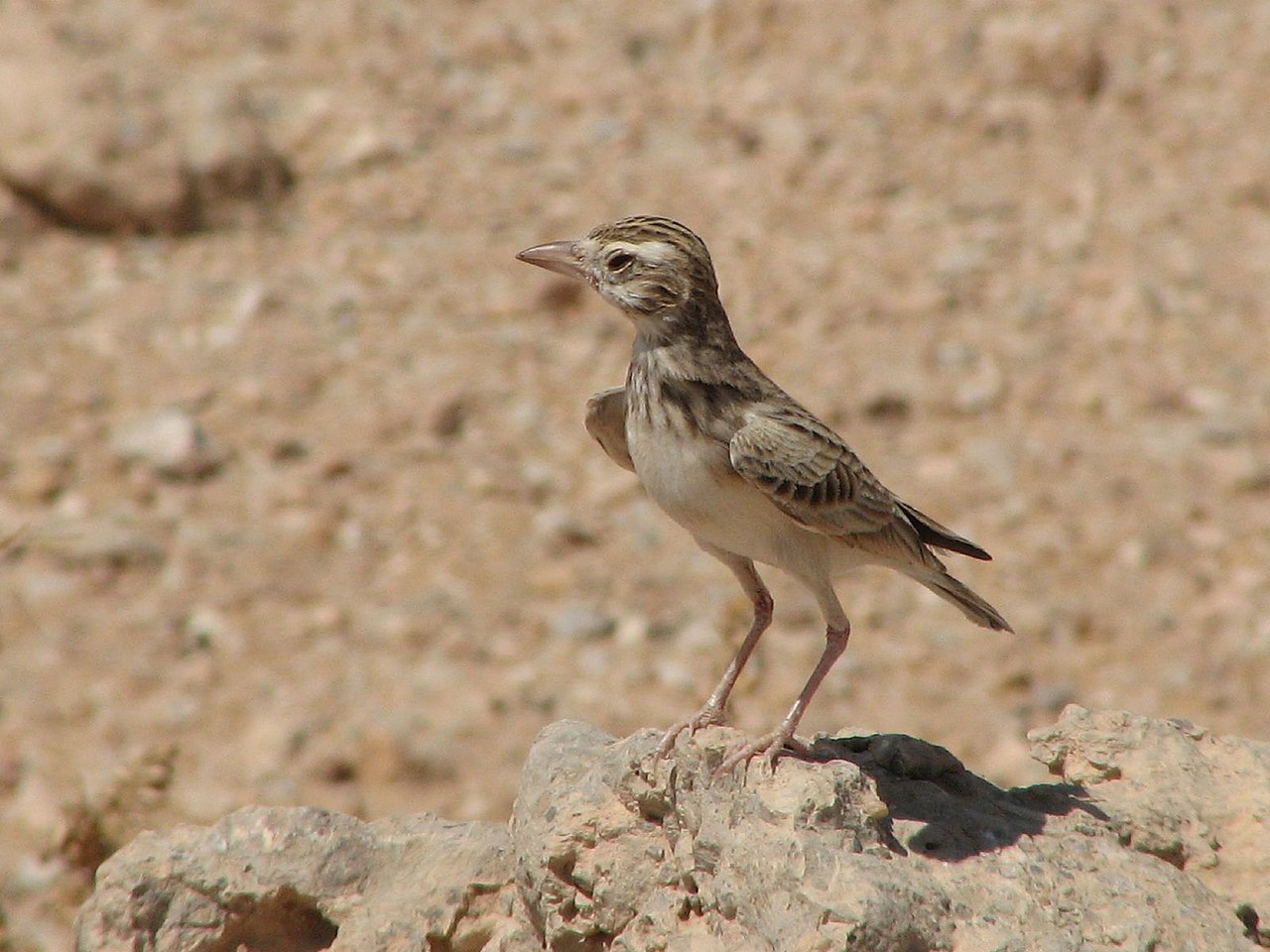
Stark's lark is a species of lark in the family Alaudidae. It is found in Angola, Botswana, Namibia, and South Africa. Its natural habitats are dry savannah and subtropical or tropical dry shrubland. Captain George Shelley named the species in honour of Arthur Stark.
Region
Southwestern Africa
Typical Environment
Occurs patchily across southwestern Angola, much of Namibia, western Botswana, and the Northern Cape of South Africa. It favors open, sparsely vegetated habitats such as gravel and calcrete plains, stony flats, and dwarf-shrub savanna of the Nama Karoo. It also uses overgrazed pastures, fallow fields, and recently burnt areas when cover is low. Presence can be strongly tied to recent rainfall, with birds moving into areas with fresh seed and insect flushes.
Altitude Range
Sea level to 1800 m
Climate Zone
Arid
Ease of Keeping
Beginner friendly: 1/5
Stark's lark is a small, cryptic lark of arid southwestern Africa, named in honour of the naturalist Arthur Stark. It often undertakes local, rain-driven wanderings in otherwise resident populations, appearing in numbers after good rains. Its sandy tones provide excellent camouflage on gravel plains, and males perform short display flights while delivering a tinkling song.


Temperament
wary, cryptic, and ground-oriented
Flight Pattern
low, undulating flight with short rapid wingbeats
Social Behavior
Usually seen singly or in pairs in the breeding season; small loose flocks form at other times, especially after rains. Nests on the ground in a shallow scrape lined with plant material, well hidden near a clump or stone. Likely monogamous, with males performing brief display flights and ground song-posts.
Migratory Pattern
Resident with local nomadic movements following rainfall
Song Description
A soft, tinkling series of chirps and trills, delivered from the ground or during a short fluttering song flight. Calls include thin tseep notes and dry chips used to keep contact in sparse cover.
Plumage
Sandy to gray-brown upperparts finely streaked, with paler, mostly unmarked underparts and slight breast mottling. Crown and mantle show delicate streaking that blends with stony ground. Tail is dark with contrasting white outer feathers. Overall appearance is compact with a short, stout bill.
Diet
Takes small seeds of grasses and forbs, supplemented seasonally with insects such as termites, beetles, and ants. After rains it increases animal prey consumption to feed nestlings. Forages by walking and gleaning from the ground, occasionally probing loose soil or among pebbles.
Preferred Environment
Feeds on open, sparsely vegetated gravel or calcrete flats, roadside verges, and short-grazed or recently burnt patches. Often selects microhabitats with bare ground interspersed with low dwarf shrubs.


