

The splendid fairywren is a passerine bird in the Australasian wren family, Maluridae. It is also known simply as the splendid wren or more colloquially in Western Australia as the blue wren. The splendid fairywren is found across much of the Australian continent from central-western New South Wales and southwestern Queensland over to coastal Western Australia. It inhabits predominantly arid and semi-arid regions. Exhibiting a high degree of sexual dimorphism, the male in breeding plumage is a small, long-tailed bird of predominantly bright blue and black colouration. Non-breeding males, females and juveniles are predominantly grey-brown in colour; this gave the early impression that males were polygamous as all dull-coloured birds were taken for females. It comprises several similar all-blue and black subspecies that were originally considered separate species.
Region
Australia
Typical Environment
Occurs widely across arid and semi-arid zones from central-western New South Wales and southwestern Queensland to coastal and inland Western Australia. Favors dense low shrubs, spinifex grasslands, mallee and mulga scrub, and heathlands, often near open patches for foraging. Also uses riparian thickets and will occupy parks and native gardens where cover is available. Avoids tall closed forests and treeless expanses lacking low cover.
Altitude Range
Sea level to 1200 m
Climate Zone
Arid
Ease of Keeping
Beginner friendly: 1/5
Splendid fairywrens are famous for extreme sexual dimorphism: breeding males blaze with electric blue and black, while females and non-breeding males are brownish and cryptic. They are cooperative breeders, with offspring from previous seasons helping to raise new broods. Despite strong pair bonds, extra-pair matings are common. Males often present yellow petals or other bright objects during courtship displays.


Male M. s. splendens in full breeding plumage, Yanchep National Park, Perth

Male M. s. melanotus Cunnamulla, SW Queensland

Female M. s. melanotusCunnamulla, SW Queensland
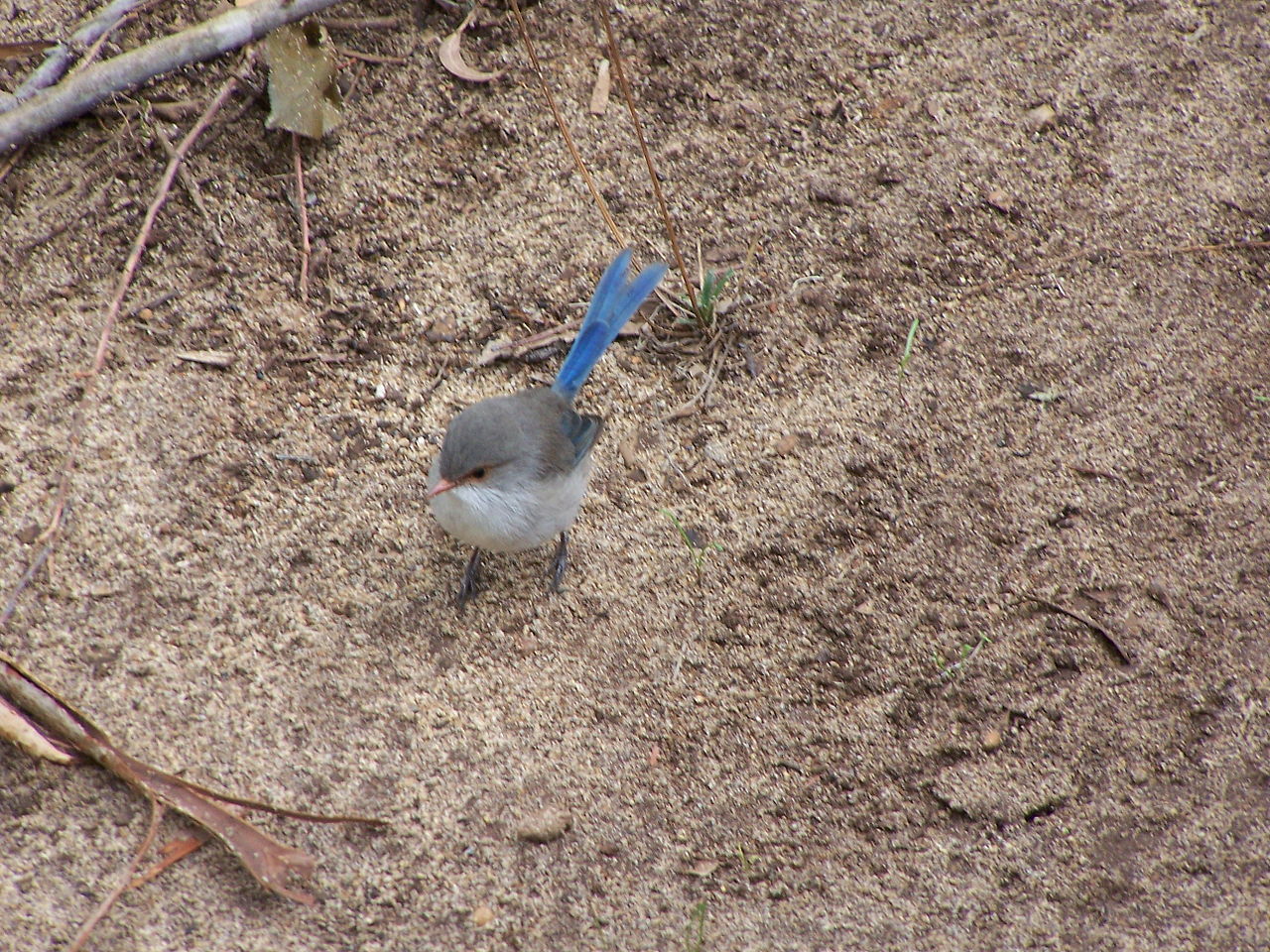
M. s. splendens female, showing chestnut bill and bluish tail

M. s. melanotus with face fan display, Lake Cargelligo

Turquoise fairywren (M. s. callainus) with purplish petal – Gawler Ranges, South Australia
Temperament
social and active
Flight Pattern
short rapid wingbeats
Social Behavior
Lives in small territorial groups that practice cooperative breeding, with helpers assisting a dominant pair. Nests are domed structures placed low in dense shrubs or grasses. Pair bonds are long-term, but extra-pair copulations are frequent; males court with petal-carrying displays.
Migratory Pattern
Resident
Song Description
Song is a high, thin series of tinkling trills and sibilant notes, delivered from exposed perches within the territory. Calls include sharp scolds and soft contact chips used to keep the group coordinated.
Plumage
Breeding males are brilliantly blue with glossy black mask, mantle band, and chest, contrasting with paler sky-blue crown and ear tufts; tail long and bluish. Females and non-breeding males are grey-brown above with paler underparts and a long bluish tail; females show a warm rufous wash around the lores. Juveniles resemble females but duller.
Diet
Primarily gleaning small insects and other arthropods such as beetles, ants, caterpillars, and spiders from foliage and the ground. Will occasionally take small seeds and bits of fruit, especially when insect prey is scarce. Foraging is active and low to the ground, often with tails cocked and flicking.
Preferred Environment
Feeds in dense low shrubs, spinifex clumps, and ground litter edges where cover is close by. Uses open patches adjacent to cover and will forage in native gardens and roadside vegetation that provide similar structure.


