
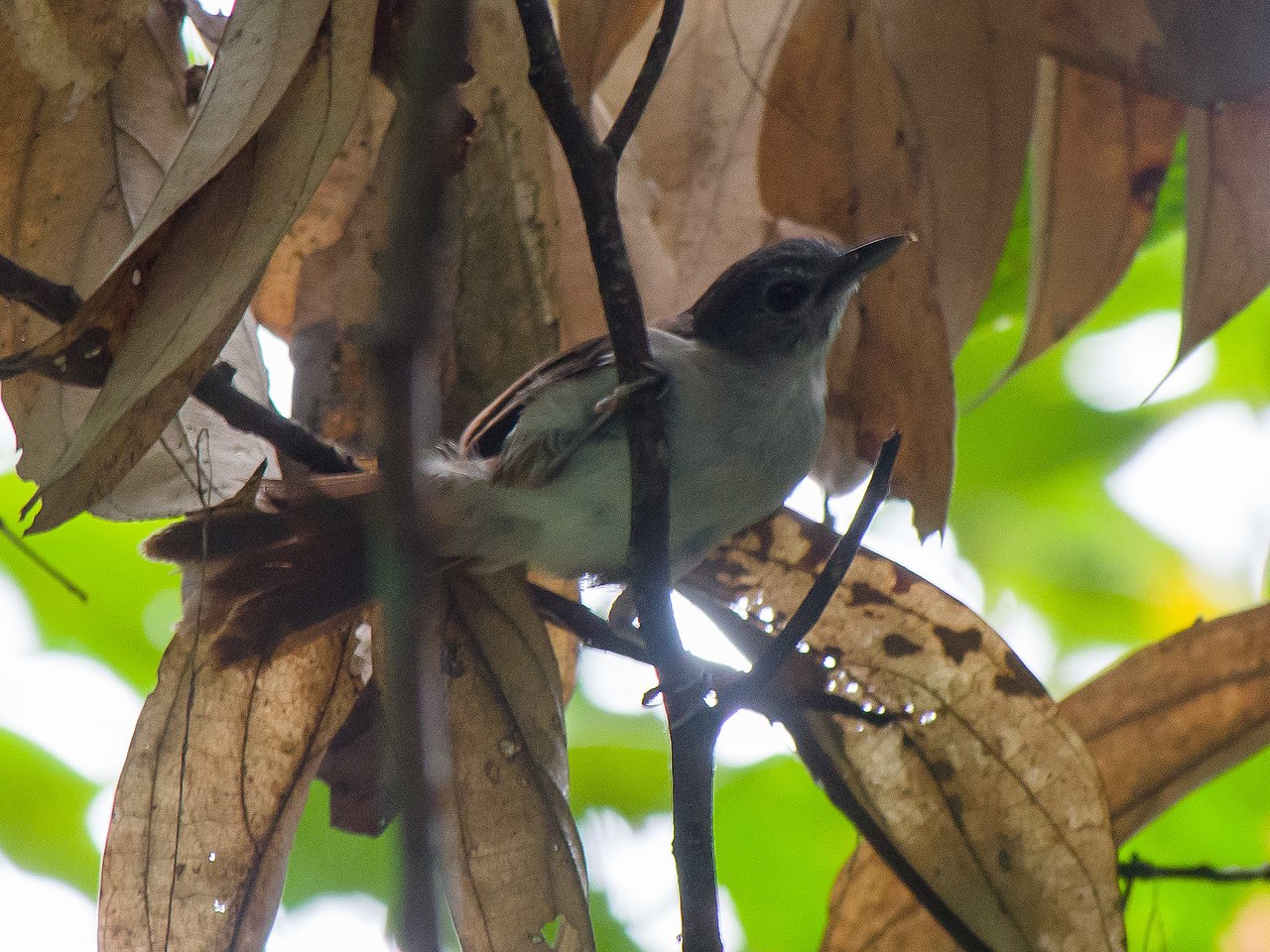
The sooty-capped babbler is a member of the family Pellorneidae. It occurs in Malaysia, Indonesia, Brunei, Thailand, and Singapore.
Region
Sundaland
Typical Environment
Found in lowland evergreen and semi-evergreen forests, including primary and well-structured secondary growth. It frequents dense undergrowth in peat-swamp, riverine, and kerangas (heath) forests, and forest edges with thick thickets. The species keeps to the lower and mid-understory, often near streams and in shaded, humid microhabitats. It avoids open areas and heavily degraded scrub, persisting best where leaf litter and shrub layers are intact.
Altitude Range
0–1000 m
Climate Zone
Tropical
Ease of Keeping
Beginner friendly: 1/5
The sooty-capped babbler is a shy understory specialist of lowland Southeast Asian forests and a member of the family Pellorneidae. It often joins mixed-species flocks and forages close to the ground, where its subdued colors provide excellent camouflage. Pairs commonly duet, producing soft, whistled phrases that help them stay in contact in dense vegetation.

Temperament
secretive and skulking
Flight Pattern
short rapid wingbeats through dense understory
Social Behavior
Usually seen in pairs or small family groups, frequently joining mixed-species understory flocks. Nests are typically domed or cup-like structures placed low in dense vegetation. Both sexes participate in parental care, and pairs maintain territories year-round.
Migratory Pattern
Resident
Song Description
Soft, whistled phrases and mellow notes given in short series, often as antiphonal duets between mates. Calls include gentle chups and trills used for contact while foraging in thick cover.
Plumage
Warm brown upperparts with slightly rufous wings and tail; underparts buffy to olive-buff with paler throat. Crown forms a dark, sooty cap contrasting with the face and nape. Feathers appear soft and slightly fluffy, aiding camouflage in dim understory light.
Diet
Primarily consumes small insects and other arthropods such as beetles, caterpillars, and spiders. It gleans prey from leaves, twigs, and dead foliage, and occasionally probes litter and tangles. Small berries or soft fruits may be taken opportunistically, especially when insect activity is low.
Preferred Environment
Feeds in the lower to mid-understory, often within dense thickets, vine tangles, and along shaded streams. It favors humid, shaded microhabitats where insect prey is abundant and cover is ample.


