

The song sparrow is a medium-sized New World sparrow. Among the native sparrows in North America, it is easily one of the most abundant, variable, and adaptable species.
Region
North America
Typical Environment
Widely distributed from Alaska and Canada across the continental United States into northern and central Mexico. Occupies a broad range of shrubby habitats, including riparian thickets, marsh edges, brushy fields, forest margins, and suburban gardens. Coastal and island populations can be darker and more sedentary, while interior birds may migrate. It is one of the most common and adaptable sparrows across temperate North America.
Altitude Range
Sea level to 3000 m
Climate Zone
Temperate
Ease of Keeping
Beginner friendly: 1/5
The song sparrow is among the most variable North American sparrows, with many regional subspecies differing in size and coloration. Its rich, highly variable song features local dialects, and males sing persistently to defend territories. It adapts well to human-modified habitats, frequenting gardens, hedgerows, and marsh edges. A hallmark field mark is the heavy breast streaking that often forms a central dark spot.


Song sparrow in coastal Marin County, California

A song sparrow singing in Delaware, USA
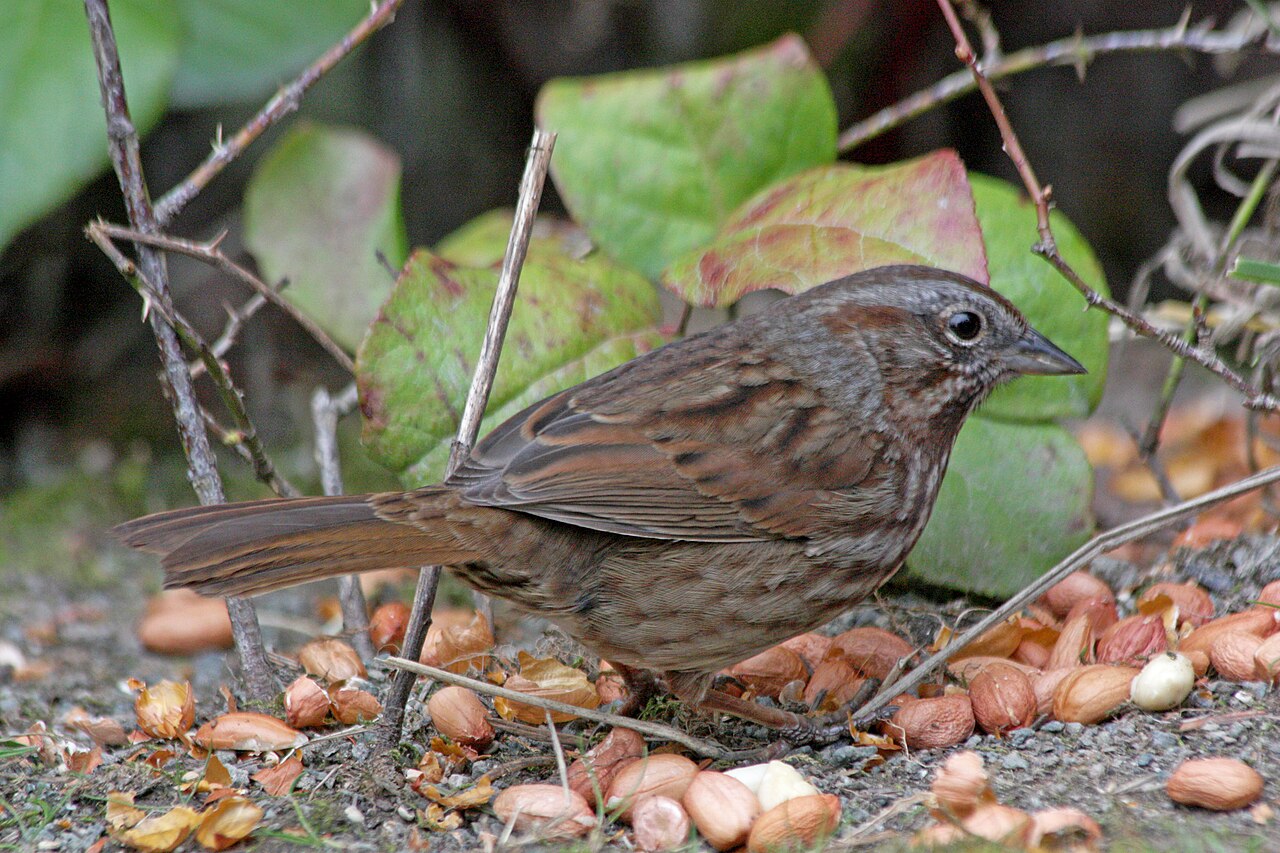
Taken near Anacortes, Washington in March, this individual is most likely M. m. morphna

Taken at Springfield, Oregon in early April, this photo probably shows M. m. cleonensis or a "phaea" hybrid

M. m. mexicanaAlmoloya del Rio, Mexico
Temperament
territorial but adaptable
Flight Pattern
short rapid wingbeats with low, fluttering flights
Social Behavior
Generally solitary or in pairs during breeding; males sing from exposed perches to defend territories. Nests are placed low in shrubs, grasses, or occasionally on the ground; pairs can raise multiple broods in a season. Outside breeding, they may form loose flocks in suitable feeding areas.
Migratory Pattern
Partial migrant
Song Description
A rich, variable series of clear whistles, trills, and buzzes, often starting with a few bright notes and sliding into complex phrases. Individuals exhibit local dialects, and males sing frequently at dawn and throughout the day in spring.
Plumage
Brown, heavily streaked upperparts with grayish tones; underparts whitish with bold brown streaks that often coalesce into a central breast spot.
Diet
Eats a mix of seeds, grains, and small invertebrates; insects and spiders dominate in the breeding season to fuel nesting and feed young. In fall and winter, seeds of grasses and forbs become more important. They will also take small berries when available and may visit backyard feeders for millet or cracked corn.
Preferred Environment
Typically forages on or near the ground in dense cover, scratching leaf litter and probing around shrubs. Often found along brushy margins, hedgerows, and marsh edges where cover and food are abundant.


