

The snow petrel is the only member of the genus Pagodroma. It is one of only three birds that have been seen at the Geographic South Pole, along with the Antarctic petrel and the south polar skua, which has the most southerly breeding sites of any bird, inland in Antarctica.
Region
Antarctica and the Southern Ocean
Typical Environment
Breeds on rocky outcrops, cliffs, and nunataks across the Antarctic continent and offshore islands. At sea it ranges widely over the Southern Ocean, often near the pack-ice edge, leads, and polynyas. Frequently seen around icebergs and in coastal waters during the breeding season. Outside breeding, it disperses pelagically over cold Antarctic and subantarctic waters.
Altitude Range
Sea level to 2400 m
Climate Zone
Polar
Ease of Keeping
Beginner friendly: 1/5
The snow petrel is the sole member of the genus Pagodroma and is one of only three birds recorded at the Geographic South Pole. It breeds on rocky cliffs and nunataks across Antarctica, sometimes far inland. Like many petrels, it can eject a waxy stomach oil to deter predators and fuel long flights. Its pure white plumage provides superb camouflage against ice and snow.


Snow petrel, P. nivea in Ross Sea

Pagodroma nivea – MHNT
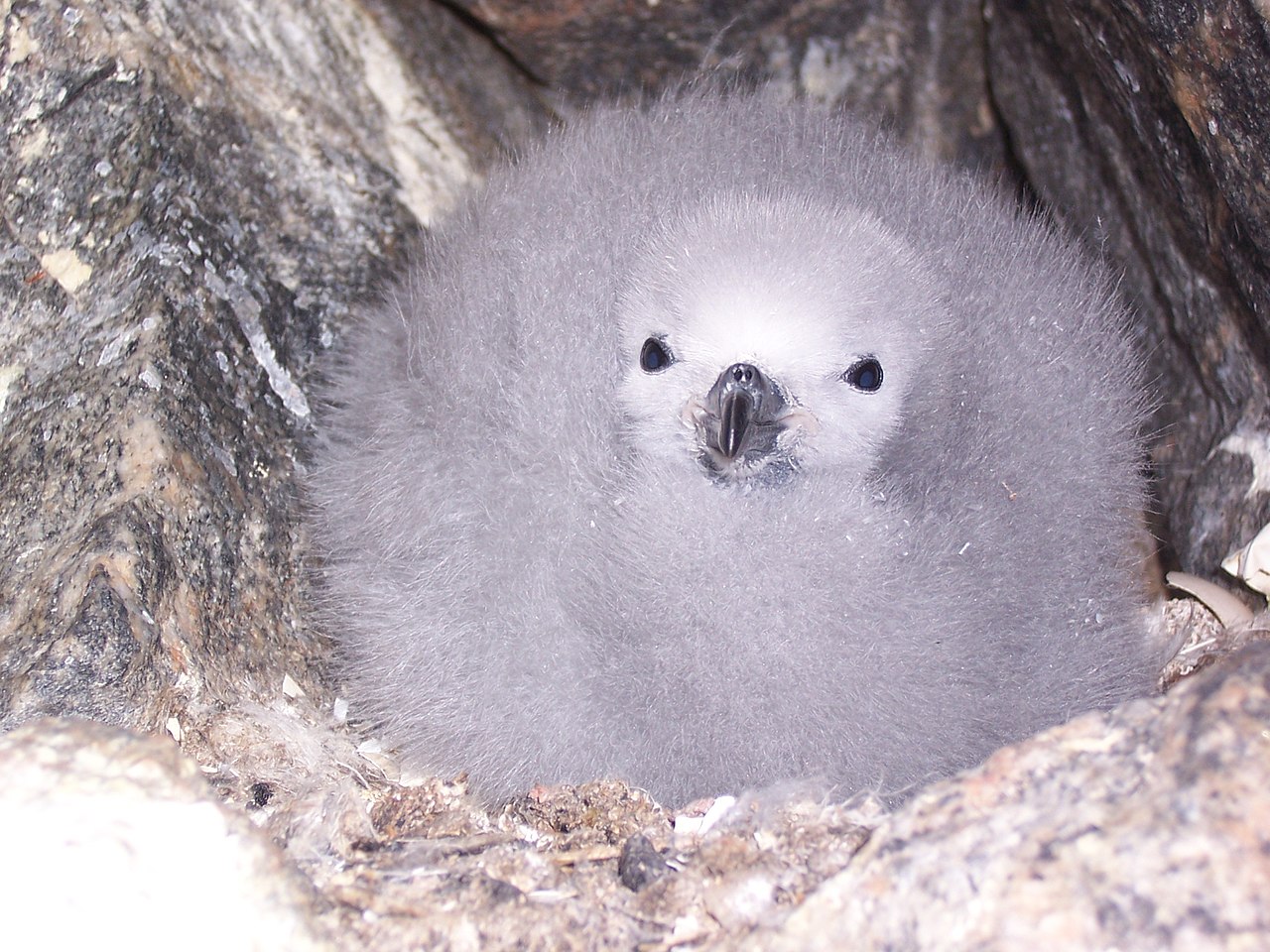
Snow petrel chick
Temperament
solitary to loosely gregarious at sea; colonial at breeding sites
Flight Pattern
buoyant flier with rapid stiff wingbeats and low glides over waves
Social Behavior
Breeds in colonies on cliffs and rock crevices, typically laying a single egg. Pairs are largely monogamous and both adults share incubation and chick rearing. Strong nest-site fidelity and defensive behavior near the nest, including stomach-oil ejection.
Migratory Pattern
Seasonal migrant
Song Description
At colonies, it gives harsh, cackling and chattering calls used in pair bonding and territorial displays. It is mostly silent while at sea.
Plumage
Entirely snowy white plumage with dense, clean-looking feathers; no visible patterning.
Diet
Feeds primarily on Antarctic krill, small fish such as Antarctic silverfish, and squid. Also scavenges carrion and offal from marine mammals and occasionally follows ships to pick up scraps. Prey is taken from the water surface or just below, often near the ice edge and in open leads.
Preferred Environment
Most often forages along the pack-ice margin, in polynyas, and around icebergs where prey is concentrated. During breeding it frequently feeds in nearby coastal waters and returns to colonies with stomach oil to feed chicks.


