

The slender-billed kite is a South American bird of prey in the family Accipitridae. It is found along a scattered range in forested parts of tropical northern and central South America, and far eastern Panama. The species was recategorized into and has once again been removed from the genus Rostrhamus.
Region
Amazon Basin and Guianas, with extension into eastern Panama
Typical Environment
The slender-billed kite occurs in tropical lowlands from the Guianas and Venezuela through the Amazon Basin of Colombia, Ecuador, Peru, and Brazil, and south into northern Bolivia, with a disjunct population reaching eastern Panama. It is strongly associated with calm, snail-rich waters along forested rivers, várzea and igapó floodplains, swamps, and oxbow lakes. Birds are often seen along edges of flooded forest where overhanging branches provide hunting perches. Local abundance fluctuates with flooding cycles and snail availability. Human alteration of wetlands can influence its local presence.
Altitude Range
0–800 m
Climate Zone
Tropical
Ease of Keeping
Beginner friendly: 1/5
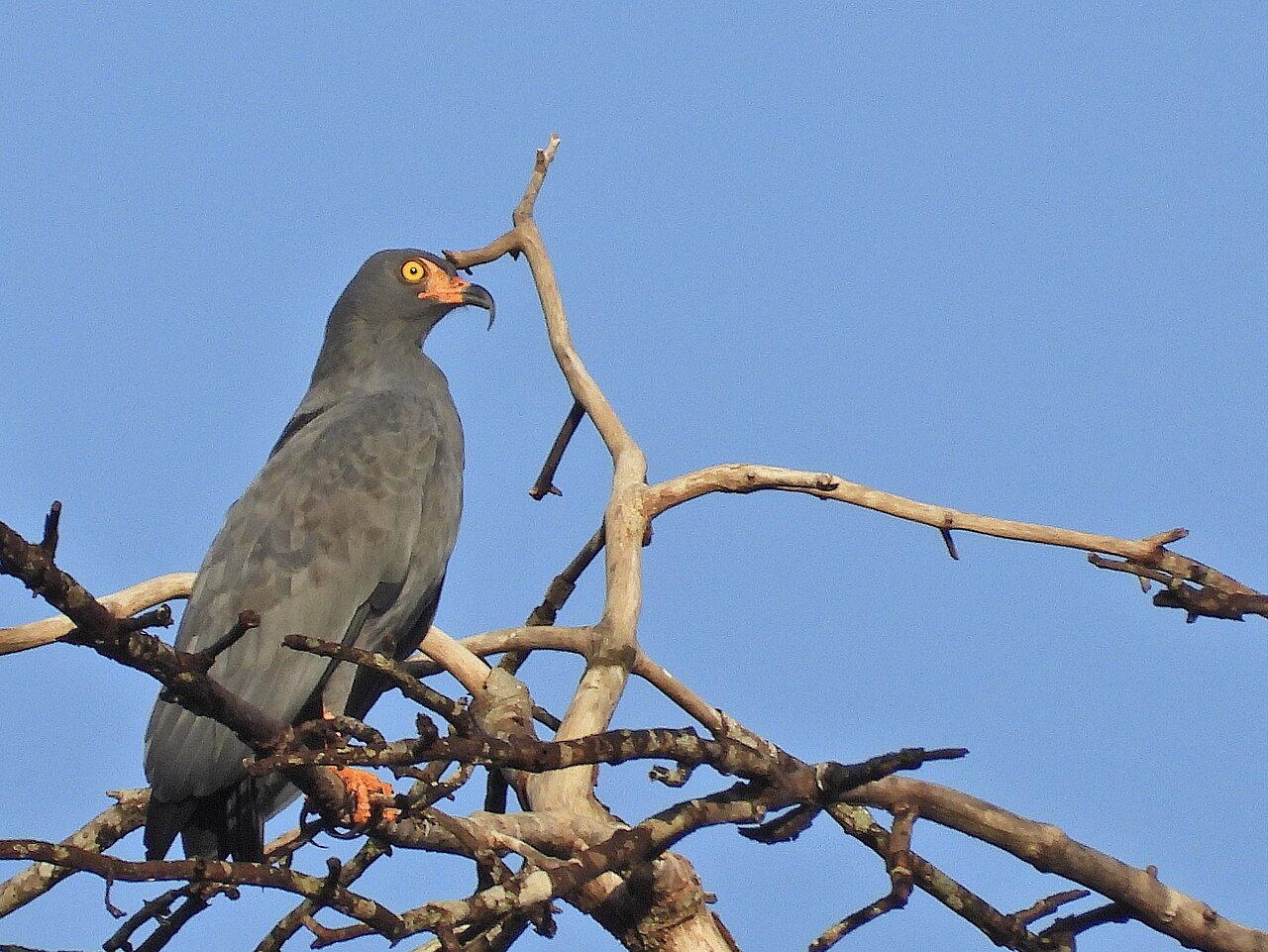
This specialized raptor feeds mainly on freshwater apple snails, using its long, slender, hook-tipped bill to extract the snail from its shell. It frequents flooded forests, oxbow lakes, and sluggish rivers across northern and central tropical South America and into far eastern Panama. The species has toggled taxonomically between Rostrhamus and Helicolestes, with current placement in Helicolestes. Its distribution is patchy and closely tied to seasonal water levels.


Temperament
solitary and secretive
Flight Pattern
slow buoyant flight with short, rapid wingbeats interspersed with glides
Social Behavior
Often perches quietly over water and hunts alone or in pairs. Nests are typically placed in trees or tall shrubs near water, with a small clutch cared for by both parents. Breeding is timed to local hydrological cycles, often coinciding with periods of high snail availability.
Migratory Pattern
Resident
Song Description
Generally quiet, giving soft whistles and mewing calls, especially near the nest. Vocalizations are most frequent during courtship and territorial interactions.
Plumage
Adult males are mostly uniform slate-gray with darker flight feathers; females and immatures are brown with pale streaking below and mottling above. Both sexes show long, narrow wings and a relatively long tail. The bill is notably thin and strongly hooked, adapted for extracting snails.
Diet
Its diet is dominated by freshwater apple snails (Pomacea spp.), which it extracts by inserting the thin, hooked bill into the shell aperture. It may take other aquatic invertebrates and small vertebrates opportunistically. Prey is often carried to a perch where the snail is braced in the talons and cleaned of flesh with precise bill work.
Preferred Environment
Feeds along slow-moving rivers, flooded forests, marsh edges, and oxbow lakes where emergent vegetation and overhanging branches provide hunting stations. It uses low perches to scan for snails and also quarters quietly over water to spot prey.


