

The slaty bunting is a species of bird in the family Emberizidae.
Region
East Asia
Typical Environment
This species is confined to southeastern China, where it inhabits dense understory in subtropical evergreen and mixed forests. It favors bamboo thickets, forest edges, gullies, and scrubby hillsides with abundant ground cover. Birds often skulk in shaded ravines and along streamside tangles. It uses both primary and well-grown secondary forest, provided there is thick undergrowth.
Altitude Range
100–1500 m
Climate Zone
Subtropical
Ease of Keeping
Beginner friendly: 1/5
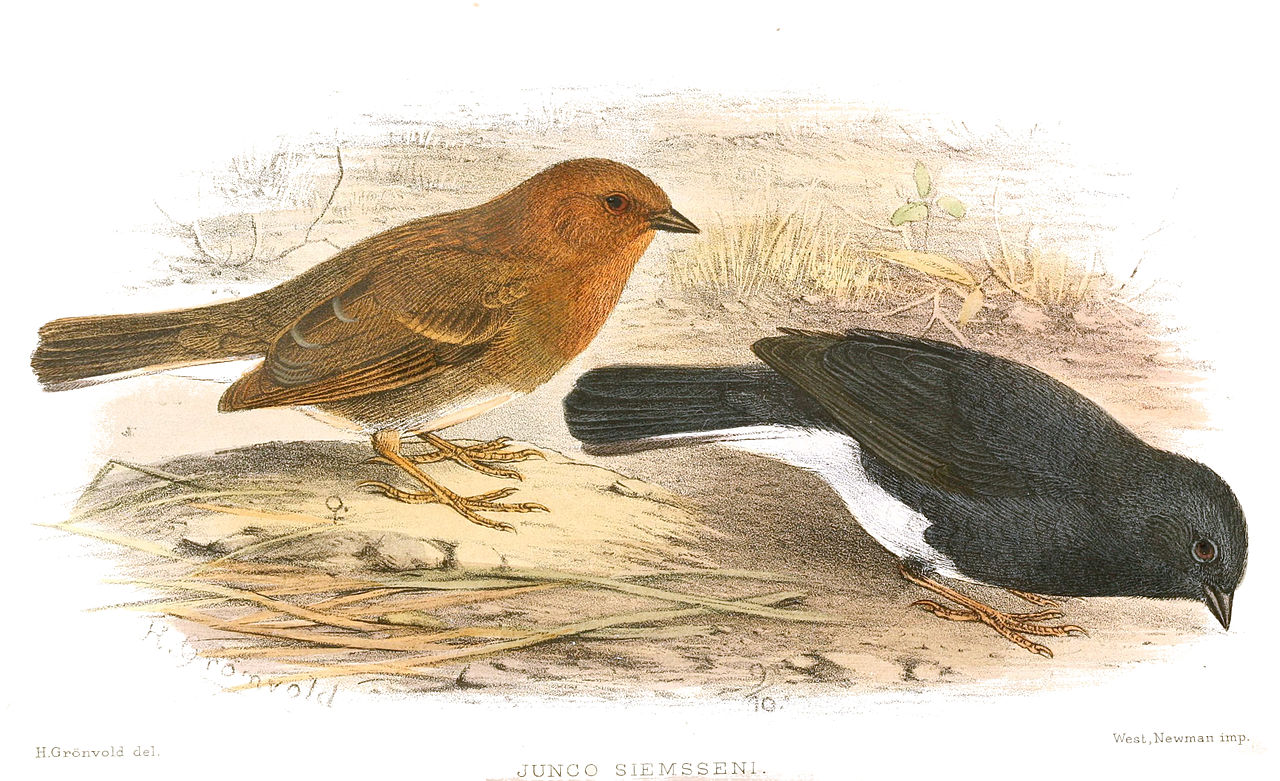
The slaty bunting is a shy, ground-loving bunting endemic to southeastern China, often keeping to dense bamboo and undergrowth. Males are distinctive, with dark slaty plumage and a sharp white submoustachial stripe, while females are brown and streaked for camouflage. It forages quietly in leaf litter for seeds and small invertebrates. Its soft, thin whistles can be hard to detect in its preferred thickets.

Temperament
solitary and secretive
Flight Pattern
short rapid wingbeats, low and direct between cover
Social Behavior
Typically found alone or in pairs, keeping low in dense cover. Nests are placed on or near the ground in thick vegetation, with both parents contributing to care. Breeding is presumed monogamous, and birds are highly territorial in the nesting season.
Migratory Pattern
Resident
Song Description
Song consists of soft, thin, high-pitched whistles delivered from within cover. Calls include a sharp tick or tzit, often given when alarmed.
Plumage
Male is predominantly slaty-grey with a darker face and neat white submoustachial stripe; undertail coverts can show a warmer tone. Female is warm brown with fine streaking above and below, providing excellent camouflage in leaf litter. Both sexes have a neat, bunting-like appearance with a compact body and rounded wings.
Diet
It feeds on a mix of grass and herb seeds and supplements this with small invertebrates such as beetles, spiders, and caterpillars, especially in the breeding season. Foraging is mainly on the ground, where it picks food from leaf litter and low vegetation. Seasonal availability of seeds and insects influences its diet composition.
Preferred Environment
Most feeding occurs in dense bamboo, thickets, and shaded forest floor with ample leaf litter. It also works along streamside tangles and scrubby edges where cover is close by.


