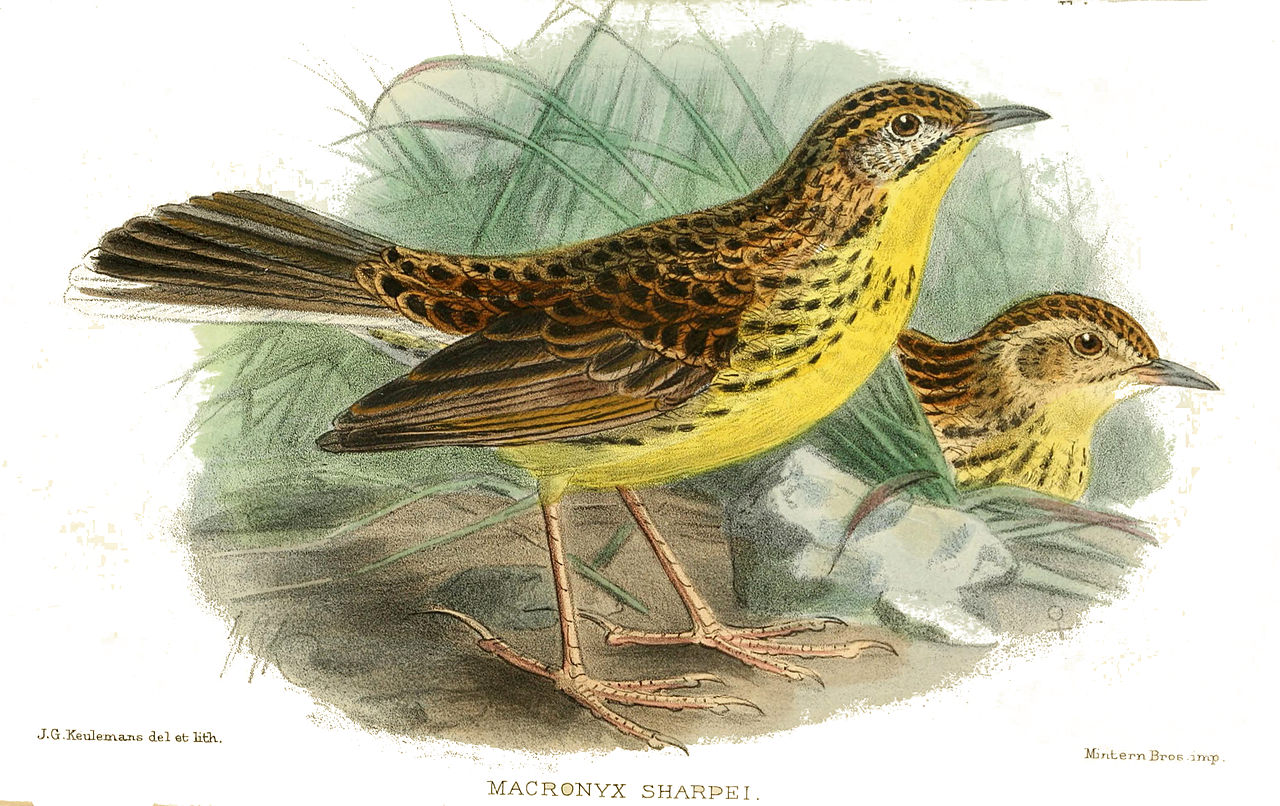
Sharpe's greenbul or the Malawi greenbul, is a species of songbird in the bulbul family, Pycnonotidae. It is found in Africa in south-western Tanzania, north-eastern Zambia and northern Malawi.
Region
Southern Rift of East Africa
Typical Environment
Occurs in montane and submontane evergreen forests and well-wooded ravines of south-western Tanzania, north-eastern Zambia, and northern Malawi. It favors dense understory, vine tangles, bamboo patches, and forest edges, and will use mature secondary growth where cover remains thick. The species is typically associated with highland blocks such as the Misuku and Nyika ranges. It is generally local but can be fairly common where suitable forest persists.
Altitude Range
800–2200 m
Climate Zone
Highland
Ease of Keeping
Beginner friendly: 1/5
Sharpe's greenbul, also called the Malawi greenbul, is a skulking forest songbird of the bulbul family found in the Southern Rift highlands of Tanzania, Zambia, and Malawi. It spends much of its time in dense understory, where it is more often heard than seen. It often joins mixed-species flocks and gives a series of mellow whistles and chattering notes.
Temperament
skulking and cautious
Flight Pattern
short rapid wingbeats through understory
Social Behavior
Usually found singly, in pairs, or small family groups, and frequently participates in mixed-species foraging flocks. Nests are neat cup structures placed low in dense shrubs or tangles. Likely monogamous, with both adults sharing incubation and chick rearing.
Migratory Pattern
Resident
Song Description
Song is a series of mellow, whistled phrases interspersed with soft chatters. Calls include sharp ticks and scolds given from concealed perches. Vocalizations carry well in dense forest but are not especially loud.
Plumage
Olive-brown to olive-green upperparts with slightly darker wings and tail, and paler, buff-olive underparts with a cleaner whitish throat. Feathers appear soft and plain, with minimal streaking and a diffuse, pale eye-ring. The overall look is subdued and leaf-colored, aiding concealment in understory.
Diet
Takes a variety of small arthropods such as beetles, caterpillars, spiders, and other invertebrates gleaned from leaves and stems. Also consumes small fruits and berries, especially when insect prey is less abundant. Foraging is deliberate, with frequent pauses and short hops through tangles and low foliage.
Preferred Environment
Feeds primarily in dense understory, vine thickets, bamboo, and along shaded forest edges and gullies. Often forages 0.5–3 m above ground and occasionally drops to the leaf litter to pick prey.