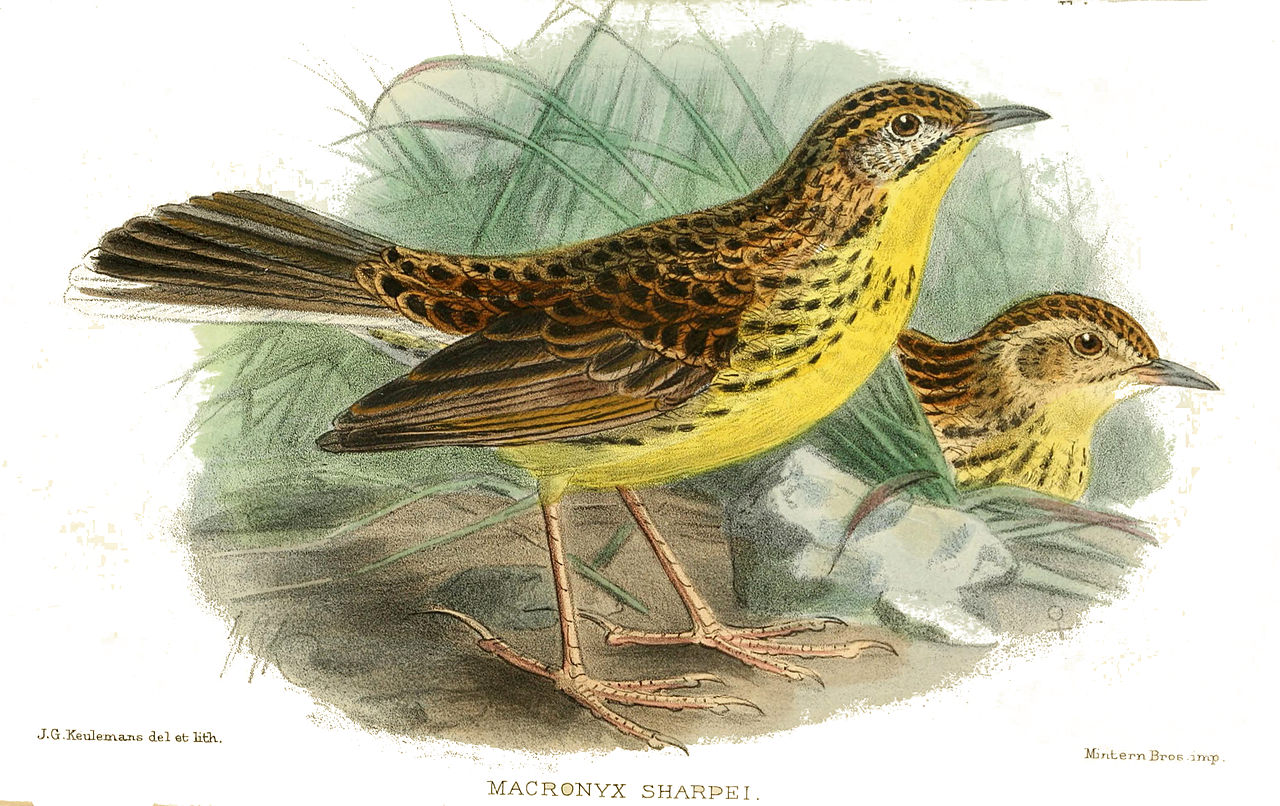
Sharpe's apalis is a species of bird in the family Cisticolidae.
Region
Central and East Africa
Typical Environment
Occupies montane and submontane forests, forest edges, and dense secondary growth with abundant shrub and vine tangles. It frequents mid-story and understory layers, often near clearings and along forest trails. The species adapts to regenerating habitats where dense foliage provides cover and foraging surfaces. It is commonly encountered in pairs and small family groups and occasionally in mixed flocks with other insectivores.
Altitude Range
800–2500 m
Climate Zone
Highland
Ease of Keeping
Beginner friendly: 1/5
Sharpe's apalis is a small African warbler of the family Cisticolidae, typically found in dense forest undergrowth and forest edges. Pairs often keep contact with soft, high-pitched calls and may join mixed-species flocks. Like many apalises, it is an agile foliage-gleaner, snatching tiny invertebrates from leaves and twigs. The species is named in honor of the British ornithologist Richard Bowdler Sharpe.

Temperament
active and skulking
Flight Pattern
short rapid wingbeats
Social Behavior
Usually found in pairs or small family parties that keep close contact while moving through foliage. It often joins mixed-species foraging flocks in suitable forest. Nests are typically cup-shaped and placed low to mid-height in dense vegetation; pairs are monogamous during the breeding season.
Migratory Pattern
Resident
Song Description
Song is a high, thin series of tsee or tsip notes delivered in quick sequences, often as antiphonal duets between the pair. Calls include sharp chips and soft contact notes used while foraging.
Plumage
Slender warbler with a grey head and nape, olive-green back and wings, and a whitish throat and belly often washed yellow on the flanks; tail relatively long with contrasting pale outer feathers.
Diet
Feeds mainly on small insects and other arthropods such as caterpillars, beetles, and spiders. It gleans prey from leaves, twigs, and vine tangles, occasionally making short sallies to snatch flying insects. Foraging is brisk and methodical, typically within the understory and mid-story foliage.
Preferred Environment
Prefers dense leafy cover in forest edges, thickets, and secondary growth where foliage is abundant. Often forages along trails, clearings, and vine-rich tangles that harbor many small invertebrates.