
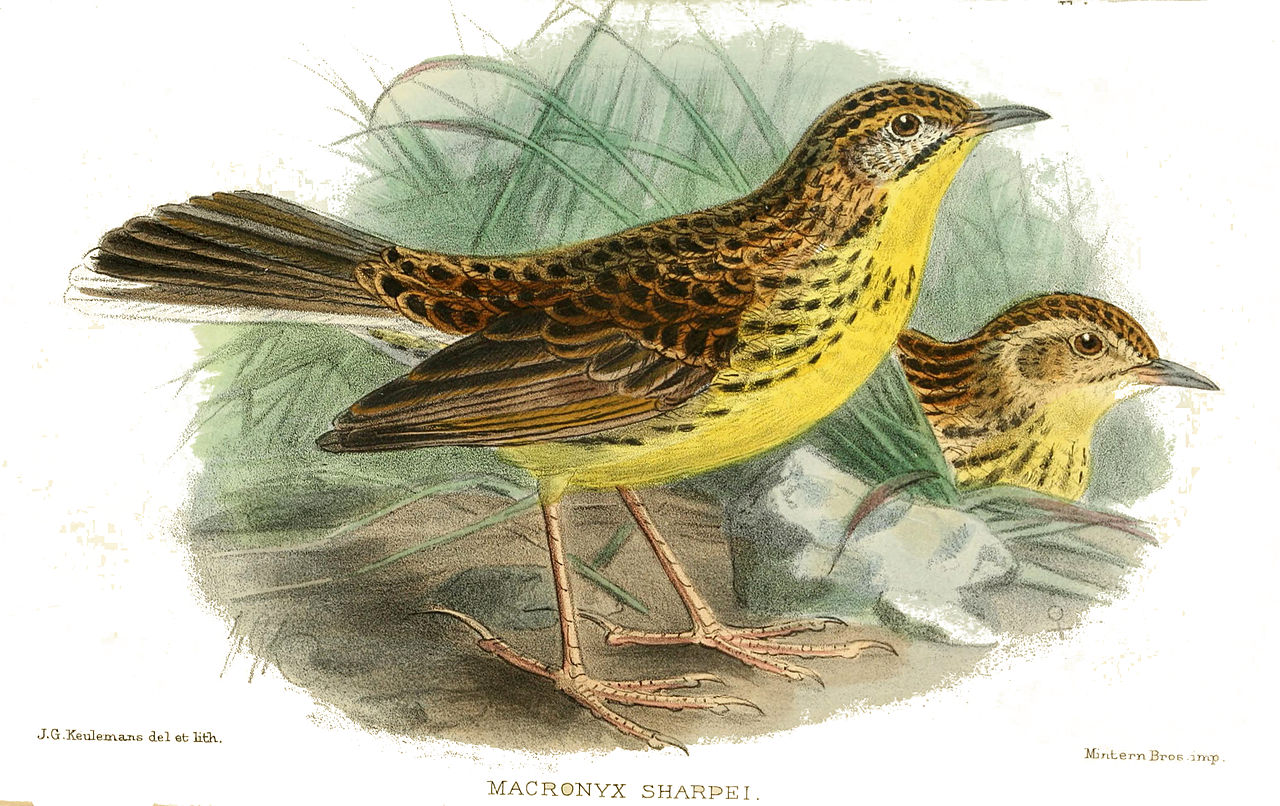
Sharpe's longclaw is a passerine bird in the longclaw family Motacillidae, which also includes the pipits and wagtails. It is endemic to Kenya.
Region
Kenyan Highlands
Typical Environment
Occurs in natural montane grasslands with dense tussocks and short swards, often on gently rolling plateaus and foothills. It favors open, treeless expanses with scattered tussock clumps and avoids heavily cultivated fields. Edges of moorland and fallow or lightly grazed pastures may be used when structure is suitable. Ground nest sites are typically concealed within grass clumps. Habitat fragmentation restricts populations to remnant grassland patches.
Altitude Range
1800–3400 m
Climate Zone
Highland
Ease of Keeping
Beginner friendly: 1/5
Sharpe's longclaw is a Kenyan highland grassland specialist that relies on intact, tussocky montane meadows. It has an elongated hind claw used for walking over grass stems, a hallmark of the longclaw group. The species is highly sensitive to ploughing and intensive grazing, with key populations around the Kinangop Plateau and Aberdare foothills. Habitat conversion to agriculture is the principal threat.

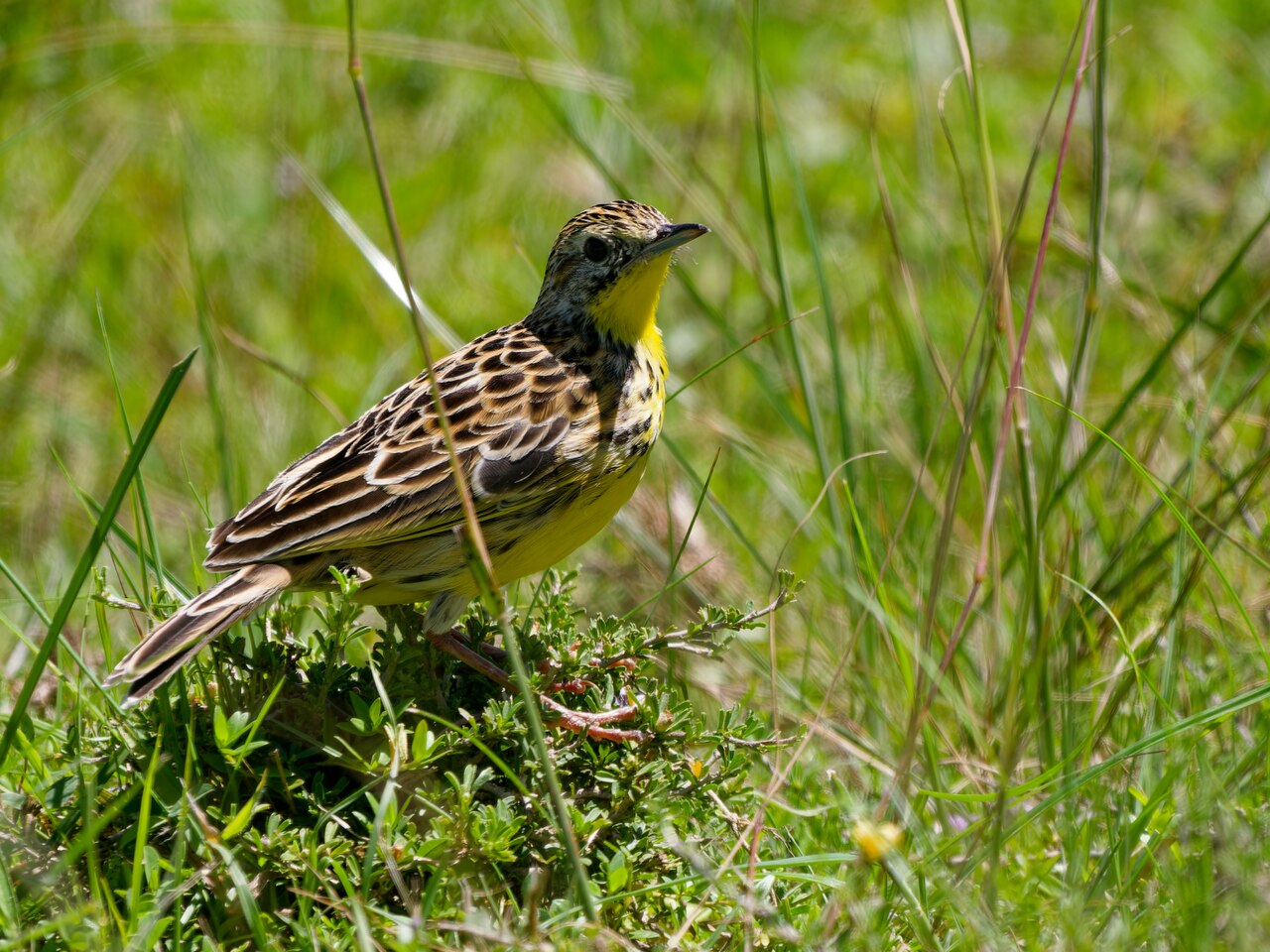
Sharpe's Longclaw

Kinangop Plateau - Kenya
Temperament
wary and moderately territorial
Flight Pattern
short rapid wingbeats with low, undulating flights
Social Behavior
Usually encountered singly or in pairs, maintaining territories in suitable grassland. Nests are placed on the ground, well hidden in grass tussocks. Pairs are monogamous during the breeding season, and adults perform distraction displays when nests are threatened.
Migratory Pattern
Resident
Song Description
Song is a thin, high-pitched series of trills and twitters delivered from a low perch or brief display flight. Calls include a sharp tsip and soft seep contact notes. Vocalizations carry modestly over open grassland.
Plumage
Upperparts are streaked brown to olive-brown with darker mantle streaking; underparts warm buff with finer streaking on the breast. The throat is rich buff to yellowish, bordered by darker malar stripes that can suggest a partial gorget. Tail is dark with contrasting white outer tail feathers. Feathers are sleek and lie close, giving a neat, pipit-like appearance.
Diet
Feeds primarily on insects such as beetles, grasshoppers, termites, ants, and caterpillars, and may take small spiders and other invertebrates. It gleans from the ground and low vegetation, probing around tussock bases. Foraging is deliberate, often in short runs with pauses to pick prey. After grassland fires it may exploit exposed invertebrates.
Preferred Environment
Forages in intact montane grasslands with a mix of short sward and taller tussocks. Lightly grazed or fallow fields adjacent to natural grassland are sometimes used, but it avoids intensively ploughed plots.


