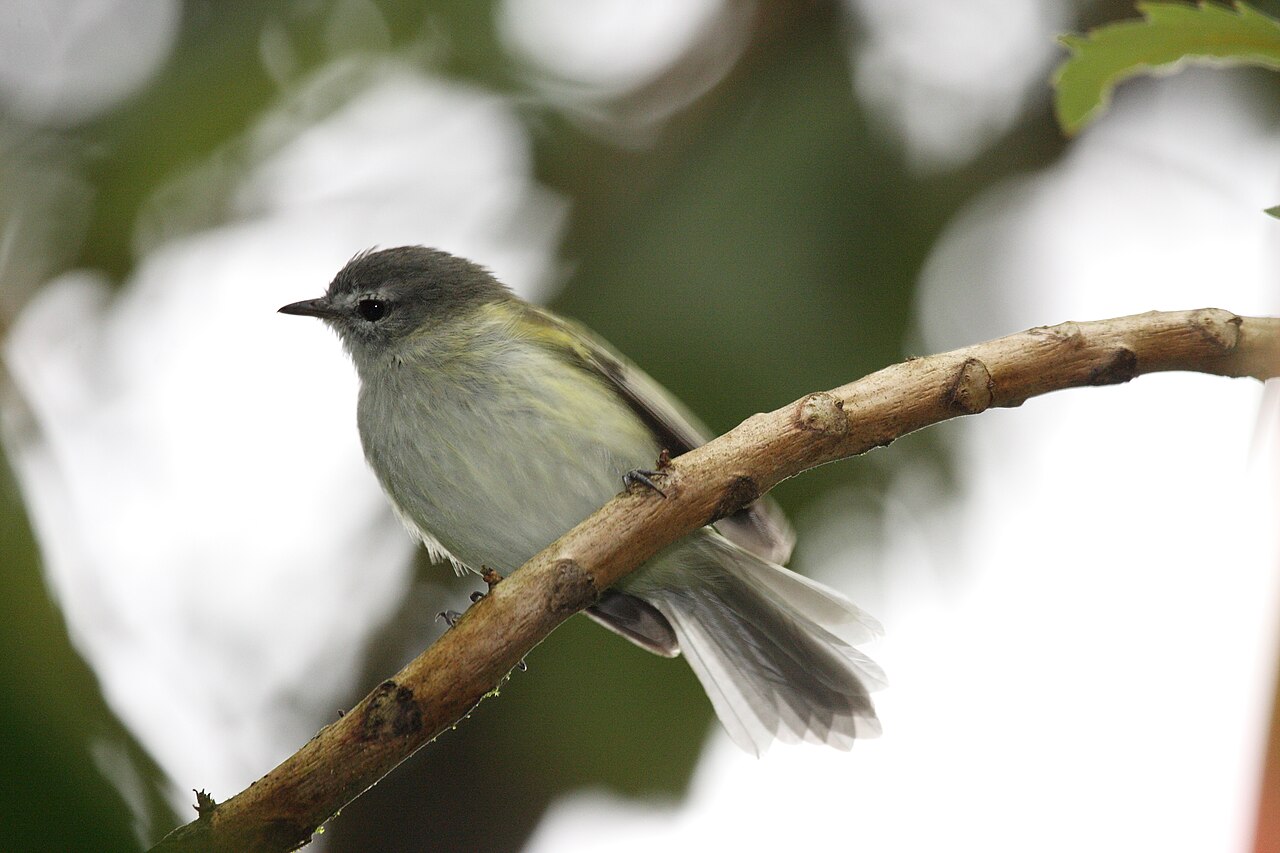
Sclater's myzomela or the scarlet-bibbed myzomela, is a species of bird in the family Meliphagidae. It is endemic to Papua New Guinea. Its natural habitats are subtropical or tropical moist lowland forests and subtropical or tropical moist montane forests.
Region
Papua New Guinea
Typical Environment
Occurs in subtropical and tropical moist lowland forests as well as lower montane forests. Favors forest edges, secondary growth, and flowering trees within primary forest, and may visit gardens or village groves where nectar is abundant. Often forages in the mid- to upper canopy but will descend to understory blossoms. Typically found in areas with a steady supply of flowering shrubs and trees.
Altitude Range
Sea level to 2000 m
Climate Zone
Tropical
Ease of Keeping
Beginner friendly: 1/5
Sclater's myzomela, also called the scarlet-bibbed myzomela, is a small honeyeater named in honor of zoologist Philip Sclater. Males show a vivid scarlet throat patch that contrasts with dark upperparts, while females are drabber and olive-brown. Like other myzomelas, it is an active pollinator, moving rapidly between blossoms and occasionally hawking small insects.


Temperament
active and alert
Flight Pattern
short rapid wingbeats with quick, direct dashes between blooms
Social Behavior
Usually seen singly or in pairs, but may join mixed-species flocks when flowers are abundant. Territorial around rich nectar sources, with chases and display flights by males. Nests are small cups placed on slender branches; pairs defend the nesting area during breeding.
Migratory Pattern
Resident
Song Description
High, thin tinkling notes interspersed with soft chips and twitters. Calls are rapid and repetitive during foraging and more insistent around nectar resources.
Plumage
Male is largely dark with a bright scarlet throat bib and clean-edged contrast to darker breast; female is olive-brown above with paler grayish-buff underparts. Both sexes have a small, slender, slightly decurved bill typical of honeyeaters.
Diet
Feeds primarily on nectar from flowering trees and shrubs, probing and occasionally hovering to access blossoms. Supplements nectar with small arthropods gleaned from foliage or snatched in short sallies. Will take soft fruits opportunistically and lap up dilute nectar with a brush-tipped tongue typical of honeyeaters.
Preferred Environment
Mid- to upper canopy of moist lowland and lower montane forest, especially at edges and in secondary growth. Frequently visits flowering trees in clearings, along streams, and sometimes in village gardens.