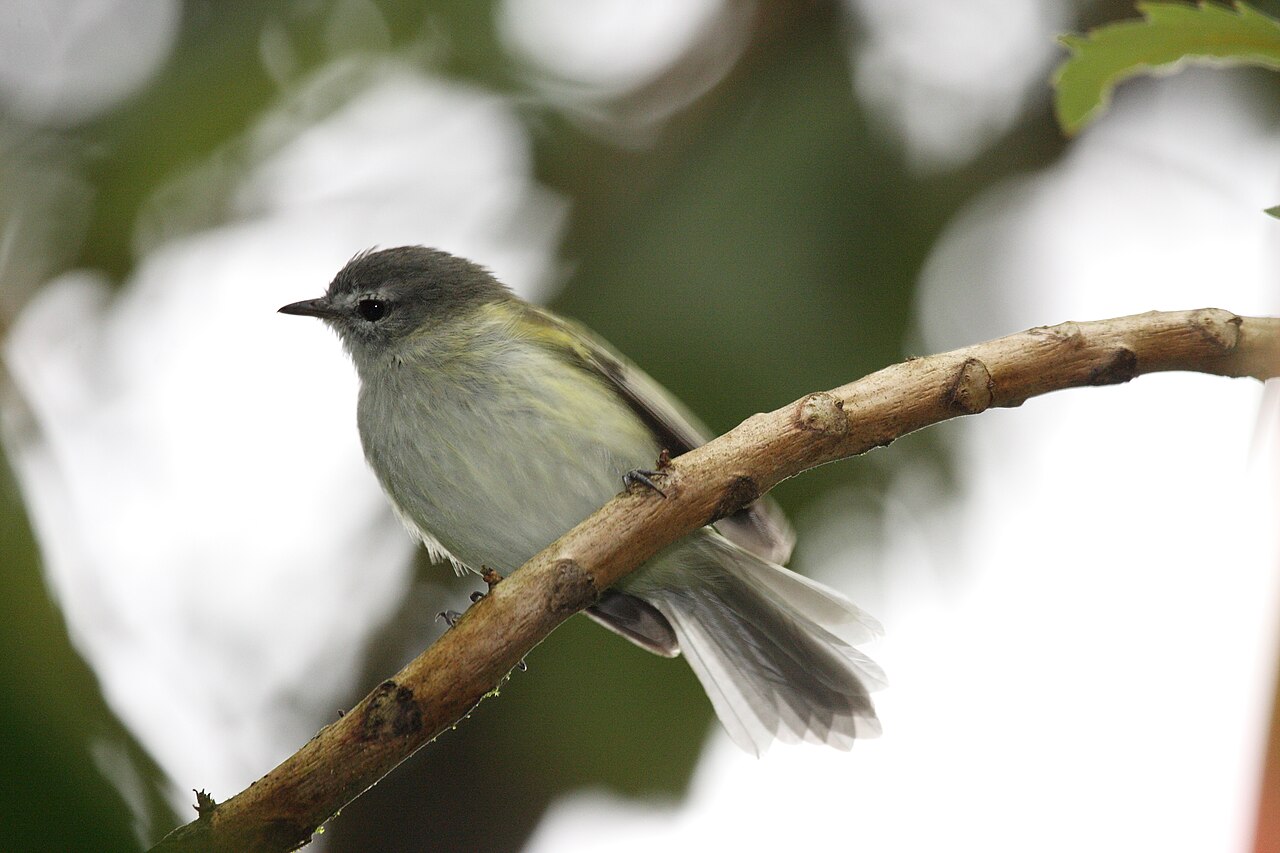
Sclater's antwren is a species of bird in subfamily Thamnophilinae of family Thamnophilidae, the "typical antbirds". It is found in Bolivia, Brazil, and Peru.
Region
Western Amazon Basin
Typical Environment
Occurs in the lowland rainforests of eastern Peru, northern Bolivia, and western Brazil. It favors the dense understory of terra firme forest and also uses seasonally flooded várzea and edge habitats with vine tangles. Birds frequently move through bamboo thickets (Guadua) and thickets along streams. Typically found in shaded, humid interiors where visibility is low.
Altitude Range
100–700 m
Climate Zone
Tropical
Ease of Keeping
Beginner friendly: 1/5
Sclater's antwren is a small understory antbird named after the British ornithologist Philip L. Sclater. It often forages in mixed-species flocks, where its quick movements and thin, high-pitched trills give it away. The species shows marked sexual dimorphism, with darker, more contrasting males and warmer-toned females. It is considered of low conservation concern but depends on intact lowland rainforest.


Temperament
secretive but active
Flight Pattern
short rapid wingbeats
Social Behavior
Usually encountered in pairs that join mixed-species flocks moving through the understory and mid-understory. Nests are small cups placed low in dense vegetation. Pairs maintain small territories and communicate with soft contact calls while foraging.
Migratory Pattern
Resident
Song Description
Song is a short series of thin, high-pitched notes that may accelerate into a light trill. Calls include sharp chips and sibilant tsss notes, often given while moving with flocks.
Plumage
Male is dark gray to blackish above with contrasting white wingbars and light spotting or barring on the flanks; underparts darker with fine pale markings. Female is warmer olive-brown above with buffy to pale underparts and reduced contrast, still showing distinct white wingbars. Both sexes are small, compact antwrens with a neat, tidy appearance.
Diet
Primarily hunts small arthropods such as insects and spiders. Gleans from leaves and twigs, often hanging or making short sallies to pick prey from foliage. Occasionally hawks tiny flying insects and may forage near, but not strictly with, army ant swarms.
Preferred Environment
Dense, shaded understory with vine tangles, bamboo, and second-growth thickets along forest edges and streams. Often forages 0.5–4 m above ground within cluttered vegetation.