
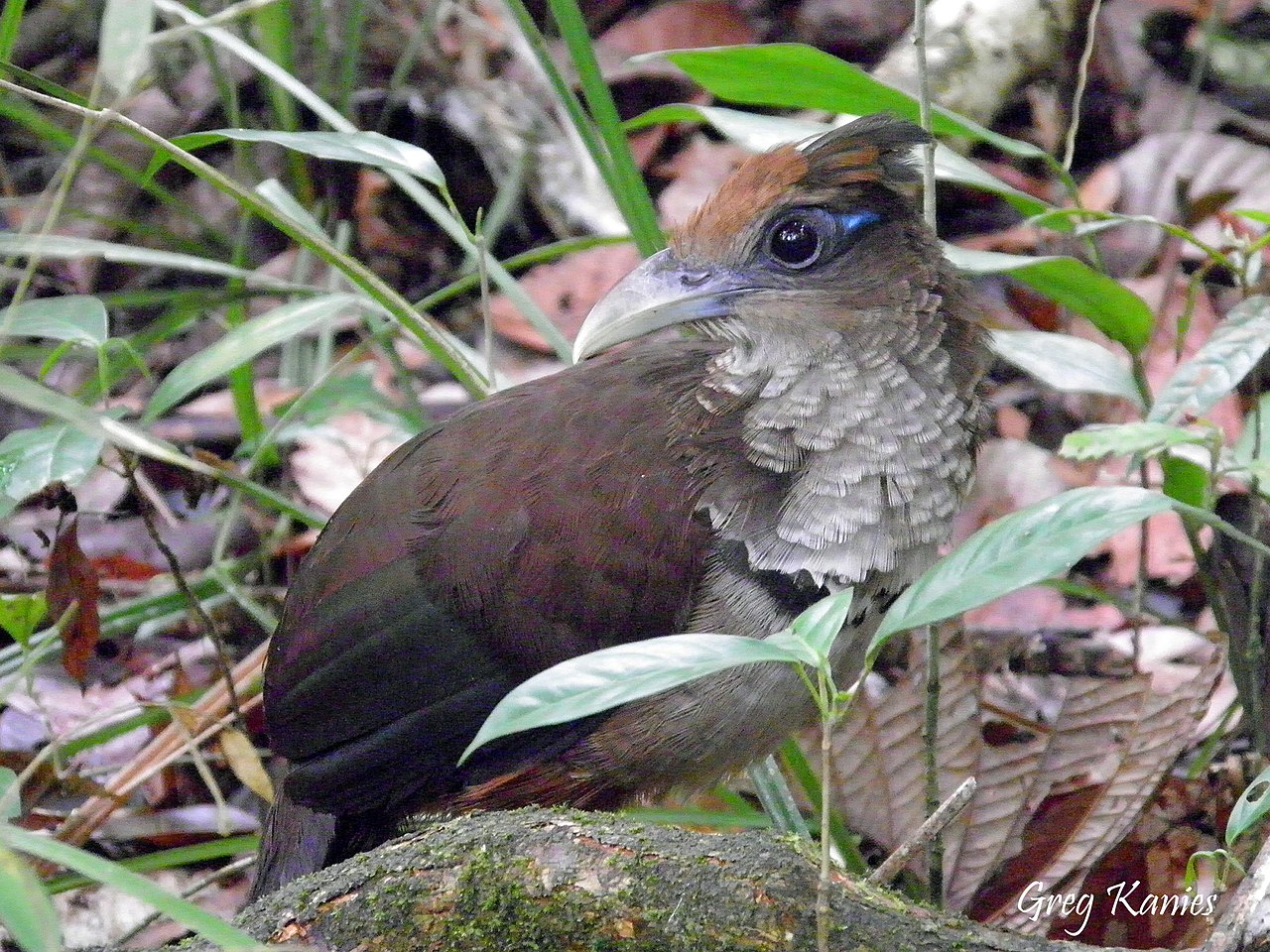
The rufous-vented ground cuckoo is a Vulnerable species of cuckoo in the tribe Neomorphini of subfamily Crotophaginae. It is found in Bolivia, Brazil, Colombia, Costa Rica, Ecuador, Nicaragua, Panama, and Peru.
Region
Central America and the Amazon Basin
Typical Environment
Occurs from southeastern Nicaragua, Costa Rica, and Panama through western Colombia and Ecuador and across Amazonian Colombia, Peru, Bolivia, and Brazil. Prefers extensive tracts of primary and mature secondary evergreen forest with dense leaf litter. Most frequently encountered on the shaded forest floor along ridges, stream terraces, and well-developed understory. It sometimes uses selectively logged forests if sufficient ground cover and prey availability remain. Edge-tolerant only to a limited degree and generally avoids highly degraded habitats.
Altitude Range
Sea level to 1200 m
Climate Zone
Tropical
Ease of Keeping
Beginner friendly: 1/5
This elusive ground-dwelling cuckoo often follows swarms of army ants and bands of peccaries, snapping up prey that is flushed from the leaf litter. It relies more on rapid running and long strides than on sustained flight. Habitat loss and fragmentation of lowland forests have contributed to its decline, and it is considered difficult to observe except where ant swarms are active.


Temperament
shy and wary
Flight Pattern
short rapid wingbeats, prefers running
Social Behavior
Usually solitary or in pairs, moving quietly along the forest floor. Often accompanies army ant swarms and occasionally peccary herds to capture flushed prey. Nests are placed low, typically a platform concealed in dense vegetation; clutch size is small. Territorial calling and bill-clattering displays are given from low perches or the ground.
Migratory Pattern
Resident
Song Description
Vocalizations include deep, hollow hoots and resonant whoop notes that carry through dense forest. Also gives sharp clacks and rattling sounds produced by the bill, especially when excited or alarmed.
Plumage
Iridescent greenish-bronze upperparts with a dark head and nape, pale buff underparts with some dusky shading, and a distinctly rufous vent and undertail coverts. Long, graduated tail is dark with a slight sheen and often shows paler tips. Feathers are sleek and often appear glossy in dappled forest light.
Diet
Feeds mainly on large arthropods such as insects, spiders, and centipedes, often seized as they flee from ant swarms. Also takes small vertebrates including frogs, lizards, and small snakes, and will occasionally consume eggs or carrion. Opportunistic at mixed-species disturbance sites and may snap prey mid-dash with swift lunges. Fruit is taken infrequently and is a minor component of the diet.
Preferred Environment
Forages on the forest floor in primary and well-structured secondary rainforest. Most active along ant-swarm fronts, trail edges, and quiet leaf-litter corridors where cover is ample. Avoids open areas and heavily disturbed ground.


