

The rook is a member of the family Corvidae in the passerine order of birds. It is found in the Palearctic, its range extending from Scandinavia and western Europe to eastern Siberia. It is a large, gregarious, black-feathered bird, distinguished from similar species by the whitish featherless area on the face. Rooks nest collectively in the tops of tall trees, often close to farms or villages; the groups of nests are known as rookeries.
Region
Palearctic
Typical Environment
Found from western Europe and Scandinavia across the steppe belt to eastern Siberia and northern China. Prefers open agricultural landscapes, pastures, meadows, and steppe, with tall trees available for colony nesting. Common in rural areas but also occurs in parks and green belts near towns. Avoids dense, continuous forest and very arid or high-mountain zones. In winter, northern populations move south and west, swelling flocks in milder lowlands.
Altitude Range
Sea level to 2000 m
Climate Zone
Temperate
Ease of Keeping
Beginner friendly: 1/5
Rooks are highly social corvids that form large communal nesting colonies called rookeries in tall trees near farms and villages. Adults are easily recognized by the pale, bare skin at the base of the long bill, a feature lacking in juveniles. They are intelligent problem-solvers and efficient foragers, often probing soil for grubs and worms. Their presence around farmland can help control insect pests, though they also take grain and scavenge.


A rook skull

The rook is a very social bird; in the evenings they gather in large flocks, often in thousands.

Egg, Collection Museum Wiesbaden Germany
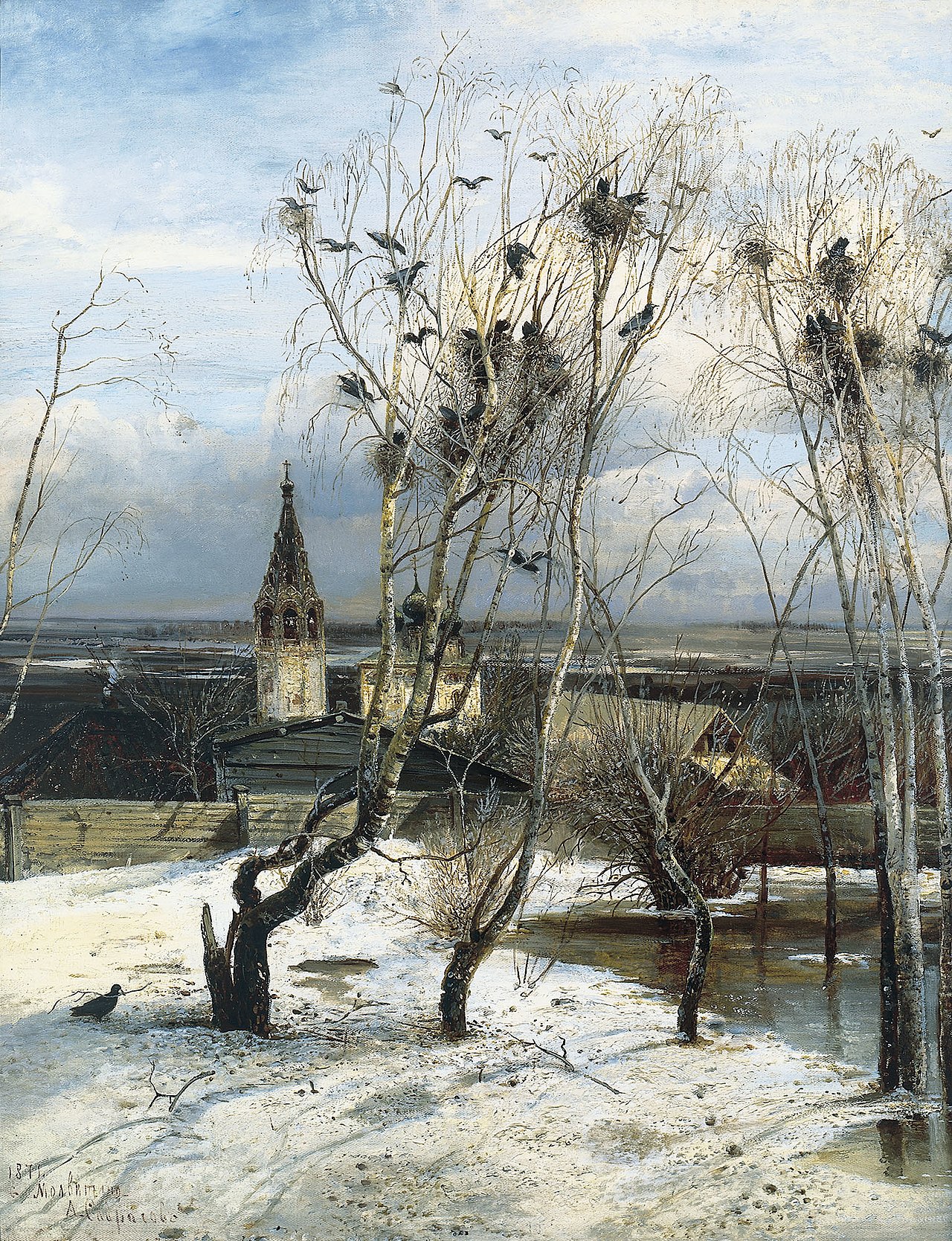
In The Rooks Have Returned (1871) by Alexei Savrasov, the arrival of the rooks is an early portent of the coming spring
Temperament
social and gregarious
Flight Pattern
strong flier with steady wingbeats; occasional soaring and gliding
Social Behavior
Breeds in dense colonies (rookeries), with many nests clustered in the crowns of tall trees. Pairs are largely monogamous and maintain long-term bonds, engaging in mutual preening and cooperative nest building. Outside the breeding season, they form large foraging flocks and communal roosts that can number in the thousands.
Migratory Pattern
Partial migrant
Song Description
Vocalizations are harsh, nasal caws and croaks, typically ‘kaah’ notes delivered in bursts. At rookeries they produce a continuous chorus of caws, rattles, and soft chatter used in social interactions.
Plumage
Glossy black with a purplish-blue sheen; adults show a whitish, bare facial patch around the bill base and shaggy thigh feathers.
Diet
Omnivorous, with a strong preference for invertebrates such as earthworms, beetle larvae, leatherjackets, and other grubs obtained by probing soil. Also takes seeds, grain, nuts, and fruits, and opportunistically consumes carrion and human food scraps. Will occasionally prey on eggs or nestlings of other birds.
Preferred Environment
Forages mainly in short grass, grazed pasture, stubbles, and freshly ploughed or sown fields where probing is easy. Also feeds in parks, road verges, and on tidelines or refuse sites when available.


