

The river lapwing is a lapwing species which breeds from the Indian Subcontinent eastwards to Southeast Asia. It range includes much of northern and northeastern India, and extends through Southeast Asia to Vietnam. It appears to be entirely sedentary. Formerly also called spur-winged lapwing, this name is better reserved for one of the "spur-winged plovers" of old, Vanellus spinosus of Africa, whose scientific name it literally translates. The masked lapwing of Australasia was at one time also called "spur-winged plover", completing the name confusion.
Region
South and Southeast Asia
Typical Environment
Found from northern and northeastern India, Nepal, Bhutan, and Bangladesh through Myanmar, Thailand, Laos, Cambodia, and Vietnam. Prefers broad, lowland rivers with exposed sand and gravel bars, braided channels, and adjacent floodplain patches. Often uses reservoirs, seasonally flooded grasslands, and sparsely vegetated river islands when undisturbed. Avoids dense vegetation and typically keeps to open substrates where visibility is high. Human disturbance and altered flow regimes can limit site occupancy.
Altitude Range
Sea level to 1500 m
Climate Zone
Tropical
Ease of Keeping
Beginner friendly: 2/5
The river lapwing is a riverine specialist that breeds on open sandbars and shingle banks along large rivers from the Indian Subcontinent to mainland Southeast Asia. It was once called the spur-winged lapwing, but that name is best reserved for the African species Vanellus spinosus. Pairs defend nests vigorously, using distraction displays and noisy alarm calls to deter intruders. Habitat alteration from damming, sand mining, and human disturbance is a key threat to this species.


at Jayanti in Buxa Tiger Reserve in Jalpaiguri district of West Bengal, India.
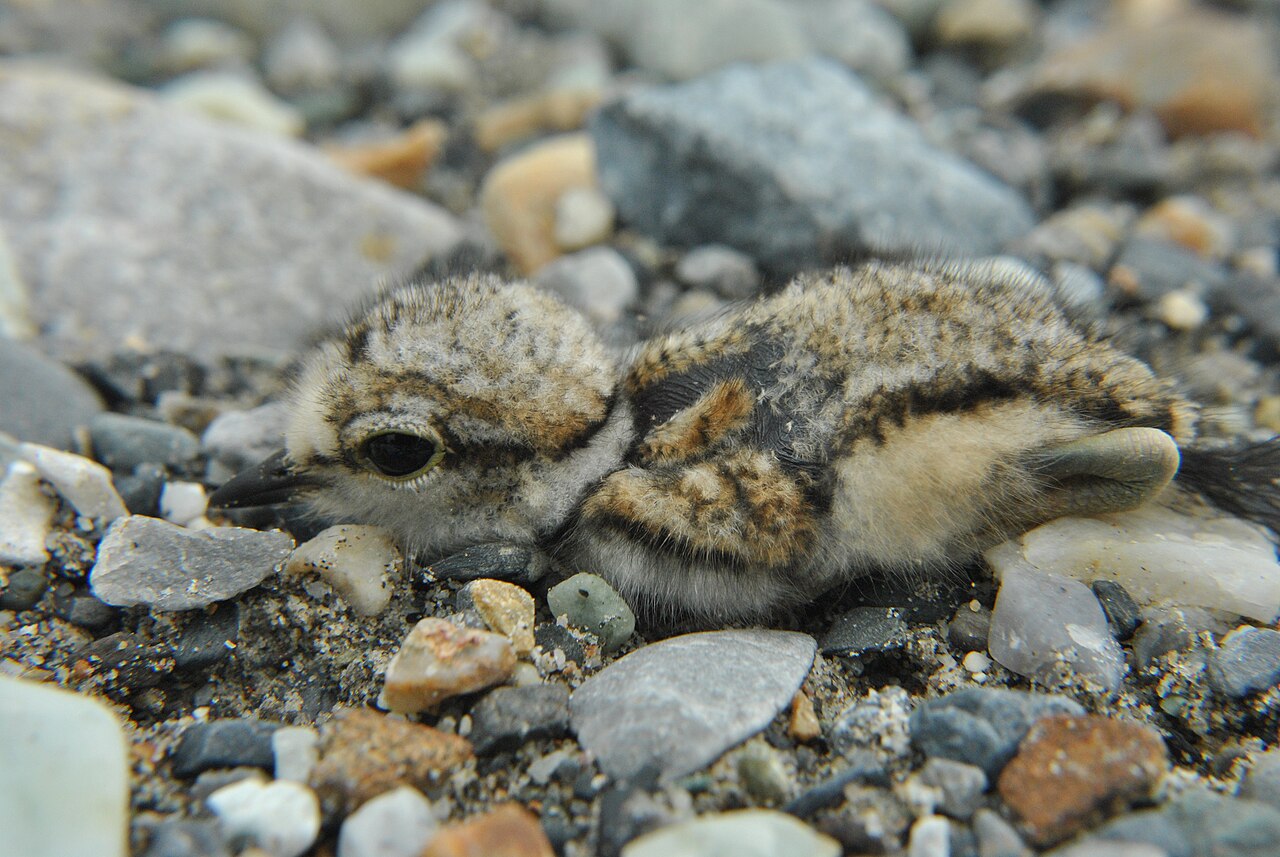
River lapwing chick found in Jayanti river bed, Buxa Tiger Reserve, West Bengal, India
Temperament
wary and territorial
Flight Pattern
strong flier with short rapid wingbeats and agile, low riverine flights
Social Behavior
Usually encountered in pairs or small loose groups, especially during the breeding season. Nests on bare sand or shingle in a shallow scrape, typically with 2–4 eggs. Both parents share incubation and chick-guarding, aggressively mobbing intruders. Outside breeding, may gather at suitable roosts on open sandbars.
Migratory Pattern
Resident
Song Description
Calls are loud, sharp, and metallic, often a repeated peewit or piercing keek-keek delivered in alarm. Vocal and conspicuous near nests, with rapid series of notes during territorial displays.
Plumage
Smooth grey-brown upperparts with clean white underparts divided by a bold black breast band; head mostly black with a prominent slender crest; wings show contrasting black-and-white pattern in flight.
Diet
Feeds primarily on insects such as beetles, ants, grasshoppers, and their larvae, picked from the surface or just below it. Also takes other small invertebrates including worms, mollusks, and crustaceans. Foraging involves short runs, pauses, and precise pecks, often probing soft sand or mud. Opportunistically consumes small aquatic invertebrates stranded along receding shorelines.
Preferred Environment
Forages on exposed sandbars, shingle banks, river margins, and the edges of shallow pools. Prefers sparsely vegetated, open substrates that allow unobstructed views for detecting predators. Will use reservoir drawdown zones and quiet river beaches when disturbance is low.


