

The red-necked avocet also known as the Australian avocet, cobbler, cobbler's awl, and painted lady, is a wader of the family Recurvirostridae that is endemic to Australia and is fairly common and widespread throughout, except for the north and north east coastal areas of the country. Closely related to the stilts, it shares their fragile slender elegance, however the deep red head and neck distinguish them. It appeared on a 13 cent postage stamp in 1966.
Region
Australia
Typical Environment
Found across much of Australia except the far northern and northeastern coastal fringe. Prefers shallow saline or brackish wetlands, including inland ephemeral lakes that fill after substantial rains. Also occurs on coastal estuaries, intertidal mudflats, and artificial saltworks. It avoids densely vegetated swamps, favoring open shorelines and broad, shallow margins. Movements are highly responsive to rainfall and water availability.
Altitude Range
Sea level to 800 m
Climate Zone
Temperate
Ease of Keeping
Beginner friendly: 1/5
This elegant wader is instantly recognized by its deep chestnut head and neck and its long, upcurved bill used to sweep for prey in shallow water. It is largely nomadic within Australia, moving widely after inland rains to exploit temporary wetlands. The species often breeds colonially on bare islands and shorelines. It even featured on an Australian 13-cent postage stamp in 1966.

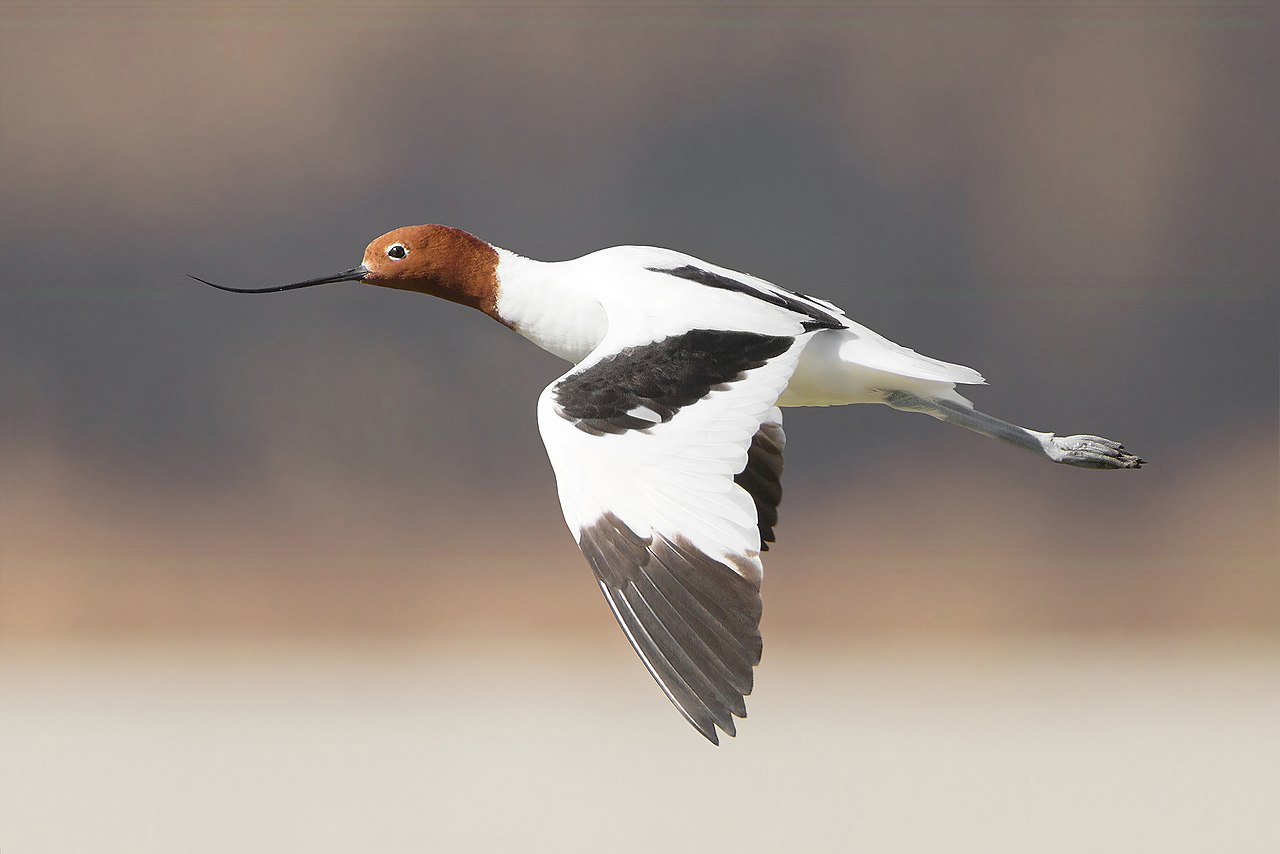
Lake Joondalup, Western Australia
Temperament
social and active
Flight Pattern
strong flier with steady wingbeats and short glides
Social Behavior
Usually seen in flocks, especially on large open wetlands and salt lakes. Breeds in loose to dense colonies on bare or sparsely vegetated islands or shorelines, scraping shallow nests in the substrate. Both sexes incubate and tend precocial chicks, which feed themselves soon after hatching.
Migratory Pattern
Partial migrant
Song Description
Calls are clear, ringing yelps and piping notes, often rendered as ‘pleek’ or ‘kluit’, given in flight and when alarmed. In colonies, a chorus of sharp, yapping contact calls carries over the water.
Plumage
Crisp white body with bold black wings and mantle, contrasted by a rich chestnut head and neck.
Diet
Feeds mainly on aquatic invertebrates such as insect larvae, midges, small crustaceans, and worms. Uses its upturned bill to sweep side-to-side through very shallow water, detecting prey by touch. Also picks items from the surface film and soft mud. Occasionally takes small mollusks when available.
Preferred Environment
Shallow edges of saline and brackish lakes, flooded saltpans, and mudflats with firm, open substrates. Frequently forages in artificial habitats like saltworks and sewage ponds where water levels are managed and prey is concentrated.


